EMQ » Jul – Oct 2024 » Volume 60 Issue 3
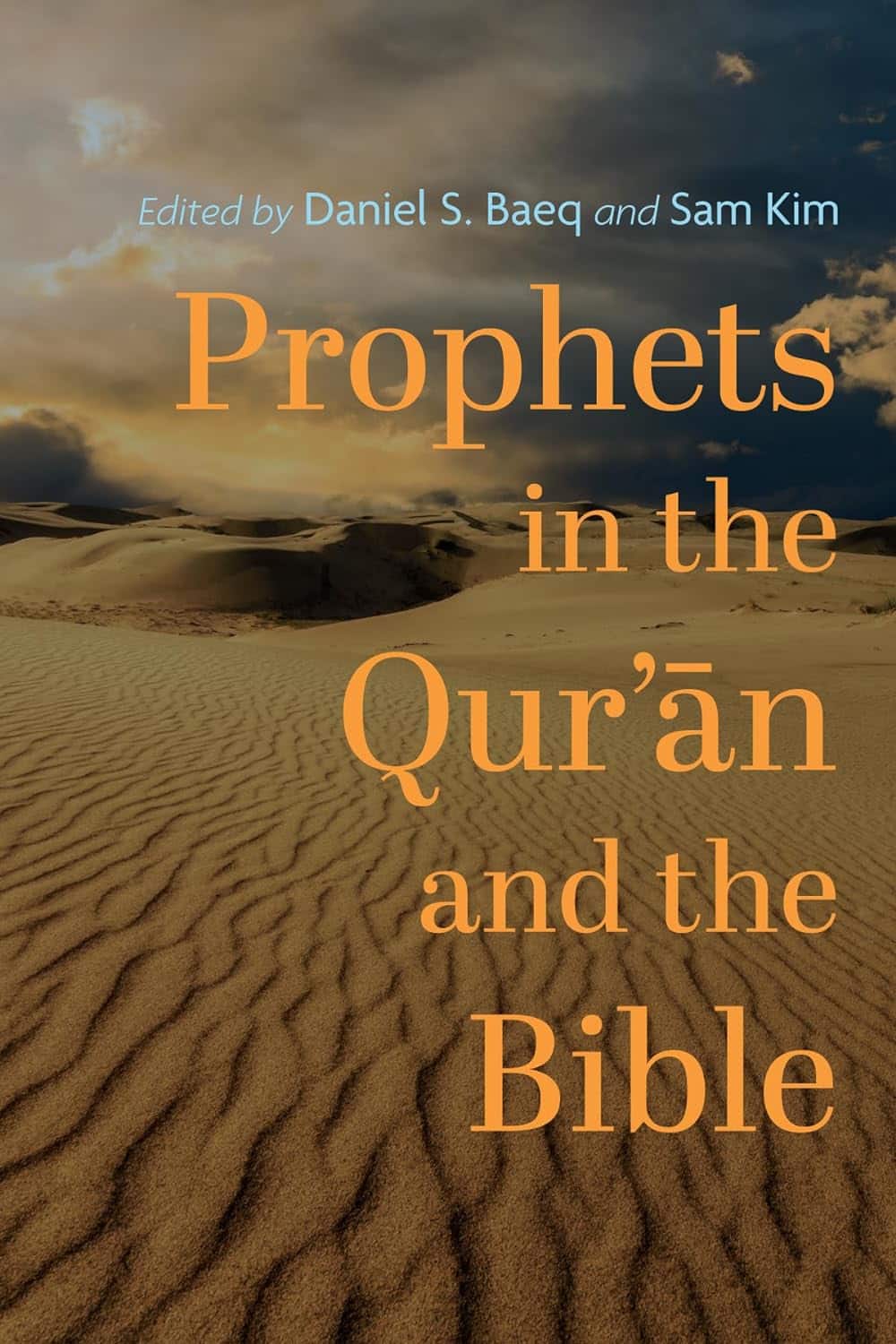
Prophets in the Qur’ān and the Bible
Edited by Daniel S. Baeq and Sam Kim
Wipf & Stock Publishers, 2022
210 pages
US$26.00
*As an Amazon Associate Missio Nexus earns from qualifying purchases.
Reviewed by Don Little, DMin (Missions), Pioneers’ missiologist-at-large and director of the Lilias Trotter Center, who has served in ministry among Muslims and in equipping for 38 years. He is the author of Effective Discipling in Muslim Communities (IVP, 2015).
Of the dozens of books on Islam, the Qur’an, and ministry to Muslims on my shelves, I cannot find a single book-length Christian study of the prophets in the Qur’an who are also in the Bible. In contrast, a simple search on Amazon for books about the prophets in the Qur’an turns up dozens of books written by Muslims that recount and celebrate the stories of the 25 Qur’anic prophets. Perhaps this book can fill the apparent gap in the serious Christian study of the Qur’an’s biblical prophets.
The fifth chapter of Mark Durie’s excellent 2018 book, The Qur’ān and its Biblical Reflexes, is reprinted here (slightly revised) as the first chapter to lay the book’s foundation. In “Rasūlology: Qur’ānic Messengers and Biblical Prophets,” Durie carefully studies the meaning of prophethood in the Qur’an and the Bible. This essay demonstrates how greatly the theology of Qur’anic prophethood contrasts with the biblical understanding.
The remaining chapters are nine essays of varying quality by different authors on ten people found in the Bible in canonical order: Adam (Adam), Noah (Nuh), Abraham (’Ibrahim), Joseph (Yusuf), Moses (Musa), David (Dawud), Ezekiel (Zul-Kifl), Zachariah (Zakariya), John the Baptist (Yahya), and Mary (Maryam). Each stand-alone essay has little connection with the other essays, and there is little consistency in what is being attempted. It is encouraging to see essays by four Koreans, who are, as far as I know, not yet well known outside of Korea, being published alongside essays by established Western scholars of Islam such as Peter Riddell, Gordon Nickel, and Mark Durie.
In addition to Mark Durie’s insightful study of David (Dawud), I found Il Joo Kong’s study of Ibrahim and Peter Riddell’s study of Yusuf to be particularly insightful. They offer fresh light on how the Qur’an treats these biblical figures, insights that can also be used in conversation with Muslim friends and debate partners. In his penetrating study of Zakariya and Yahya, Wonjoo Hwang exemplifies the type of conclusions that are echoed by most of the other writers: “It may be fair to state … that biblical figures in the Islamic narratives are introduced primarily for a polemical purpose against the Jews and Christians by reinterpreting their biblical stories” (178).
The book will be of primary value to those studying the Qur’an or Islamic theology or engaging in deep and sustained conversations with well-educated Muslim seekers. Readers looking for clear and consistent studies of the Qur’an’s biblical prophets may find this book less compelling.
For Further Reading
The Qur’an and its Biblical Reflexes: Investigations into the Genesis of a Religion by Mark Durie (Lexington Books, 2018)
Prophets in the Quran: An Introduction to the Quran and Muslim Exegesis edited by Brannon Wheeler (Bloomsbury, 2002)
EMQ, Volume 60, Issue 3. Copyright © 2024 by Missio Nexus. All rights reserved. Not to be reproduced or copied in any form without written permission from Missio Nexus. Email: EMQ@MissioNexus.org.