EMQ » Jul – Oct 2024 » Volume 60 Issue 3
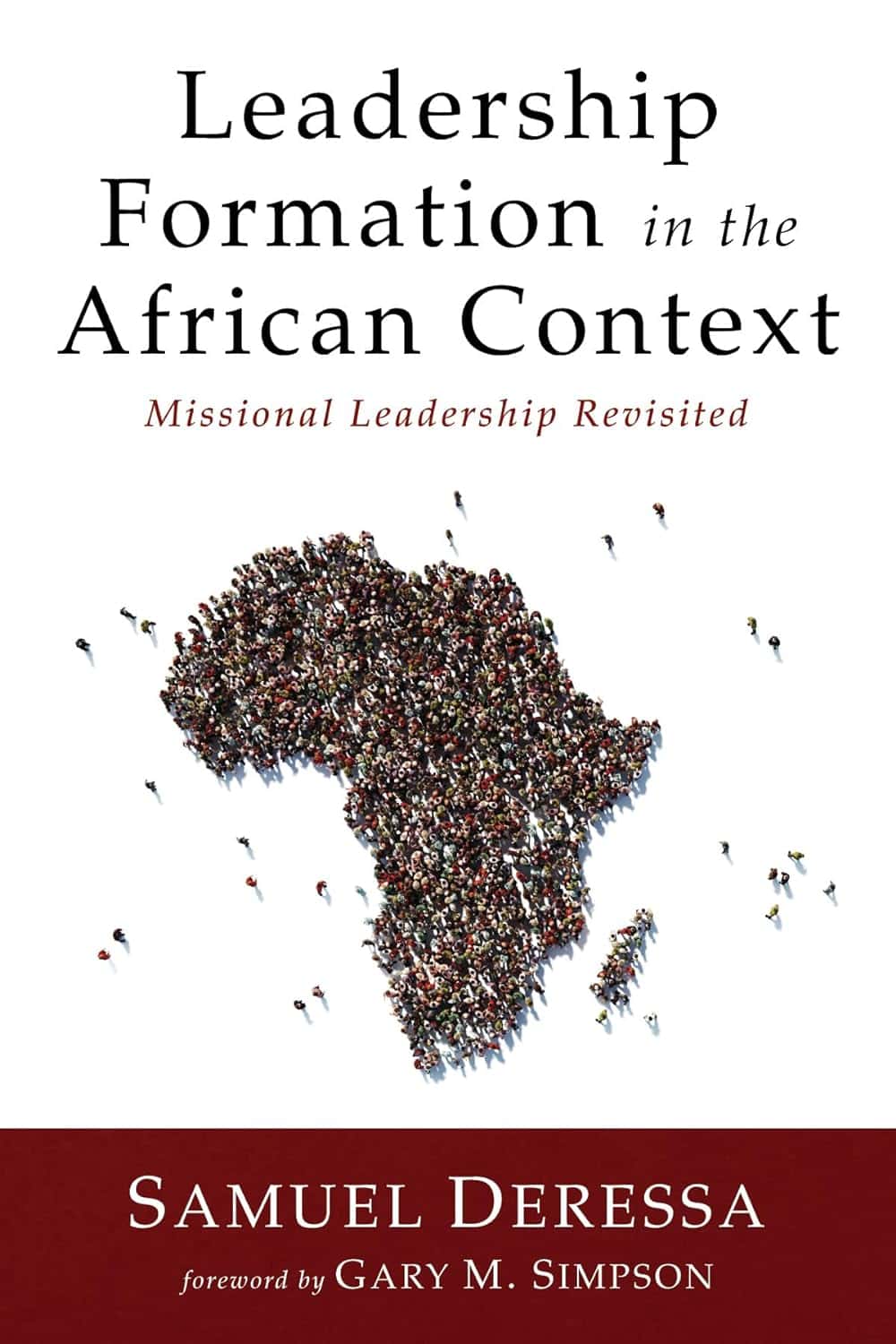
Leadership Formation in the African Context: Missional Leadership Revisited
By Samuel Deressa
Resource Publications (an imprint of Wipf & Stock), 2022
210 pages
US$29.00
*As an Amazon Associate Missio Nexus earns from qualifying purchases.
Reviewed by Susan L. Maros, affiliate associate professor of Christian leadership, Fuller Theological Seminary, author of Calling in Context: Social Location and Vocational Formation (IVP Academic, 2022).
In an era marked by increasing globalization – where mission is from everywhere, to everyone – fostering research that bridges cultures and contexts is a necessary progression related to World Christianity. Those of us in the West are in need of literature that facilitates our understanding of the experiences of our brothers and sisters in the Global South, aiding us in listening to their insights and concerns expressed in their own voices. Deressa offers just such an opportunity in this text.
He examines four Oromo-speaking, Lutheran congregations in Addis Ababa, Ethiopia, providing a clear and lucid narrative description of each community. Deressa draws from the reservoirs of missional church literature, cultural perspectives articulated by Clifford Geertz, and insights into congregational life outlined by the seminal work of Nancy Ammerman to construct his analysis.
Deressa lays a foundation for a robust framework of missional leadership formation within an African context. He astutely identifies a limitation prevalent in much of the leadership literature originating in the West: an excessive focus on the individual. Deressa offers a model of leader formation that conceptualizes leadership in a communal context, attending to the influence of environment and culture. Moreover, Deressa sheds light on how the congregations he studied embody African cultural values which lead to holistic ministry.
Deressa’s critique of the existing literature is gracious but falls short of adequately highlighting the limitations of applying Western frameworks to the Global South. We hope the author will return to these themes and offer a more thorough, generative critique in his future writing.
Nevertheless, he has made a meaningful contribution by his description of African leadership with specific reference to ethnicity (Oromo) and denomination (Lutheran). In doing so, Deressa has taken a step toward one of his aims: contributing to the literature concerning how congregations engage in the theological enterprise. His concluding discussion of the work is particularly compelling.
Deressa’s work serves as a valuable resource for scholars engaged in the study of congregations, whether situated in the West or the Global South. Notably, Deressa underscores implications for leader development, emphasizing the impact of context on that formation.
This text holds promise as a resource in both undergraduate and graduate courses, serving as a model for exploring leadership formation within congregations. Additionally, it stands as a pertinent example of a scholar adeptly bridging the perspectives embedded in Western academic literature with the lived experiences prevalent in the Global South. Ultimately, Deressa’s work reminds us that all theology is contextual and all formation is contextual.
For Further Reading
African Christian Leadership: Realities, Opportunities, and Impact edited by Robert J. Priest and A. Kirimi Barine (Orbis Books, 2017)
Starting Missional Churches: Life with God in the Neighborhood edited by Mark Lau Branson and Nicholas Warnes (InterVarsity Press, 2014)
EMQ, Volume 60, Issue 3. Copyright © 2024 by Missio Nexus. All rights reserved. Not to be reproduced or copied in any form without written permission from Missio Nexus. Email: EMQ@MissioNexus.org.