EMQ » Jul – Oct 2024 » Volume 60 Issue 3
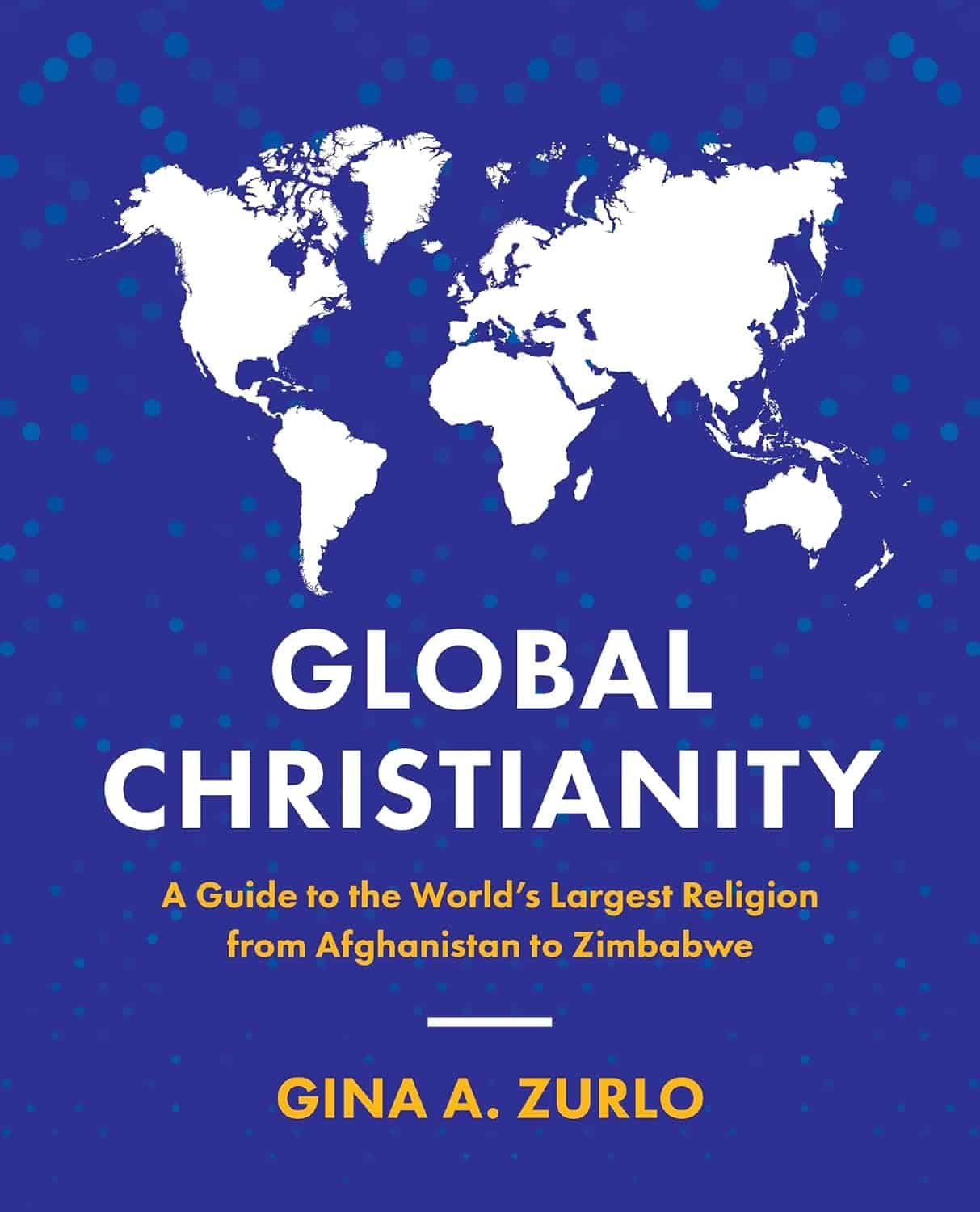
Global Christianity: A Guide to the World’s Largest Religion from Afghanistan to Zimbabwe
By Gina A. Zurlo
Zondervan Academic, 2022
335 pages US$29.99
*As an Amazon Associate Missio Nexus earns from qualifying purchases.
Reviewed by David R. Dunaetz, chair and professor of leadership, organizational psychology, and public administration at Azusa Pacific University and a former church planter in France for 17 years.
The goal of Global Christianity is to disseminate the research conducted at the Center for the Study of Global Christianity, which is best known for producing the World Christian Encyclopedia (WCE), a project originally led by David Barrett. The WCE is very expensive and difficult to access; according to Worldcat.com, only Fuller Theological Seminary and the University of Michigan have electronic versions. This book summarizes and updates the material in the WCE by describing how Christianity (in the broadest sense) manifests itself in most of the countries of the world.
The first short section presents an overview of Christianity by continent. The second short section presents an overview of what is happening in four traditions (Catholic, Independent, Orthodox, and Protestant) and two movements (evangelical and Pentecostal/charismatic) throughout the world. These categories represent the difficulty of classifying various phenomena in contemporary Christianity.
“Independent” is a broad category including groups such as Mormons, the Universal Church of the Kingdom of God (Brazil), the house church movement in China, black churches in the US, African Independent Churches, Vinyard Churches, non-denominational megachurches, and break-away denominations such as the Anglican Church of North America. Similarly, the distinction between evangelical and Pentecostal/charismatic is not always clear and sometimes overlaps.
The third section, the longest part of the book, is a country-by-country description of Christianity. Between a half page to two pages of information is presented for each country, depending on its population. The information is presented fairly objectively and does not especially focus on evangelical concerns, although data is usually provided concerning the number of Bible translations, the number of denominations and congregations, the number of missionaries sent and received, and to what degree the country has access to the gospel. Special concern is often shown for the degree to which churches support women’s rights in each country.
Obtaining useful religious demographics is difficult. Many of these statistics are based on government or other large-scale surveys of religious identity or on denominational statistics. As evangelicals, we might be more concerned about what individuals believe than identifying the church or denomination with which they choose to self-identify. Some phenomena, such as movements where Muslims put their faith in Christ but continue to self-identify as Muslims, are invisible to government surveys or any other reliable form of counting; they cannot be included in a work like this.
Although websites like joshuaproject.net and operationworld.org provide more information about the world’s countries from an evangelical point of view, Global Christianity provides a broader overview of Christianity, touching on subjects that evangelical missionaries often do not address.
For Further Reading
Global Christianity: Current Trends and Developments by Vebjørn L. Horsfjord, Sven Thore Kloster, Gina Lende, and Ole Jakob Løland (Pickwick Publications, 2022)
Operation World: The Definitive Prayer Guide to Every Nation, 7th ed., by Jason Mandryk (InterVarsity Press, 2010)
EMQ, Volume 60, Issue 3. Copyright © 2024 by Missio Nexus. All rights reserved. Not to be reproduced or copied in any form without written permission from Missio Nexus. Email: EMQ@MissioNexus.org.