EMQ » July – Oct 2024 » Volume 60 Issue 3
[mepr-show rules=”100329″ unauth=”message”] This content is shown only to authorized members. It is hidden from everyone else.Collaboration and Partnership
Summary: The mission field is changing as more foreign and national partners work together towards shared goals. The development of Every Community for Christ Philippines offers an example of what this looks like.
By Amber G.
How does a mission field with tremendous diversity move forward in a mutual, collaborative manner? What is happening in the Philippines today through Every Community for Christ Philippines (ECC PH) provides one model.
With around 7,640 islands, of which about 2,000 are inhabited,[i] and 186 languages,[ii] the Philippines is diverse. The Filipino culture is a mixture of indigenous, Asian, and Western influences. Because of these differences in culture, language, and geography, there is a great diversity among the Filipino people.
In addition, the Philippines has 42,027 barangays (neighborhoods or villages).[iii] Statistics given from the Philippine Churches Update show that about 23,214 of these barangays have no church.[iv] In those barangays with churches, most are Catholic with a wide variety of other denominations and independent churches. This level of diversity becomes a huge and difficult environment in which to achieve mutuality in mission and purpose.
ECC PH is an NGO, registered with the Philippine Securities and Exchange Commission, and led totally by Filipino leadership. It is committed to the vision of church planting saturation throughout the Philippines in cooperation and collaboration with other churches and organizations. But it didn’t start there.
ECC began as the church planting teams of the national denomination – Faith Evangelical Church of the Philippines (FECPI). The denomination was started by One Mission Society (OMS) in the 1980s, totally led by foreign missionaries and focused on just this one denomination. How did ECC get from where it was to where it is today, and what have we learned?
Foreign and National Partnership
To illustrate the evolution of the partnership between the OMS missionaries and the national leaders of ECC in the Philippines, we’ll use the Perspectives’ stages of mission-church relations.
- Stage 1: A Pioneer stage – First contact with a people group.
- Stage 2: A Paternal stage – Expatriates train national leadership.
- Stage 3: A Partnership stage – National leaders work as equals with expatriates.
- Stage 4: A Participation stage – Expatriates are no longer equal partners, but only participate by invitation.[v]
Stage 1: Pioneer Stage
In 1982, OMS started its church planting ministry in the Philippines. In 1984, it held its first worship service. More OMS missionaries began to arrive to plant, pastor, and grow the national church – FECPI. In 1990, church planting began in partnership with ECC. ECC became the church planting teams for the national church. Although the teams were made up of Filipinos, the leadership was OMS foreign missionaries. During this period, the pioneer stage started to transition to the paternal stage where expatriates train the national leaders.
Stage 2: Paternal Stage
This stage began in 1989 with the start of Faith Bible College (FBC). OMS was following its traditional model of planting churches and then starting a Bible college to equip leaders to pastor those churches. More OMS foreign missionaries arrived not only to help plant churches and grow the national church, but also to teach at FBC. Leaders were trained and equipped. Churches were planted.
In 2011, the paternal stage began to draw to a close. Residential OMS missionaries began to leave the Philippines. They had trained and equipped leaders, and now they passed on the leadership to four national leaders. Each led one aspect of the ministry. Those included:
- Faith Bible College (FBC)
- Faith Fellowship Aurora (FFA), the first and largest church OMS planted,
- Faith Evangelical Church of the Philippines Inc. (FECPI) which was comprised of all the newly-planted churches in Metro Manila and central and northern Luzon areas
- Every Community for Christ (ECC) which continued to be the church planting arm of FECPI.
The trained national leaders now had full responsibility for the ministries started by OMS.
Three of the ministries (FECPI, FBC and ECC) came together to dialogue about the unique focus of each ministry and how to move forward collaboratively. A summit in 2012 was held for this purpose. OMS missionaries facilitated the summit.
As a result of this summit, FBC would continue to equip workers primarily for FECPI. FECPI now wanted to start to plant their own churches through their local churches and through the church planters who graduated from FBC.
ECC, the church planting arm of OMS for FECPI, was in limbo prior to the summit. They were still the church planting team for FECPI, but started redefining their mission and purpose. This later led to looking at working with other churches and organizations other than FECPI. They continued to have strong ties to OMS.
Stage 3: Partnership Stage
The Philippine field struggled with entering the partnership stage. The paternal stage is very familiar to the Filipinos but not the partnership stage. This is partly because of Philippine history which shaped the behavior of the Filipinos and partly because of the training and orientation of OMS missionaries sent to the Philippines.
The Philippines was ruled as a colony of Spain for more than 300 years followed by the Americans and the Japanese. Because of this, Filipinos developed a behavior of being dependent on what the authority told them to do.
Filipinos and foreign missionaries both felt frustration in the early years of the partnership stage. Missionaries helped Filipinos move from being recipients to equals, and Filipinos were not used to being given the freedom to make decisions.
At the time of the summit as OMS withdrew residential missionaries, OMS assigned an itinerant missionary couple to the field, Larry and Sharon Freed. They were not to lead or supervise. They came alongside the Filipino leadership of ECC PH to provide prayer support, accountability, coaching, vision casting, encouragement, training, and guidance in strategic planning.
Prayers for church multiplication were mobilized, a cadence of accountability was set in place, and vision casting for church multiplication was constantly done. Encouragement was part of conversations, trainings were conducted, and strategic meetings were introduced. All of these were done through coaching of the foreign missionaries with the national leaders of ECC.
Coaching is counter-cultural because it empowers the person or persons being coached by helping them make decisions and be responsible for the decisions made. But through consistent coaching by the itinerant missionaries to the nationals three to four times each year, ECC PH made the transition to the partnership stage.
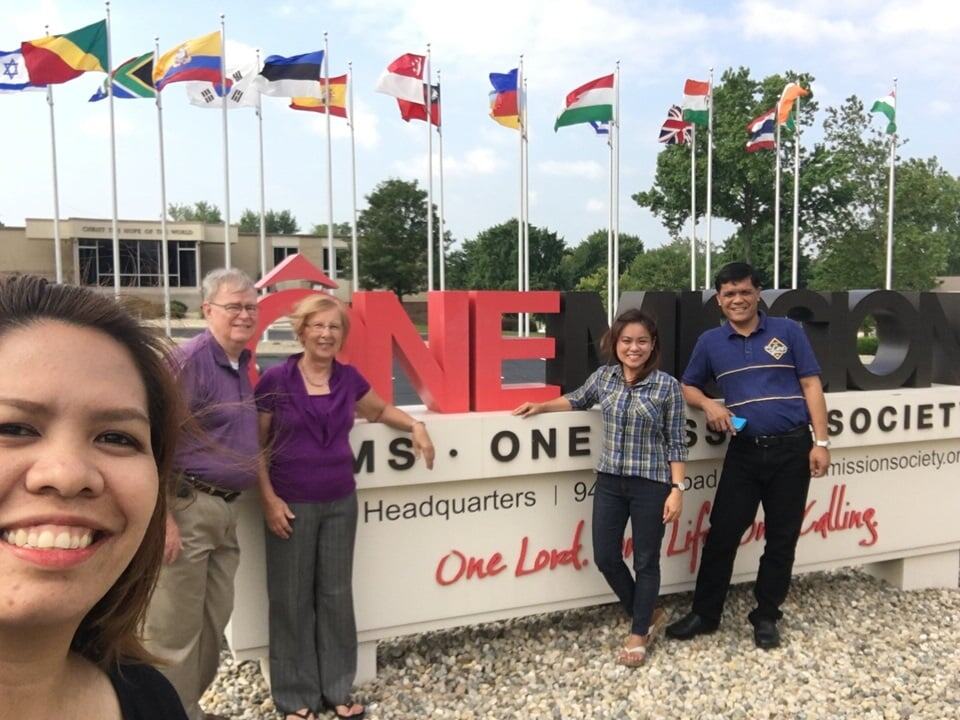
The Juan Project
OMS’s vision is, “Over the next decade, one billion people will have one significant opportunity to hear, understand, and respond to the Gospel of Jesus Christ.” As part of the umbrella of OMS, ECC PH wanted to participate in fulfilling this God-given vision.
In 2016, the itinerant foreign missionaries together with the national leaders of ECC reevaluated whether the vision was happening or not. We acknowledged a shortfall and found two key reasons: (1) Leadership was overburdened limiting growth. We needed to restructure. (2) ECC had done a good job of church planting in the first and second generations; but they were not doing church multiplication. We had to start multiplying leaders and churches.
The Lord gave us a new direction after much prayer. A saturation project was launched on January 20, 2017, called the Juan Project. Juan refers to a Filipino individual and to the Filipino people collectively. It is a vision of gospel saturation which aims to see a church planted in every community called purok, sitio or zone.
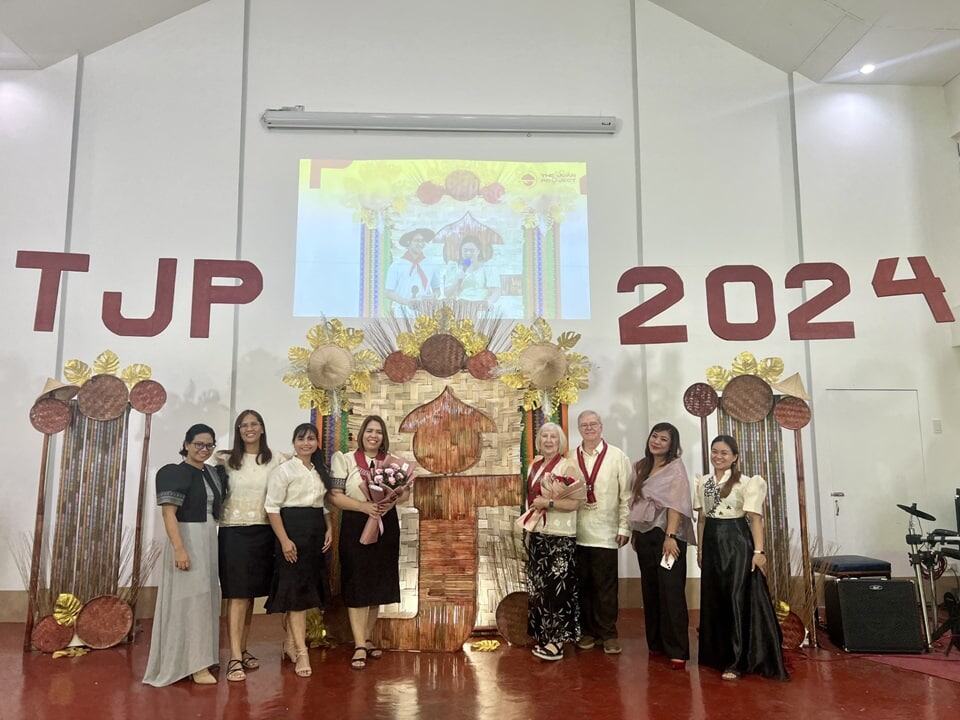
A significant paradigm shift occurred. ECC PH stopped being the church planting team of FECPI. ECC now started coming alongside churches, organizations and associations to train and coach them in church multiplication. ECC’s launching of the Juan Project was a result of the efforts to shift from stage 2 (paternal) to stage 3 (partnership).
ECC PH would maintain existing efforts while concentrating on a few provinces namely Tarlac, Pangasinan, Aurora, Samar and Leyte. Over the next decade, the goal is to plant vibrant, evangelical churches that multiply within these areas. The Juan Project is achieving the vision of planting and multiplying churches that have a global impact, thereby contributing to the “One Billion – One Opportunity” vision.
ECC registered as ECC PH with the Securities and Exchange Commission in the Philippines. It became a non-profit legal entity in the Philippines. While itinerant missionaries coached the leadership, ECC PH began working alongside churches, ministry partners, and organizations by providing vision casting, training, coaching, prayer support, encouragement, and accountability in church multiplication. Much like the transition of ECC PH from paternal stage to partnership stage, the transition from stage 2 to stage 3 of ECC PH in working with churches and organizations in the Philippines was challenging.
ECC PH is committed to church planting saturation so that there is a church in every diverse community of the Philippines. ECC PH is facing this reality and not being hindered by it. Instead, it is bringing unity and encouraging mutuality. It is mobilizing people to join together to work with one purpose – bringing the gospel to every community so that lives will be transformed. This is in line with a key value of Philippine culture – bayanihan.
Bayanihan is a core Filipino concept. It describes “a traditional system of mutual assistance in which the members of a community work together to accomplish a difficult task.”[i] We, Filipinos, like to do things together. The call to be united is what attracts churches and organizations to take part in the Juan Project. The task is difficult, but with mutual assistance, we believe it can be accomplished. As Let Malaluan put it, “It can’t be done by one church or one organization. We need each other and we need to be one as Jesus prayed for the future disciples.”[ii]
Through the Juan Project, ECC PH partnered with like-minded churches, ministry partners, and organizations in Tarlac, Pangasinan, Aurora, Samar, and Leyte. This was stage 1 of mission activity for ECC PH in the Philippines. Stage 2 quickly followed with receptive potential partners through providing vision casting, training, coaching, prayer support, encouragement, and accountability.
Now in the seventh year of the Juan Project, ECC PH is intentionally working on shifting to stage 3 through coaching of partners. In addition, The Juan Project has added five more provinces, namely La Union, Zambales, and Rizal in 2020 and then Camarines Sur and Palawan in 2023. With all these transitions, ECC PH, encourages mutuality among its diverse workers and partners in thirteen provinces.
Aside from being communal, we practice the principle of church multiplication: equip local leaders. These leaders in a province do not need to travel to Manila to be equipped. We do not uproot them from their homes, work, or ministry. We go to them. They also understand the culture and language more than we do, so it is fitting to train them where they minister while immersed in their culture.
Foreign missionaries trained only a few people. Filipinos are intentional and strategic in where and who they equip so that the church multiplication movement will happen more naturally through the local people who speak the heart language. We empower the first batch we equip, so that they will equip others in their location.
“Over 200 partners, across wide geographic boundaries, multiple languages or dialects, the full spectrum of theological positions, and a wide span of ages, gender, and spiritual maturity – ECC Philippines experiences tremendous diversity,” said Larry Freed, the church multiplication coach of ECC PH’s leadership. “But ECC Philippines successfully moves forward toward God’s vision of saturation of the Philippines with the Good News of Jesus Christ through a mutuality based on the grace of God.”
“ECC PH’s DNA centers in such values as shared leadership working together in teams, adding and receiving value from each other, creating a culture of family where everyone experiences belongingness, allowing people to risk and fail, caring and being present for each other. We use practices based on intentionality, coaching, evaluation, and moving forward,” he continued.
“People discover their giftedness and serve in the place where they can best fit and flourish. Conflict is dealt with quickly and in love. We continuously adapt to the changing needs of the community, culture, and ministry as we evaluate our failures, best practices, and challenges. We are a work in progress being molded by the hands of our Lord.”[iii]
We, both the itinerant missionaries and the national leaders, continue to work together in the saturation of the gospel in the Philippines despite the differences in culture, and language. Through regular coaching, mutuality is practiced and is passed on to the local partners of ECC PH
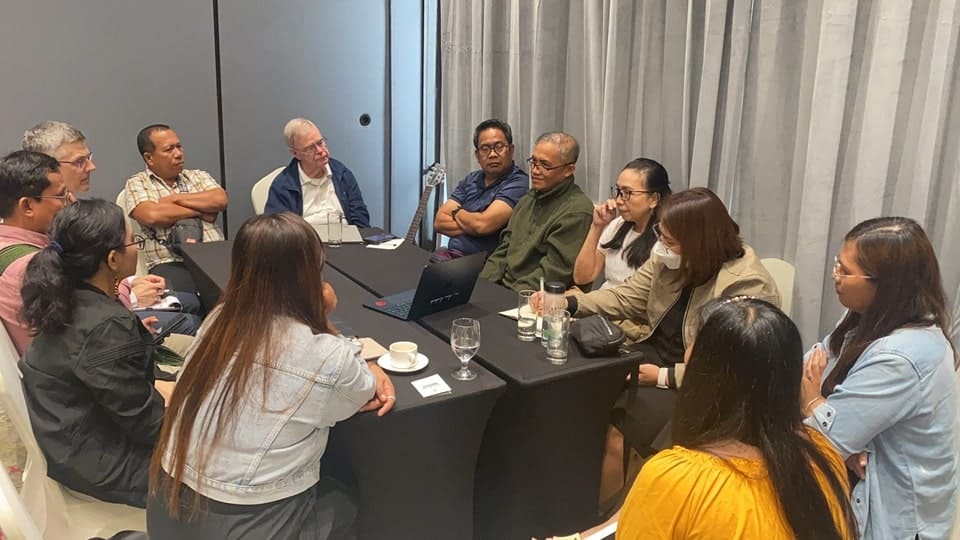
Partnering With Teams in Asia
For many decades, OMS primarily sent missionaries from the United States to the rest of the world. As it expanded, missionaries were also sent from Canada, Australia, New Zealand, and the UK. Yet as the organization pursues a more diverse workforce, we are seeing more and more followers of Jesus sent from anywhere to everywhere. ECC PH, composed of Filipino leaders, is a part of that. It is mobilized to collaborate with other leadership teams in Asia for church multiplication.
Japan
The ECC country coordinator in Japan, who is also a part of the Japan Holiness Church (a denomination OMS planted) visited the Philippines in 2016. He wanted to observe how ECC PH applies train and multiply in church multiplication and have a better understanding of the OMS work in the Philippines through the Filipino people. The team in Japan grew to more than 25 Japanese men and women from different denominations.
They continue to have consultations via Zoom with ECC PH, sharing best practices related to church multiplication. In a recent consultation, the Japanese team was recently challenged to shift their emphasis from focusing on strategy and materials to prayer. They looked at the example of the Juan Project in the Philippines which was birthed and is sustained through prayer.
Hong Kong
Hong Kong Evangelical Church, a non-Chinese congregation planted by an OMS missionary couple, is composed of Filipinos, Spanish-speaking nationals, and French-speaking nationals. Since 2016 they have been trained in church multiplication by ECC PH leaders.
Indochina
The OMS work in Indochina was started by OMS missionaries that partnered with existing churches. Dialogue and consultation began in 2018 between ECC PH leaders and an American missionary working with national leaders in Indochina. Following the example of the Juan Project in the Philippines, in 2020, the team in Indochina launched the same saturation project. In 2022, ECC PH leaders visited the Indochina team together with the OMS American missionary for consultation and encouragement as the Indochina team continues to pursue the saturation project in Indochina.
East Asia
In 2023, ECC PH leaders were invited to co-facilitate with other OMS missionaries from the USA in training East Asian nationals in coaching.
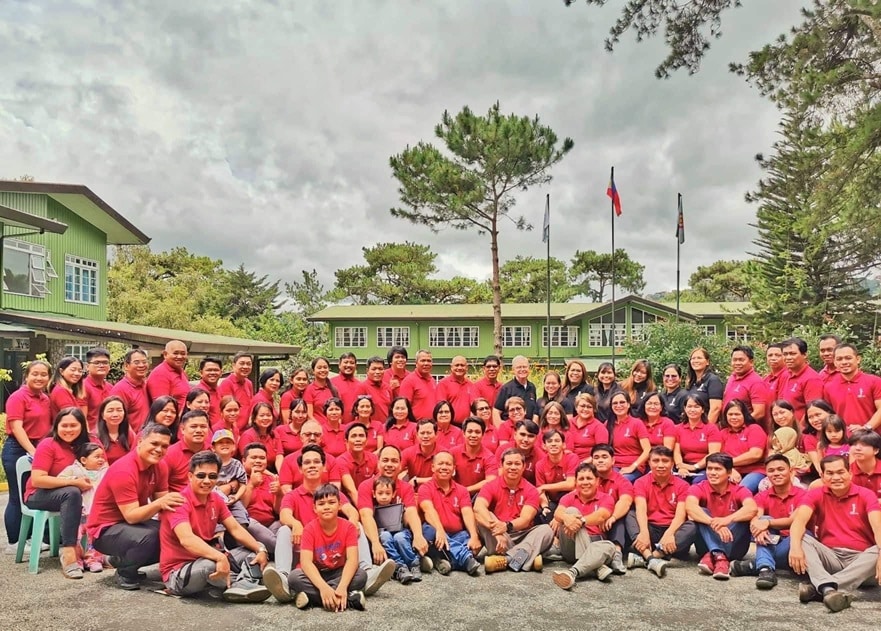
What We Have Learned in Partnership
We use what is understood and embraced by the culture. In sharing the vision of gospel saturation, we used the words that promote collaboration and partnership which are embedded in the culture such as project and bayanihan.
Foreign missionaries freely coached us. Now we freely we provide coaching to local partner churches and organizations and to other OMS fields in Asia. We train leaders while in their own context. The amount of energy to uproot them from their context to undergo training or equipping is the same or even more energy to incorporate them back to where they originated.
The vision of gospel saturation cannot be done alone but it is possible through collaborative efforts of diverse cultures and varying theological inclinations and most importantly by God’s grace.
Amber G. serves at Every Community for Christ Philippines, an organization under the umbrella of OMS Global. She is the training director, coaching training coordinators who are also coaching others in 13 provinces of the Philippines. She has an MDiv from Asia-Pacific Nazarene Theological Seminary.
[i] “Know Before You Go: the Philippines,” National Geographic, accessed March 23, 2024, https://www.nationalgeographic.com/travel/article/partner-content-know-before-you-go-the-philippines.
[ii] Ariane Macalinga Borlongan, “There are 186 languages in the Philippines, not just two!,” The Manila Times, accessed March 23, 2024, https://www.manilatimes.net/2023/06/11/opinion/columns/there-are-186-languages-in-the-philippines-not-just-two/1895506.
[iii] “Number of Provinces, Cities, Municipalities and Barangays by Region as of March 31, 2023,” Department of Interior and Local Government Facts and Figures Details, accessed March 23, 2024, https://www.dilg.gov.ph/facts-and-figures/Regional-and-Provincial-Summary-Number-of-Provinces-Cities-Municipalities-and-Barangays-as-of-30-September-2020/32.
[iv] “Find Churches by Region / Province / Barangay,” Philippine Church Update, accessed March 23, 2024, https://philippinechurches.org/Philippine_Church_Update_Data.pdf.
[v] Ralph D. Winter, “Four Men, Three Eras, Two Transitions,” Perspectives on the World Christian Movement: A Reader,(rev. ed.), (Pasadena: William Carey Library, n.d.), B35-B43.
EMQ, Volume 60, Issue 3. Copyright © 2024 by Missio Nexus. All rights reserved. Not to be reproduced or copied in any form without written permission from Missio Nexus. Email: EMQ@MissioNexus.org.