EMQ » April – June 2024 » Volume 60 Issue 2
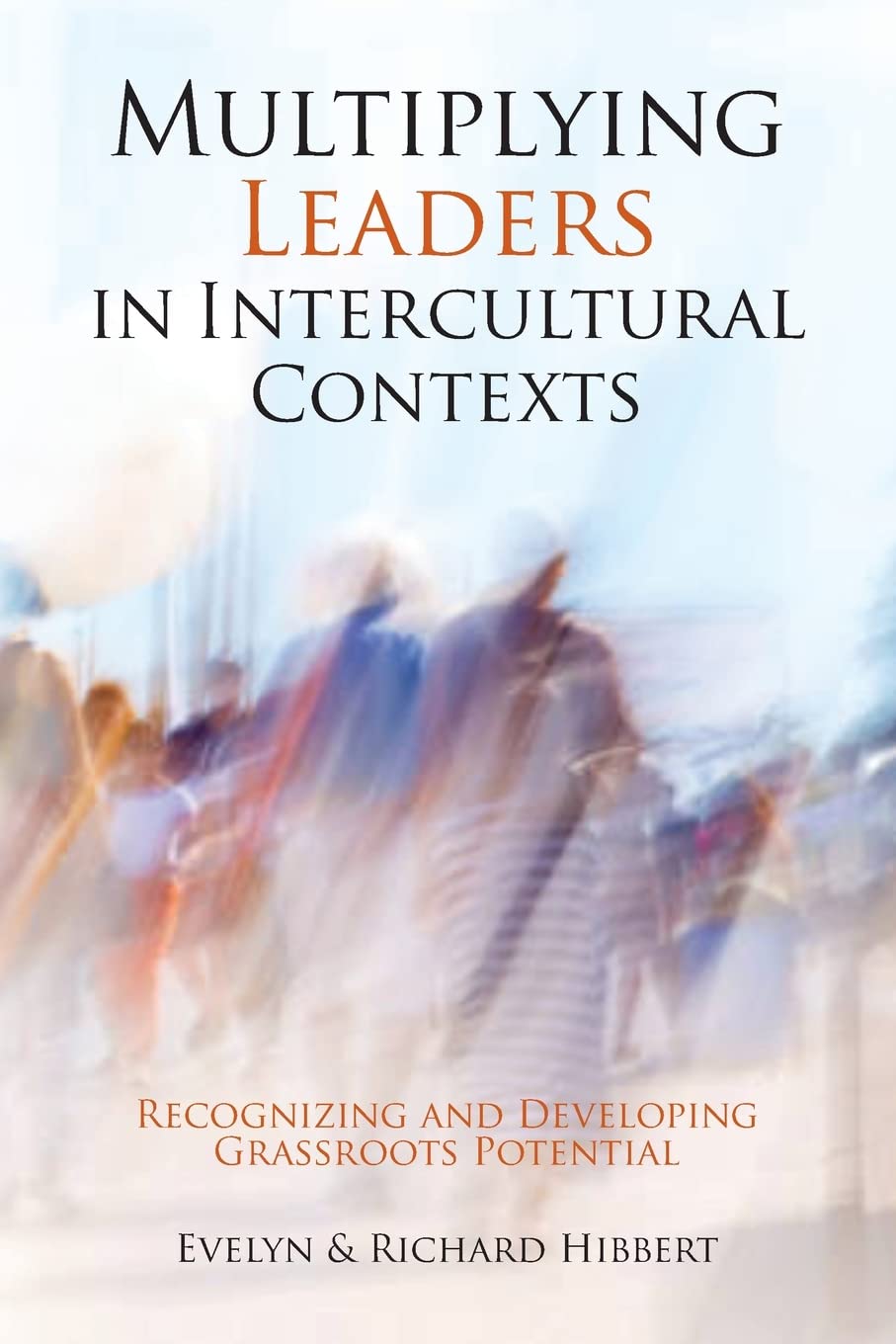
Multiplying Leaders in Intercultural Contexts
By Evelyn Hibbert and Richard Hibbert
William Carey Publishing, 2023
176 pages US$14.99
*As an Amazon Associate Missio Nexus earns from qualifying purchases.
Reviewed by Bob Bagley who is now semi-retired after almost four decades of service with Global Partners in various leadership roles.
My bookcase is loaded with books on leadership development. However, none are like this book. For starters, it is not focused on the development of leaders at the top leadership level of churches or ministries. Instead, it focuses on “grassroots leaders who lead small groups and ministries within a local church” (50). The Hibberts explain that “These leaders are the growing edge of the church. They are learning about and living for Jesus amid normal life” (1).
Rather than present a new program for leadership development, the Hibberts firmly place it within the relational context of discipleship. They repeatedly return to their assertion that leadership development is an outgrowth of discipleship. They insist that “Failures of leadership are more often because of discipling problems than leadership development issues” (41). To that end they assert that “Doing all we can to establish good discipling across the whole church may well be more important than developing leaders.” (139)
The Hibberts nevertheless provide a model for leadership development that they describe as the 4 critical characteristics that need to be strengthened as leaders are developed. They are: (a) community – the context in which leadership occurs, (b) character – growing in Christlikeness, (c) clarity – about the purpose of the community and how to achieve that purpose, and (d) care – strengthening their whole community by enabling members to care for one another (58).
The book begins with an exploration of the dynamics of culture as it relates to leadership and the relationship between disciples and leaders. Then, as the authors move on to discuss biblical leadership principles and the development process, they keep bringing the reader back to the application of the cross-cultural principles. For example, when discussing strengthening the community, they advise, “We should invest time watching and learning how groups in the leaders’ context make decisions. We should mentor and support leaders in healthy, culturally fitting, group decision-making” (83).
I especially appreciated the extensive bibliography provided by the authors to help readers dig deeper into ideas that are particularly intriguing to them.
Missionaries serving in formal leadership training programs may find the book frustrating, but for those serving on the ground, helping to develop churches and leaders at the grassroots level, this will prove to be an immensely helpful guide.
For Further Reading
Dancing between cultures: Culturally Intelligent Coaching for Missions and Ministry by T. S. Horst (Life Development Publishing, 2017).
Leading cross-culturally: Covenant Relationships for Effective Christian Leadership by S. G. Lingenfelter (Baker Academic, 2008).
Intercultural Discipleship: Learning from Global Approaches to Spiritual Formation by W. J. Moon (Baker Academic, 2017).
EMQ, Volume 60, Issue 2. Copyright © 2024 by Missio Nexus. All rights reserved. Not to be reproduced or copied in any form without written permission from Missio Nexus. Email: EMQ@MissioNexus.org.