EMQ » April – June 2024 » Volume 60 Issue 2
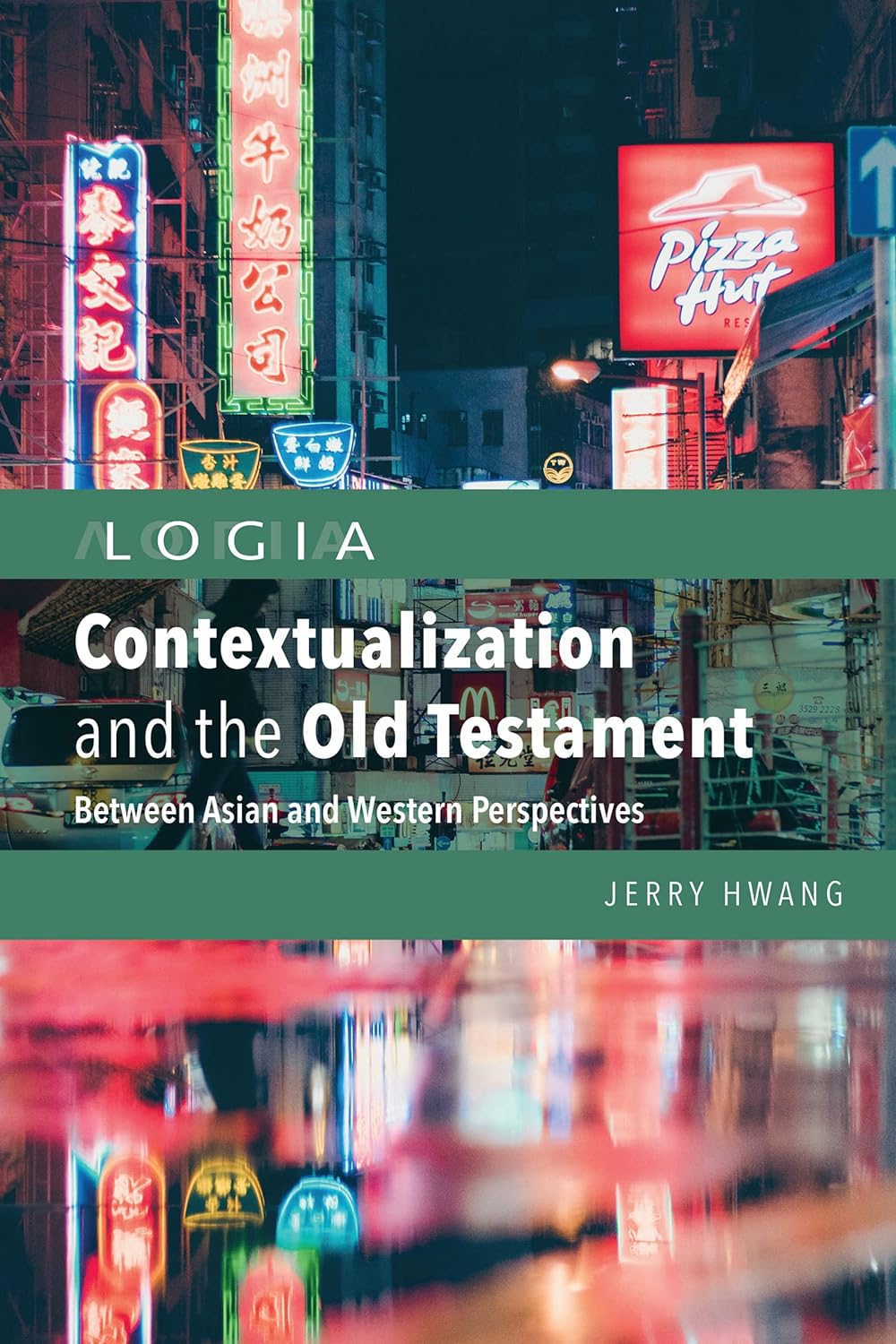
Contextualization and the Old Testament: Between Asian and Western Perspectives
By Jerry Hwang
Langham Global Library, 2022.
264 pages US$28.99
*As an Amazon Associate Missio Nexus earns from qualifying purchases.
Reviewed by Justin Wheaton who is pursuing a master’s degree in Old Testament and semitic languages from Trinity Evangelical Divinity School.
Contextualization and the Old Testament: Between Asian and Western Perspectives by Jerry Hwang is an important read for all students of the Bible, whether they be pastors, seminary students, missionaries, or even academics. This book is needed in the current evangelical climate which often makes the mistake of focusing too much on the New Testament to the detriment of the Old Testament, a reality pointed out by Hwang. Moreover, evangelicalism would suffer from the belief that only Western American/European interpretations of the Bible are correct.
At the beginning of the book, Hwang poses a question that forms one of the main theses of the entire work: can Christian converts from backgrounds such as Hinduism and Buddhism maintain aspects of their culture while still professing faith in Jesus? To answer this question, he does an excellent job of putting into perspective the many differences between Western and Eastern hermeneutics in such realms as views on covenant, honor and shame, official versus popular religion, and more. Interestingly, he demonstrates that in many texts, the views of Ancient Near Eastern peoples are often closer to those of modern-day Eastern peoples.
One of Hwang’s most notable achievements is helping the Western reader understand that American/European biblical interpretations are not the only correct way to both read the Bible and evangelize Asian audiences. This preference of Western missionaries to favor Western perspectives leads people who live in the East to conclude that Christianity is a Western religion incompatible with the thinking of those in countries such as China, Japan, and Korea.
Sadly, Western Christianity is also linked with imperialism in the minds of Asian peoples. Hwang succeeds at establishing that while Christianity is often seen as a Western religion tied with colonialism, it does not have to be. He also succeeds in laying a foundation for understanding that the Bible is viewed through the lens of the culture to which it is given and that this is not necessarily a bad thing.
While Hwang’s work is a must-read, a couple of minor critiques may be offered. The arguments can be a little slow and hard to follow at times. For instance, in his chapter “Divine Translatability and Term Questions for Deity,” in the section addressing whether Yahweh and Allah are the same God, it is not clear how the discussion relates to Eastern perspectives. Furthermore, there also appear to be some inaccuracies in his text regarding the Ancient Near East.
For example, Hwang claims that, like Yahweh, the Ugaritic god El is a transcendent creator. This is incorrect as (a) an Ugaritic cosmogony has not been discovered to discuss El’s transcendence and (b) in the texts that we possess, El appears to be a part of an already created universe. Yahweh, on the other hand, is a transcendent creator, as Hwang rightly notes. This may seem like a small detail, but when performing a comparison between the two deities, every detail matters.
For Further Reading
Contextualization in the New Testament: Patterns for Theology and Mission by Dean Flemming (IVP Academic, 2005).
Scripture and Its Interpretation: A Global, Ecumenical Introduction to the Bible by Michael J. Gorman (Baker Academic, 2017).
EMQ, Volume 60, Issue 2. Copyright © 2024 by Missio Nexus. All rights reserved. Not to be reproduced or copied in any form without written permission from Missio Nexus. Email: EMQ@MissioNexus.org.