EMQ » April–July 2024 » Volume 60 Issue 2
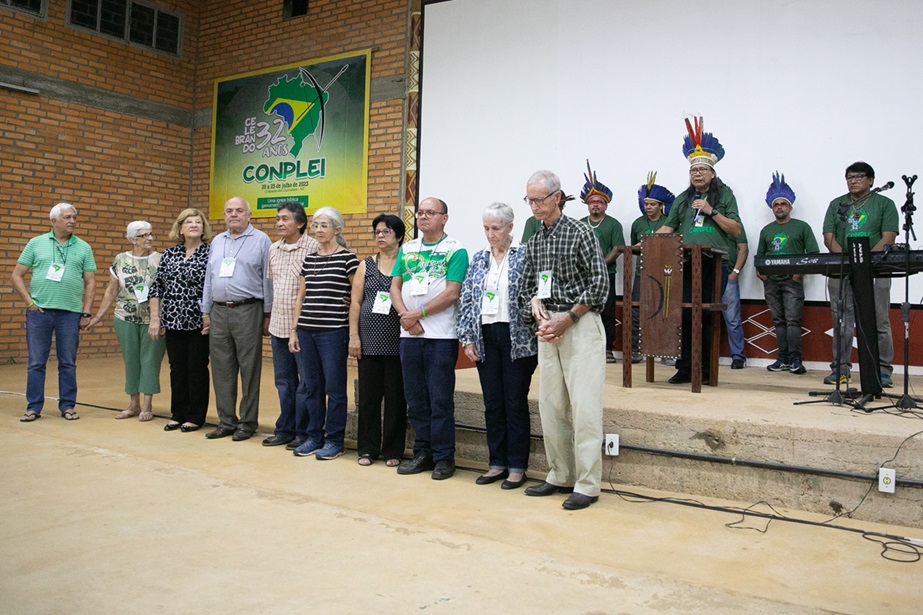
Summary: Foreign missionaries arriving to serve in the Amazon and lowland region of South America are entering a different mission context than 20 years ago or even 10. Capable and wise Indigenous Christian leaders have a significant presence. Yet while the role of foreign missionaries is different, there is still a place to serve.
By Chris and Tina Ferry
Foreign missionaries continue to serve in the Amazon and lowland region of South America, and new missionaries arrive daily. Typically sent by Western churches and mission organizations, they arrive eager and committed to make a positive impact. Many individual churches are also directly sending and supporting their missionaries which is admirable church missions engagement!
However, the realities of today’s Indigenous church in this region are often not fully understood by those coming to minister. While tribes still exist without external contact or a complete grasp of the gospel, foreign missionaries aren’t the sole believers in the Amazon region. Capable and wise Indigenous Christian leaders comprise a significant presence in the area. The unique and crucial role foreign missionaries continue to hold in missions in the Amazon and lowland region of South America remains important. Yet to fulfill the Great Commission in this region, foreigners need to participate in a different way.
Journeying Together
Previously, foreign missionaries set the pace, cast the vision, and evaluated the impact. That work helped give birth to a growing Indigenous church. Today’s tribal church leaders are in communion with the Most High, meditating on the Word, and equipped to cast vision, set the pace, and assess genuine impact.
In this season, healthy foreign involvement looks like accompanying and journeying with emerging tribal leaders. It’s about walking the path together, standing by to support in challenging and confusing times as they faithfully and sacrificially serve their people. Accompanying requires asking strategic questions and attentively listening. Its about seeing tribal leaders and tribal churches as equal collaborators, not employees on a project.
As foreign missionaries in this context, we must clothe ourselves in humility as servants aligned with our tribal co-laborers and focus on quality and sustainability over quantity. Our Indigenous brothers and sisters respectfully ask us to plan collaboratively with them and to join them while the vision emerges from within the tribal church and its leaders. Because the way foreign and Indigenous leaders think and communicate is different, decisions and tasks may take longer and be less efficient. But our patience with this process grants Indigenous leaders ownership of projects.
Tribal leaders need to be involved from day one, and together we need to establish deep, long-term partnerships characterized by mutual submission, appreciation, gentleness, and respect. To do this well entails trusting that the Holy Spirit speaks and reveals his will not only to us but also to tribal peoples. This also means that we trust that the Holy Spirit will empower and equip the tribal church to walk in the direction God leads – not by power or might but by his Spirit. Tucking ourselves behind the curtain and being content with not being the hero shows our support as they step into leadership. It also fosters sustainable and rewarding collaboration.
An active commitment to transparency at every level allows national co-workers to tell us the truth, say no, and to correct us. It looks like listening, evaluating, discussing fears and hopes, planning finances, praying, and perceiving God’s direction – together. It also involves a willingness to stay in the game and weather the bumps even when misunderstandings, missteps, and missed goals challenge unity.
In our own Western contexts, communicating about an approach of mutual submission and demonstrating it helps disciple the Western church into a new understanding of missions engagement. This is imperative because it alleviates external pressures to be the leading missionary and encourages serving in inconspicuous yet crucial ways. It’s a shift from serving up-front to side-by-side. It fully embraces that the church is one body with many equally valuable parts that work together in God’s mission.
Preparing for a New Missions Context
The foreign missionaries of tomorrow are entering a very different missions context than the one from 20 years ago or even 10. As mission agencies and churches prepare new missionaries, it is crucial to prioritize preparedness over speedy deployment.
Grasping the context is the first step in learning to walk alongside and not ahead. Before going, missionaries need to gain an understanding of a region’s political, social, religious and missions history, and current realities. It is also important to study the state of the national and Indigenous church, the breadth and depth of established and emerging missional movements, and the quality and characteristics of collaboration in a region among mission organizations, the national church, and the Indigenous church.
To do this, mission agencies and churches that directly send need to invest time in humbly seeking guidance from people on the ground. Talk with leaders of different denominations, agencies, and the national and Indigenous church. Ask them about what new missionaries need to know before they serve in the region. Find out from local leaders what they hope for from new missionaries and inquire about ways newcomers can best interact and integrate. Encourage a culture of on-going dialogue and active listening that eventually includes new missionaries and continues after they arrive.
Language and cultural training must be prioritized. A common misconception is that once on-site, language acquisition will naturally follow. However, this rarely happens. And while translators can be beneficial as a short-term solution, reliance on them shifts relational connections to another individual, which isn’t conducive to long-term sustainability. Allocating concentrated and intentional time for language learning helps missionaries build their own local relationships and fosters trust. An inability to communicate in the local language hampers these.
Shifting Seasons and Roles
We have learned so much as foreign missionaries accompanying Indigenous and Latino leaders, and we continue to grow and learn. One profound lesson we learned is to recognize shifting seasons. The conclusion of one season doesn’t negate its value. Instead, it signals an opportunity to join the next good work God has prepared. And as we move into what is next, we can praise and value those who served before us acknowledging that we stand on their shoulders. Leaders we work with side-by-side are walking in freedom because of their sacrifice.
While transitions and change can bring grief, new seasons also bring celebration. In the Amazon and lowland region of South America, North American missionaries, agencies, and sending churches have much to celebrate. The existence of the Latin national and tribal churches are the tangible outcome of our collective efforts! Local ownership and their desire to drive local initiatives is also something to celebrate.
Yet our work as foreign missionaries is not complete. We have a new role in this fresh season. To nurture unity within the body of Christ, we must mutually honor and respect each other while we embrace this new season and role.

Chris and Tina Ferry (chris.ferry@alteco.org, tina.ferry@alteco.org) serve as co-executive directors of ALTECO (alteco.org) and members of the Three Waves Movement (movimientotresolas.org) leadership team in South America. They advocate for collaborative efforts among local churches and NGOs, believing that fulfilling these needs requires collective partnerships. Chris and Tina work to catalyze collaboration among organizations, aiming to shift from simply doing for to doing with tribal communities.
EMQ, Volume 60, Issue 2. Copyright © 2024 by Missio Nexus. All rights reserved. Not to be reproduced or copied in any form without written permission from Missio Nexus. Email: EMQ@MissioNexus.org.