EMQ » April–July 2024 » Volume 60 Issue 2
Summary: Despite immense challenges and forces of evil that worked to destroy our culture, my family stands as a testimony of people who served God through our culture. Through many days of darkness, they carried gospel light to my people – the Wichita. Today, I continue in their legacy, facilitating the engagement of Native American churches in global mission.
By Derek Ross
In a small town, 40 people gather in a church to celebrate the life of a church member who made their heavenly journey. A leader quietly prays in English, the common language in the room. Then people begin to sing hymns one by one in their own languages as they feel moved to do so. After a period of silence, one stands and sings, “Nee Wah Sta Wah, Wah Nits o Kaw.” Several join in. They sing hymns in their own languages. The next song begins in another language, and later another and another.
But who are these people, where do they come from, what languages are they speaking, and how long have they lived where they are? Is this a church of refugees or immigrants from other lands?
Let me reveal the answers.
This was a funeral for a member of my family who recently passed away. The songs were in my language – Wichita[i] – as well as in Choctaw, Kiowa, Cheyenne, Muscogee, and Comanche. All of us are from tribes that have lived in this land we now know as the United States of America for thousands of years.
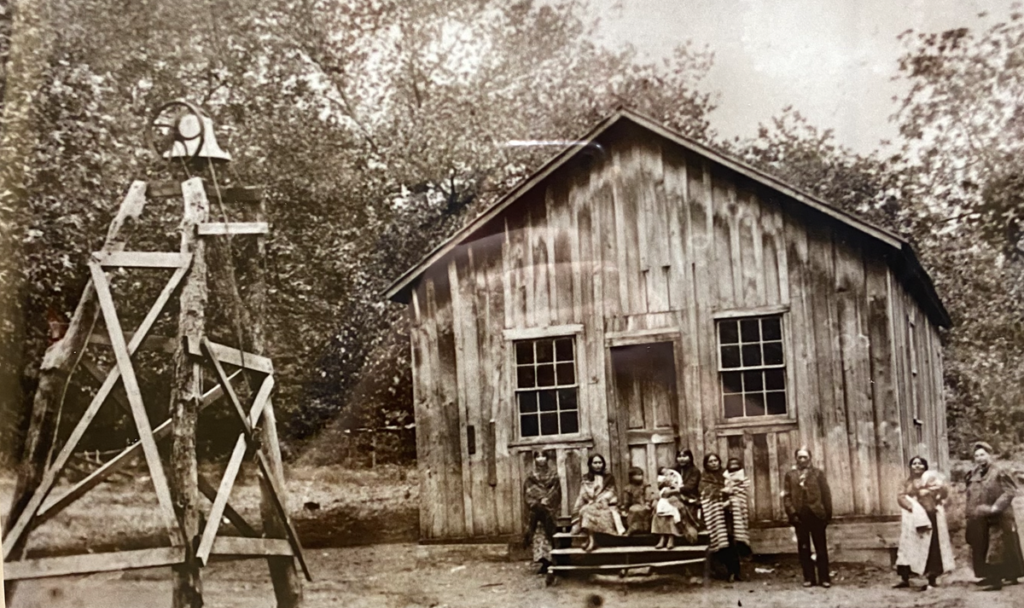
The church is the Rock Springs Indian Baptist Church in Anadarko, Oklahoma – the church where I grew up. It was the first Baptist church among Plains Indians in the US, and it was planted 150 years ago (est. 1874) by Rev. John McIntosh, a missionary from the Muscogee Nation.[ii]
Jesus said, “Be my witnesses in Jerusalem, Judea, Samaria, and the ends of the earth.” While some missions are destinations to be traveled to, we were the ends of the earth right here in the US.
The People Groups of the US
Native American tribes are sovereign nations within the boundaries of what is now the United States. The federal government recognizes 574 American Indian Tribes[iii] as well as 400 more non-recognized tribes.[iv] We once spoke hundreds of languages. Today, of the more than 200 Native American languages documented in the Ethnologue, most are extinct or endangered.[v]
The Wichita and Affiliated Tribes (Waco, Tawakoni, Keechi), number 3,700 and comprise one of the federally recognized tribes. The Wichita lived in and controlled areas from Waco, Texas to around Kansas City, Kansas for more than a thousand years,[vi] perhaps even several thousand years. Archeological research in Wichita, Kansas shows that the Wichita Tribe might have had a population of 200,000 people prior to their first contact with Europeans in 1541.[vii]
Native American tribes, including my community – the Wichita – are the Indigenous peoples of this land. But after European expansion, we became like immigrants. My ancestors did not have to live in a faraway place to struggle through adapting to a new culture. It came to us.
And when the US was a new nation, we were not citizens. While some Native Americans received citizenship through treaties or military service as early as 1817, citizenship was not granted to all Native Americans until 1924. Yes, that’s correct. This year, 2024, is only the 100-year anniversary of all Native American being granted US citizenship.[viii]
Imprints of God’s Truth
Tribes have oral stories from time immemorial that mirror biblical narratives. In 1903 anthropologist George A. Dorsey collected several stories from people in my family. One that he documented was “The First Creation.” Here is an excerpt:
“In the time of the beginning there was no sun, no stars, nor anything else as it is now. Time passed on. Man-never-known-on-Earth (Kinnekasus) was the only man that existed, and it was he who created all things. When the earth was created it was composed of land and water, but they were not yet separated. The land was floating on the water, and darkness was everywhere. After the earth was formed, Man-never-known-on-earth made a man whose name was Man-with-the-Power-to-Carry-Light (Kiarsidia). He also made a woman for the man, and her name was Bright-Shining-Woman (Kashatskihakatidise).”[ix]
This sounds remarkably like portions of Genesis 1–2.
Another Wichita myth that Dorsey documented is the “Deluge and Repeopling of the Earth.” It goes like this:
“In the times of this story there were many villages and many people, some good and some bad. …Things were going wrong, for there was no such thing as death. …The prophet was told by a voice from above that he had a work that was soon to begin, for everything was going wrong; that he was to begin a work; that things were getting worse. The prophet was told to get a tall cane, and place in between the joints all kinds of seeds, grass, corn, etc., using joint after joint of the cane. Then he was told to select in pairs those animals he thought best should be saved. …
He was then told to go to the north where he would see someone standing; that he should tell him that he had everything ready, and beg him to go ahead with his work and do the rest. …when the time should come there would be a sign indicating that dire things were going to happen…. The prophet called into the cane. The people wondered what was the reason for this.
Finally the animals came, and the people began to find out what was about to happen. They began to cry and to run for the mountains and for other places, but it did them no good. After the birds and animals had passed there came a flood, and the water as all over, and it got deeper and deeper. The bad people were drowned and everything else that was not in the cane.”[x]
Notice the similarities with the story of Noah and the great flood we find in chapters 6–8 of Genesis? These are imprints of biblical truths found in the oral history of my people. They remind me that God has been working in the hearts of Native American people for generations.
Destruction and Decimation
The forces of evil have also been active in the Native American story and have worked against us following Jesus. Between 1492 and 1900, it is estimated that 12 million Indigenous people died in what is today the United States.[xi] European explorers and colonial governments, and then later the US government, employed a number of strategies to destroy Native cultures and decimate its peoples.
Their actions were based on a series of papers (papal bulls) issued by the pre-reformation church that became the legal framework for the doctrine of discovery, the basis of manifest destiny, and the source of a cultural ideology. They established that lands discovered by Christians and occupied by non-Christians could be taken by Christians, and the “soulless” people in them could be subjugated and enslaved.[xii]
The doctrine influenced interpretations of “dominion” from Genesis. It also rooted ideas into Luke 11:2 and Matthew 28:18–20, which were contextualized to the European culture in that time-period namely that these passages command an expansion of an earthly and physical Christian empire (Christendom). This then directly linked to manifest destiny – expanding the Christian global empire by conquering more land from non-Christians was a God-ordained right.[xiii]
The impact of these ideas shows up in places like the US Declaration of Independence. We know these famous words, “We hold these truths to be self-evident, that all men are created equal, that they are endowed by their Creator with certain unalienable Rights, that among these are Life, Liberty and the pursuit of Happiness.”
What many might not know is that further down in our Declaration there are 27 points ending with the following: “He has excited domestic insurrections amongst us, and has endeavoured to bring on the inhabitants of our frontiers, the merciless Indian Savages, whose known rule of warfare, is an undistinguished destruction of all ages, sexes and conditions” (emphasis mine).[xiv]
“Merciless Indian Savages” – the first time I read that I could not believe that those words were written by our founding fathers in the Declaration of Independence. But this is not surprising when we consider that a prevailing cultural idea at that time was that Native people were ‘soulless’ non-Christian people whose existence impinged the expansion of the Christian empire.
In 1823 the US Supreme Court under Chief Justice John Marshall decided that American Indians could not own land. The decision was based on the doctrine of discovery.[xv] Seven years later, Congress passed the Indian Removal Act, which authorized the US to set aside lands west of the Mississippi River for tribes.[xvi] Another act, passed in 1834, created what became known as “Indian Territory” – which included modern-day Oklahoma.[xvii] For my tribe, this was Wichita Land.
In 1856, during the administration of the 14th US President Franklin Pierce, the US Attorney General Caleb Cushing wrote: “The fact, therefore, that Indians are born in the country does not make them citizens of the United States. The simple truth is plain, that Indians are subjects of the United States, and therefore are not, in mere right of home-birth, citizens of the United States.” [xviii]
Laws and policies prohibited Native Americans from becoming citizens because they were considered “subjects” or “wards” of the government.[xix] The federal government then established the Courts of Indian Offenses to prosecute Indians who participated in traditional ceremonies in 1883. The purpose of this was to erase the cultural identity of American Indian tribes.[xx]
Between the 1870s and the turn of the century, the federal government forced Indigenous people to take English names.[xxi] Our people took these names for government record purposes but still used our Wichita names and spoke only our Wichita language. Keep in mind that the US was at this point only one hundred years into its life.
In 1887 the federal government created the Dawes Act, a policy focused specifically on breaking up reservations and tribal lands by granting land allotments to individual Native Americans. Some believe the purpose was to erase community.[xxii]
From the mid- to late-1800s until the mid-1900s, the federal government removed thousands of Native American children and placed them into government, mission, and church-run boarding schools. The goal was assimilation. Children were not allowed to speak their native languages or participate in their cultures.[xxiii]
This feels like a hopeless history. In our Wichita history, we title the years 1820–1934 “The Days of Darkness,” and they were.[xxiv] I served in the United States Marines, I love God and this nation, and I’ve been a missionary in the Philippines for 20 years. When I think about missions through the filter of what happened to our Indigenous people of the United States, I am shocked. It leaves me wondering, “Where were God’s people?”
Gospel Encounter
Yet the Bible is filled with narratives of people enduring tremendous pain and hardship that God continued to pursue and reach. In my small group, recently, I was reminded that I have a choice to make when I examine the sinful history of the American story and my Indigenous people. I can painfully recall it or somehow see it with anticipation of the forgiveness that was coming for me… and others.
In 1855, two children were born in Waco in what is now Texas – a boy, Ay-ha-dad, and a girl, Tun on tah sah sis. On August 1, 1859, they and the rest of the Wichita in Waco were forcibly removed. Their families settled a few miles north of Anadarko, Oklahoma in the small town of Gracemont. When they grew up, they married. In 1874, they joined a Muscogee Nation missionary and the community of Native people who began the Rock Springs Indian Baptist Church.
In 1877, they had baby girl Wah-Kits, also called Its-kid-ah-hiss (Suddenly She Stands Up). She and the next generations of my family all stayed at that church. And God worked through them to reach our people and make disciples.
In 1899, my great-grandmother, Bertha Ross (Ka·santatiyeh ‘following with a scalp,’ nicknamed Tikamrnac, ‘grinding corn’) was taken by force from her home at 9 years old and sent to the Riverside Indian School – a residential board school in Anadarko, Oklahoma. But she returned. She taught in Rock Springs Bible classes and in church services, and she often served as the Wichita interpreter at the church.
My grandmother, Ruby Warden (born 1899), was a part of the last generation of fluent Wichita speakers. She wasn’t born a US citizen but counted her citizenship in heaven (Philippians 3:20).
People from my family over a 150-year period are all buried in the Rock Springs Indian Baptist Church cemetery. While the government worked to prohibit our culture, my family stood as a testimony of people who served God through our culture. Despite many days of darkness, they carried gospel light to my people.
From the Wichita to the Nations
I came to acknowledge Christ as my savior in August 1974 at Indian Falls Creek (indianfallscreek.org) in Davis, Oklahoma. This “camp for the nations” was started in 1947 by the Home Mission Board of the Southern Baptist Convention. Today, it hosts over 3000 campers every year who represent over 50 tribal Nations from across North America and over 250 churches, including mine.[xxv]
Fast forward to 2003. My wife and I, along with four children under 6 years old, committed to two years as IMB missionaries in Manila, Philippines. Two years turned into 18 and five children. Our Philippine mission (bridgingthegap-asia.org) of equipping churches and reaching students in public schools had an annual reach of 100,000 students in public schools across the Philippines and a reach of approximately 10 million people annually through the media. By 2021 we transitioned our work to equipping short-term mission teams from Native American churches from the United States.
Today, we live in Waco, Texas, and I travel back and forth between the US and the Philippines. My time in the United States has been focused on doing discipleship among Native American churches. I am also helping equip Native American churches in Oklahoma to participate in our mission in Manila and other places around the world.
I take short-term teams of Native Americans to Manila. I share about missions opportunities at Native American colleges and events, and I am exploring partnerships that may lead to more missions opportunities for Native Americans. Last year I became part of a small group of Native and non-Native leaders who are doing further research together on opportunities to equip Native American church leaders for missions.
You may have heard stories of people who forgave those who committed terrible actions that harmed them personally. When you see that type of forgiveness, it almost appears like a crime. It’s apparent that something amazing has happened. That is what happened to my family and to me. And this is the hope I have for all Native American people.
Our Philippine mission continues today. Learn more: bridgingthegap-asia.org
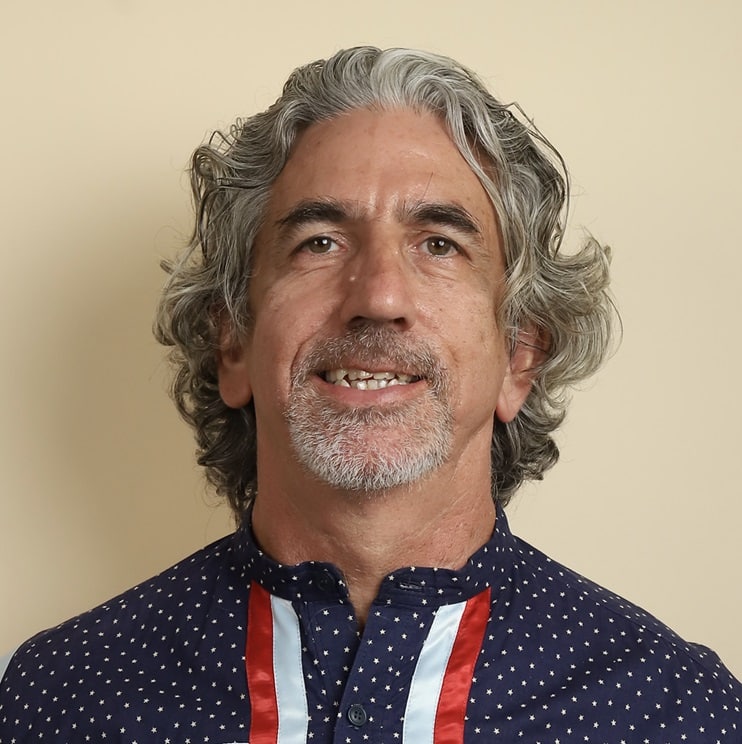
James ‘Derek’ Ross (rossmedinatx@hotmail.com) was born in Anadarko, Oklahoma. He served in the US Marines. Then he, his wife, and family served as missionaries in the Philippines for 20 years. After returning to the US, they moved to Waco, Texas. God has since opened doors for him to share about his mission at colleges and seminaries. Derek also works as a consultant to the Baylor University Mayborn Museum, works with city leaders in Waco, and serves on several boards.
[i] Listen to a recording of “Waco” being pronounced in its original language – Wichita: https://wichitatribe.com/wp-content/uploads/2023/09/waco.mp3.
[ii] “Rock Spring Baptist Church,” Exploring Oklahoma History, accessed February 07, 2024, http://www.blogoklahoma.us/place.aspx?id=464.
[iii] “Tribal Leaders Directory,” U.S. Department of the Interior, Indian Affairs, accessed February 07, 2024, https://www.bia.gov/service/tribal-leaders-directory.
[iv] “Indian Issues: Federal Funding for Non-Federally Recognized Tribes,” U.S. Government Accountability Office, accessed February 07, 2024, https://www.gao.gov/products/gao-12-348.
[v] “United States,” Ethnologue, accessed February 07, 2024, https://www.ethnologue.com/country/US/. “Preserving Native Languages: No Time to Waste,” US Department of Health and Human Services, Administration for Native Americans, accessed February 07, 2024, https://www.acf.hhs.gov/archive/ana/preserving-native-languages-article.
[vi] “Wichita,” The Encyclopedia of Oklahoma History and Culture, Oklahoma Historical Society, accessed February 07, 2024, https://www.okhistory.org/publications/enc/entry.php?entry=WI001.
[vii] F. Smith, “Wichita Locations and Population, 1719-1901,” Plains Anthropologist 53, no. 28 (2008): 407–414.
[viii] “Frequently Asked Questions,” US Department of the Interior – Indian Affairs, accessed February 15, 2024, https://www.bia.gov/frequently-asked-questions.
[ix] George A. Dorsey, “The First Creation,” in The Mythology of the Wichita (Carnegie Institution of Washington, Washington, DC, 1904), 25.
[x] George A. Dorsey, “The Deluge and Repeopling of the Earth,” in The Mythology of the Wichita (Carnegie Institution of Washington, Washington, DC, 1904), 290–294.
[xi] David Michael Smith, “Counting the Dead: Estimating the Loss of Life in the Indigenous Holocaust, 1492-Present,” Proceedings of the Native American Symposium 15 (2017), 1-31, https://www.se.edu/native-american/wp-content/uploads/sites/49/2019/09/A-NAS-2017-Proceedings-Smith.pdf.
[xii] Geraldine Patrick Encina, “The Vatican formally renounces the Doctrine of Discovery in support of Indigenous- rights.” One Earth, accessed January 2, 2024, https://www.oneearth.org/vatican-renounces-doctrine-of-discovery-in-support-of-Indigenous-rights/. “What the Repudiation of the Doctrine of Discovery Means for Indian Country,” Governing for the people making it work, accessed February 07, 2024, https://www.governing.com/context/what-the-repudiation-of-the-doctrine-of-discovery-means-for-indian-country.
[xiii] Dr. Terry Le Blanc, “Indigenous People, The Doctrine of Discovery, Colonial ‘Law’ and the Gospel,” lecture, Indigenous Andragogy, CHED IS13, Naiits: An Indigenous Learning Community (July 2021).
[xiv] “Declaration of Independence: A Transcription,” National Archives, accessed February 07, 2024, https://www.archives.gov/founding-docs/declaration-transcript.
[xv] “Johnson & Graham’s Lessee v. McIntosh, 21 U.S. 543 (1823),” Justia US Supreme Court, accessed February 7, 2024, https://supreme.justia.com/cases/federal/us/21/543/.
[xvi] “Indian Removal Act: Primary Documents in American History,” Library of Congress, accessed February 7, 2024, https://guides.loc.gov/indian-removal-act.
[xvii] “Indian Territory,” The Encyclopedia of Oklahoma History and Culture, Oklahoma Historical Society, accessed February 07, 2024, https://www.okhistory.org/publications/enc/entry?entryname=INDIAN%20TERRITORY.
[xviii] Dana Hedgpeth, “‘Jim Crow, Indian style’: How Native Americans were denied the right to vote for decades,” The Washington Post, November 1, 2020, https://www.washingtonpost.com/history/2020/11/01/native-americans-right-to-vote-history/.
[xix] Andrew Boxer, “Native Americans and the Federal Government,” History Today, September 2009, https://www.historytoday.com/archive/feature/native-americans-and-federal-government.
[xx] “1883: Courts of Indian Offenses established,” Native Voices, U.S. National Library of Medicine, accessed February 07, 2024, https://www.nlm.nih.gov/nativevoices/timeline/364.html.
[xxi] “Assimilation and Indian Names,” Native American Netroots, August 7, 2011, http://nativeamericannetroots.net/diary/1028.
[xxii] “Dawes Act (1887),” Milestone Documents, National Archives, accessed February 07, 2024, https://www.archives.gov/milestone-documents/dawes-act.
[xxiii] Olivia B. Waxman, “The History of Native American Boarding Schools Is Even More Complicated than a New Report Reveals,” Time, May 17, 2022, https://time.com/6177069/american-indian-boarding-schools-history/. “US Indian Boarding School History,” The National Native American Boarding School Healing Coalition, accessed February 07, 2024, https://boardingschoolhealing.org/education/us-indian-boarding-school-history/.
[xxiv] “Days of Darkness: 1820-1934,” Wichita and Affiliated Tribes, accessed February 07, 2024, https://wichitatribe.com/culture/history/days-of-darkness-1820-1934/.
[xxv] “About Us,” Indian Falls Creek, accessed February 07, 2024, https://www.indianfallscreek.org/about-us.
EMQ, Volume 60, Issue 2. Copyright © 2024 by Missio Nexus. All rights reserved. Not to be reproduced or copied in any form without written permission from Missio Nexus. Email: EMQ@MissioNexus.org.