EMQ » January–April 2024 » Volume 60 Issue 1

Summary: Polycentric mission brings the joy of multiplied expansion, and at the same time, the challenge of how to bring together the wealth of diverse cultural perspectives on missions theory and practice. In a world where mission is not only “from everywhere to everywhere,” but “from everyone to everyone,” missions training is evolving to respond to these joys and challenges.
By Mark Hedinger and Kate Wiseman
Jesus told Peter (and us) that he would build his church, and nothing would prevent him from accomplishing that goal (Matthew 16:18). In Revelations 7:9, the apostle John explains that at the end of the age, people from “every tribe, tongue, people and nation” will give Christ the praise and worship he deserves.
In Matthew 28:18–20, Jesus says that God will use people in the process of reaching all those peoples and languages. He is at work in and through his people to bring about the purposes that he has in mind. But what God didn’t tell us was how he was going to do this. We do see small glimpses, however, of how he is bringing these plans to fruition. In the world of missions, one way we can see this is in polycentric mission.
Introducing the 2016 World Evangelical Alliance Mission Commission (WEA MC) Global Consultation, Bertil Ekstrӧm and David Ruiz foresaw and captured well what polycentric mission entails:
“In a polycentric world of mission, the many kinds of bearers of the Gospel are only important because of the message they carry and bring to other places. Going from East to West, from South to North, or just circulating in the same region, the multiple and diverse missional structures have all the same challenge: to bring hope to a chaotic and needy world with an integral Gospel in a relevant way for the people of our days. ‘From everywhere to everywhere’ may be a worn-out expression but it is more reality today than ever before. In the 21st century, Mission has many centers and goes from ‘all nations to all nations.’[i]
Seven years later, at their 2023 Global Consultation, the WEA-MC expanded on that picture, using the image “of pebbles dropped into a pond which create ripples that spread from multiple impact points (centres) and intersect with one another. Where gospel impact is felt in one area (the pebble dropping), the effects ripple out, and as they interact with ripples from other centres it causes waves (points of difference, tension and conflict). So we get, “local impact, ripples and waves” in a polycentric (multiple centres [sic.] of authority) world.”[ii]
Polycentric mission brings the joy of multiplied expansion, and at the same time, the challenge of how to bring together the wealth of diverse cultural perspectives on missions theory and practice. In a world where mission is not only “from everywhere to everywhere,” but “from everyone to everyone,” missions training is evolving to respond to these joys and challenges.
The Context of Polycentric Mission Training
The ripples of gospel activity extending from these diverse, multiple centers are not happening in a vacuum. They are part of an evolving cultural moment across the globe that is shaped by factors such as rapidly changing technology, educational approaches, and communication.
Technology has allowed training to shift from a pre-field model to an on-field model. There are now numerous ways to learn, present ideas, develop skills, and shape attitudes within the worker’s context, aided by timely feedback and support – even from a distance. Such digitally-enhanced training was not available even a few years ago. Furthermore, worldwide, we see a growing demand for continuing education. This, too, is being facilitated by technology.
Next, the internet has increased access to ideas but has also increased the need for discernment. Many of those ideas are excellent; but many are horrible. The environment in which we see polycentric mission growing is one that needs careful monitoring. And while English is still a valued common language within the mission world, many new polycentric sending structures are operating increasingly in home languages.
Finally, an increasing awareness of the physical and emotional effects of stress and trauma, as highlighted by the COVID-19 pandemic, emphasized the need for effective member care. Around the world, sending organizations are now offering training in member care issues such as mental health, resilience, team dynamics, Third Culture Kid (TCK, missionary children) health, TCK education, and the care for aging parents.
The Blurring Lines of the Past
We have much to celebrate about the mission training of the past. It equipped thousands of the Lord’s workers for his service. Yet while it was built on sound biblical and pedagogical foundations, in many cases, an emphasis was placed upon acquiring cognitive skills and theoretical understanding, thus demonstrating a western perspective.
Personal and spiritual formation, or engaging in practical, hands-on application within the intended, or potential ministry context were typically secondary. It was often assumed that theoretical ideas presented in a classroom in the missionaries’ homeland or a training center within a different culture would lead to effective practice and resilience in a future host culture.
In our polycentric world, however, mission training needs to be flexible about place, time, and process. This recognizes the diverse learning preferences shaped by multiple cultural backgrounds.
We are now witnessing a variety of missions training approaches, including vastly different ones, merging together. Traditional boundaries are blurring, and new relationships are clearing the way for new opportunities and approaches. This is happening in several ways.
Training timelines are becoming less rigid; pre-field, on-field, and post-field training is becoming continuous, lifelong equipping and learning. Short-term and long-term missions are harder to distinguish as repeat trips across borders become common practice.
Traditionally, a teacher was often thought of as the sage on the stage. But now, a teacher is more like a guide on the side. They are becoming facilitators, coaches, and mentors. Trainees are moving from being dependent learners to being independent self-directed learners. They can identify the gaps in their understanding that need to be filled so that they can be equipped with the skills and resources they need to engage in God’s mission to his diverse world.
Formal and non-formal training approaches are moving closer together, reducing the divide between theoretical learning and learning through practical application, and between academics and practitioners. The division between competency–based and accredited training is breaking down as competency-based programs become increasingly recognized and validated.
As technologies develop, the traditional choice of face-to-face training in preference to online training is less clearly defined. Video conferencing and other technologies now offer opportunities to create digitally enhanced, hybrid learning communities that bring together the best of both worlds.
These changes bring great opportunities for partnership and collaboration. They also encourage honoring different cultural perspectives. This is imperative if we are to serve together as a diverse team, united by a common vision.
More Questions than Answers
As we reflect upon the rich conversations that we have had with fellow trainers around the world, we find ourselves with more questions than answers about what polycentric mission training can and will look like in the coming days.
What are the distinct characteristics of sending culture 1, 2, etc.? What about the host culture? What are their cultural patterns? What is God doing in their midst? In this polycentric mixture, how do they each see one another?
As new sending nations “go to the nations” what will polycentric mission training look like for expats returning home, or children of expats returning to their parents’ homeland? After being out of their home culture, possibly for years, what training will serve them well? How do we equip the TCK’s to adapt to a culture that is called home but is not their own? What assumptions might they have about their own cultural fit?
How will we engage with the needs of those engaged in diaspora mission? How do we train a university student or a construction worker who returns home as a new Christian with a heart to bring the gospel into their community? How can we help churches disciple these new Christians and support them? How do we train these and other returning diaspora to take their place in the polycentric mission world?
How do we train those called to bring the gospel to their families, friends, and neighbors? When the call is not to go but to stay, how do we equip them for intercultural ministry at home?
We do not have answers to these questions, but we know that God has a heart for the nations that is driving this new era of polycentric mission training. We can be guided by his Word and the Holy Spirit as we move further into a world in which diversity and unity are both central to the building of the kingdom.
Training Missionaries for a Polycentric World
Given the diversity of this glorious polycentric world of mission, what are the values and principles that we as trainers need to hold onto and instill in others? How should we prepare those who will make disciples in, from and among all nations? Here are a few suggestions.
1. Love Above All
Jesus told us that our love for one another would be a vital part of our mission outreach. John 17 relates Jesus’ prayer for us, his church. In verse 21, he prays, “that they may all be one; even as you, Father, are in me, and I in you, that they also may be in us, that the world may believe that you did send me.”
The importance of John 17 cannot be overstated particularly given the opportunities for conflict and misunderstanding that arise in polycentric mission. How will we bring new people into a church if it is divided? As we look at the great potentials for polycentric mission training, one key competency is having the biblical attitude of finding peace with other Christians. Jesus told us that our love for one another is a testimony that we are his.
2. Prioritize Relationships Over Techniques
The Bible speaks little of techniques, but it speaks with clarity about the importance of relationships. The call of mission is to disciple people into loving the Lord God with all their heart, soul and mind and their neighbor as themselves (Matthew 22:34–40). Enoch Wan describes these relational directions as the vertical relationship between Creator and created beings (in this case, people), and horizontal relationships among created beings.[iii]
The Western world has, over time, developed a love for techniques and methods. The rest of the world often focuses more on building relationships. Learning how to develop appropriate relationships is as essential to reaching a host culture as it is when interacting with mission colleagues.
Relationships are not simply a matter of “we like each other” or “we work together.” A maturing relationship will take account of cultural expectations, personality traits, appropriate behaviors in relation to gender, age, level of professional involvement etc. Relational interactions are shaped by cultural attributes such as power distance and individualism vs. collectivism. By looking through the lens of relationship we can engage with people in ways that honor and respect their cultural norms.
3. Become Flexible
Many of our mission training approaches, particularly those that grew out of the West, are based on either/or thinking processes. We work either with collective cultures or with individualist. We work either in your language, or mine. We work with children or adults. We work with believers or nonbelievers.
In a polycentric world, however, it is far more fruitful to look at training in terms of both/and. For example, we work with people who both have strong communities and are still individuals. We help people grow in the grace and knowledge of the Lord Jesus Christ – both those who have a firm testimony of faith and those who have not yet trusted Christ. We work with families, including adults and children.
Taking a flexible, both/and view of life and ministry helps build bridges, break down barriers and create relationship with those around us.
4. Learn to Learn
Today’s mission teams are likely to interact with multiple nationalities, languages, and cultural expressions of Christianity. Theoretically, culture specific training could be an answer to how to equip workers for polycentric mission. However, cultures contain so many variations that it is not possible to teach enough culture-specific content and expect that memorizing those facts will lead to healthy relationships. More often, it leads to stereotypes that might not be true at all.
A better approach is to guide people into the skills, knowledge, and attitudes needed to be self-directed learners. This develops curiosity and creativity enabling them to engage with unexpected patterns. Teaching people how to observe, ask questions, adjust, reserve judgements, and appreciate is far more effective. The focus is learning how to learn the patterns of others and adjust to them in order to build effective relationships to spread the gospel.
5. Participate with Jesus
Jesus is building his church. We are called to participate by making disciples and training and equipping faithful people who can also train and equip others (2 Timothy 2:2). But as we consider our part, we must not forget that God leads.
Ephesians 4 calls on the church to guard the unity that is inherent in the body of Christ. That means we develop the humility and the patience to see him at work in directing both workers from my country and workers who are arriving from your country. He is directing the building of his church, and we can take comfort in trusting that those who arrive in any given nation (whether it is to share the gospel or receive it and take it home with them) – along with those who welcome them – were all sent by that same God.
Conclusion
Polycentric mission is our reality. The gospel was meant to be spread and shared by all who received it. So, too, was this day meant to come when mission would be from everywhere to everywhere and everyone to everyone. This is the work of God in our day.
As stewards of the multiform grace of God, we come together from many nations to serve God and equip others to do the same. To be faithful to our calling, our training must recognize the reality of this beautifully complex polycentric Church that Jesus is building. Training that focuses on love, relationships, flexibility, learning to learn, and growing trust in God will equip us for this season.
As we embrace this exciting world of polycentric mission training, we have something to offer – the Scriptural lessons of a saving relationship with triune God. If we go into that world in his strength, as learners who are willing to lay aside our preconceptions and what is no longer needed from the past, we have a great adventure ahead of us. Trainers need to point toward that great adventure.
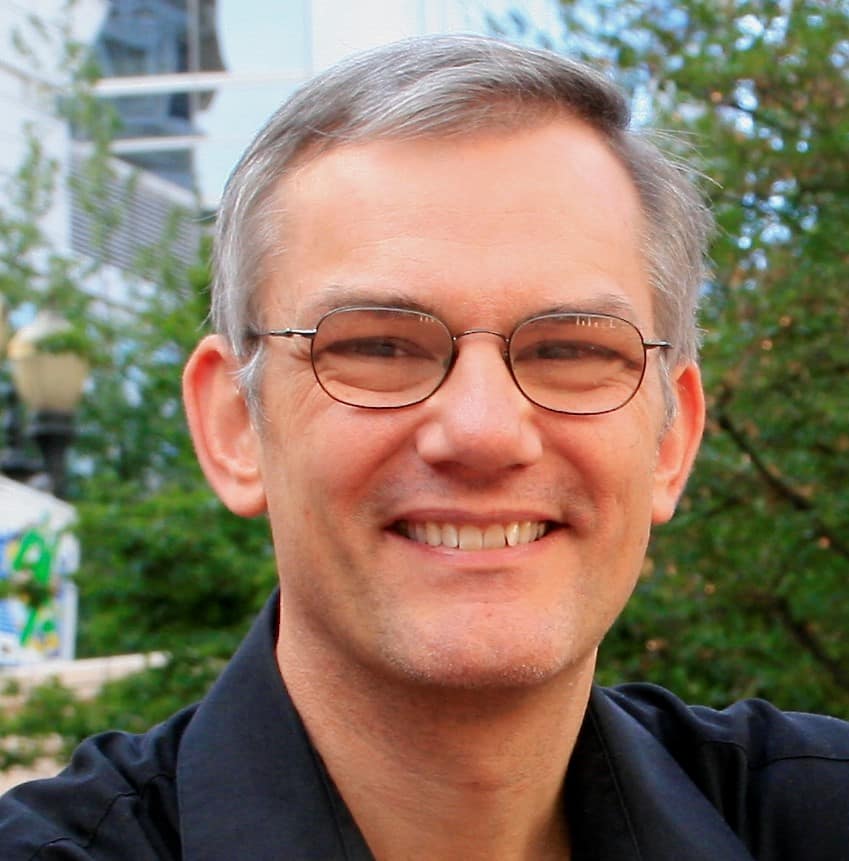
Mark Hedinger (imtn.markhedinger@gmail.com) and his wife, Karen, serve with CultureBound (culturebound.org) and Western Seminary (westernseminary.edu). Since 2008, he has focused on equipping workers from around the world for intercultural ministry. He previously served in mid-level mission agency leadership, and on staff at a Mexican Bible institute. He lives in Portland, Oregon.

Kate Wiseman (imtn.katewiseman@gmail.com) serves alongside Mark Hedinger as co-coordinator of the International Missionary Training Network (IMTN, theimtn.org) and co-synergist for missionary training for the WEA-Mission Commission. She is head of learning services at All Nations Christian College, UK (allnations.ac.uk). She has a passion for delivering (and empowering others to deliver) accessible, relational, and digitally enhanced intercultural ministry training.
[i] Bertil Ekström and David Ruiz, “Programme Narrative – WEA-MC Global Consultation in Panama 2016,” World Evangelical Alliance Mission Commission, September 2016, accessed September 29, 2023, https://weamc.global/wp-content/uploads/2016/09/Panama-programme-narrative.pdf.
[ii] “About GC23,” World Evangelical Alliance Mission Commission, accessed September 29, 2023, https://weamc.global/gc23/.
[iii] Enoch Wan, “The Paradigm of ‘Relational Realism,’” Occasional Bulletin 19, no. 2 (2006): 1– 4.
EMQ, Volume 60, Issue 1. Copyright © 2024 by Missio Nexus. All rights reserved. Not to be reproduced or copied in any form without written permission from Missio Nexus. Email: EMQ@MissioNexus.org.