EMQ » January–April 2024 » Volume 60 Issue 1
Summary: Reverse mission is often used to describe Majority World mission movements, particularly ones to Western countries. But this way of describing mission carries baggage that encourages certain mission movements to be seen as more or less than others.
By Harvey Kwiyani
There is a great deal of controversy around the term reverse mission. Some scholars love it. They say it is an easy descriptor for the missionary movement that starts in Africa and ends up in the West. Other scholars find it difficult to justify, saying it has too much colonial and racist connotations. Whatever the case, it is here. It is still in popular use in some academic circles, though it is clearly in decline, having peaked in the years between 2010 and 2015. This decline may reflect a growing awareness of some of its shortcomings.
Origins of the Term, Reverse Mission
The term reverse mission emerged in the early 2000s, mostly among sociologists, phenomenologists of religion, and historians of Christianity (and not necessarily among mission scholars and practitioners). A Nigerian scholar, Matthew Ojo, popularised it in his 2007 essay, defining it as “the sending of missionaries to Europe and North America by churches and Christians from the non-Western world, particularly Africa, Asia and Latin American, which were at the receiving end of Catholic and Protestant missions as mission fields from the sixteenth to the later twentieth century.”[i]
In 2011, a Korean missionary in Europe, Hun Kim, defined reverse mission as non-Western churches returning with the gospel to societies that initially brought the gospel to them.[ii] Some African scholars – prominent among them is a Nigerian Baptist pastor in London, Israel Olofinjana – have preferred to use reverse mission (and reverse missiology) instead of diaspora mission and diaspora missiology.
In his 2010 book, Reverse in Mission and Ministry: Africans in the Dark Continent of Europe, Olofinjana says “African Christians ministering in the UK now are directly or indirectly a harvest of seeds sown by the early missionaries to Africa.” A small circle of African theologians have followed Olofinjana to write about the significance of reverse mission in Europe.
Olofinjana himself has led the charge by publishing several blog posts and speaking in seminars about how “there is indeed such a thing as reverse mission and reverse missiology.” By reverse mission, Olofinjana and his colleagues mean the missionary work of African Christians in the West – and this is really an African conversation. They have sometimes included Asian and Latin American Christians in reverse mission, but they largely focus on African Christians in Europe or North America in their definition.
Olofinjana justifies keeping reverse mission because European mission in Africa in the nineteenth and twentieth centuries was actually mission going forward. Now that African Christians have come to Europe and are attempting to engage in mission among the people who sent missionaries to African a century or two ago, this is mission in reverse. Right from the start, it was used mainly to describe the missionary work of African Christians in the West.
Some African scholars were among the first to use it to describe the work of their own denominations and others similar to them in the West. It was noticeably not used for the Asian and Latin American mission movements working in the West who had already been active in Europe and North America for decades. Asian scholars preferred the term diaspora mission/missiology while Latin Americans simply talked about mission. Thus, reverse mission has been almost exclusively used in connection with the growing presence of Africans in the West, beginning in the 1980s but intensifying in the 1990s.
Why I Don’t Like It
While I understand what the term is trying to describe, I find it impossible to use. Reverse mission can imply that whatever missionary work Africans are doing in the West is a reversal of what Westerners did in Africa in the nineteenth and twentieth centuries. But we know it is not. In a literal sense, it is not clear what reversing the missionary work of Europeans would look like. Thus, the term reverse mission does not render itself an easy definition. However it is defined, I do not see any evidence that Africans are reversing mission.
Of course, anyone interested in mission history will know that the current Western context is very different from that of nineteenth century Africa. At that time, Western missionaries not only preached the gospel to Christianise the continent, but they also sought to civilise it. To many missionaries, African religious systems had to be demolished by any means necessary and, in their place, Christianity (understood back then as a superior monotheistic religion) was to stand.
Africans were to be compelled to adopt aspects of Western culture as a mark of civilisation. If this was mission then, we can agree, today, that Africans are definitely not attempting to reverse it in Europe in the twenty-first century. They are not looking for a political colonization of the West or to civilise Westerners. Unfortunately, when many Europeans hear reverse mission, they think reverse colonialism and are suspicious of Africans trying to use religion to dominate Europe.
Reverse mission also implies that there is a forward movement in mission that is normative – in this case, that it flows from the West to Africa. If mission starts in any country in Africa, and flows to the West, it is going in an unusual (unexpected, and maybe unacceptable) direction and must, therefore, be labelled reverse mission. As some have argued, it brings the gospel to the land that sent it to Africa in the first place. Mission, in this kind of thinking, is what white people do in Africa and the rest of the world. Reverse mission is, then, what the rest of us do.
We know that the gospel came to Europe from Turkey (Acts 16). Yet, when Europeans take the gospel to Asia Minor or the Middle East, it is not reverse mission. Why then is it reverse mission when Africans work in Europe and not when Europeans work in Turkey? If non-Western mission to the West is reverse mission, then what should we call non-Western mission to non-Western contexts?
Finally, I often get concerned when I hear Africans celebrate that they are the missionaries that God has sent to the “dark continent of Europe.” Beneath this belief that God has called Africans to evangelise Europeans, one can sense the same colonial attitudes that shaped much of Western mission in Africa. I have a friend who runs cross-cultural mission courses under the title, “Who are the Heathen Now?” He is reminding Europeans that 200 years ago, the heathen were in Africa, but now Africa is largely Christian, and the heathen are in Europe.
Of course, to some extent, this is understandable. When most Africans think of mission, it is usually what the Europeans did in Africa that comes to mind – the whole thing, built on that attitude of “we are better because we are Christians.” That is what they saw and know. Unfortunately, as it has become clear in the past two decades, most African churches in the West are unable to evangelise beyond their own people. It seems to me that, in addition to the lack of cross-cultural will and skills, the fact that some Africans think being Christian makes them superior to Westerners plays a big role in their failure to evangelise in Europe and North America.
Consequently, most African congregations in the West are made up of fellow Africans, usually from the same country. Some are actually full of people from one ethnic community. Reverse mission, or whatever we call it, is not happening. It may happen in the next decade, or with the next generation, but today, generally speaking, Africans are not evangelising Westerners.
Yet their presence in the West is making a difference. In several European cities, Africans are the most visible representation of Christianity. For instance, Christians of African heritage comprise most church attenders in London. They are generously running numerous food banks. When they gather for prayer, for instance, at the Festival of Life where more than 50,000 Africans gather for a vigil in London, we are confident they are having spiritual impact.
However, all this work has not translated to converting many Westerners to the Christian faith. Most of the large churches in the UK are African. A Nigerian pastor, Matthew Ashimolowo, leads the Kingsway International Christian Centre in London which claims to have more than 12,000, mostly Nigerian, members. Until the breaking of the war in Ukraine, the largest church in the entire Europe was The Embassy of the Blessed Kingdom of God for All Nations,[iii] led by another Nigerian pastor, Sunday Adelaja.
It is for these reasons that I argue that reverse mission is a misnomer for what African Christians are doing in the West. It is not serving any good and is best discarded from our vocabulary. Both in the Scriptures and in church history, there is nothing that points us to believe that God reverses mission.
In addition, most Africans do not think of themselves as missionaries. Africans often use pastor and evangelist as key labels for their work, even when what they are doing is clearly mission work. They reserve the term missionary for Westerners, especially white Westerners (this is what colonialism can do to a people).
It is my conviction that God’s mission is always moving forward no matter where it starts and ends. God may send US missionaries to Africa while, at the same time, sending African missionaries to the US. All of this is God’s mission, and it is all mission moving forward. I am persuaded that there is no reverse gear in God’s mission.
The same God who sent missionaries from the West to the rest is now also calling people from the rest to come and serve in the West. This is not reverse mission. It is simply mission. As followers of Christ, we need to normalise this. Mission can be from any continent to any other continent. People engaging in mission work come in all ethnicities and from all over the world.
Can We Just Call it Mission?
Language matters. By calling one thing mission and another reverse mission, we are creating a false dichotomy that does not benefit us in any way. There is no reverse gear in mission. God’s mission is always going forward, from the UK to Nigeria and from Nigeria to the UK. It is the same for American missionaries who go to the Philippines just as it is for the Filipino Christians who go serve in America. God’s mission is always going forward.
If the labels are necessary, we can use other identifiers such as African missionary work in the West, or Asians mission to the United States, or even South Korean missionaries in Kenya. In doing so, we acknowledge that God can call anyone to serve in mission anywhere in the world. The same God who calls Westerners to mission also calls black and brown people from the Majority World to that very same mission.
The God who sends Westerners to Africa also calls Africans to serve in Europe. As a matter of fact, every convert to Christianity is called to be co-workers with God in God’s mission in the world. God alone determines where to call people. Some serve in their own neighbourhoods. Others serve overseas. Yet they are all serving in the same mission – God’s mission.
Many African Christians may still think of mission as something that is reserved for Westerners. Many do not call themselves missionaries even when they do great missions work. The term mission for them is too closely connected to whiteness.
I have heard many ask, “Can a black person be a missionary?” As such, many Africans engaging in the work of mission simply identify as pastors and evangelists if they serve in the ministry. Otherwise, they are simply Christian teachers, doctors, lawyers, and many others, who are zealous about sharing their faith with others.
When it comes to evangelism, African Christians are often loud and in-your-face. A great deal of African Christians’ theology of salvation is urgent – we have to evangelise as many as possible for greater rewards in heaven. It is also communal – heaven will not be fun without one’s community (extended family, village, friends, etc). Their African worldview that does not separate the sacred from the profane encourages them to evangelise in all kinds of places, even in places here in the West where Westerners fear it is illegal to preach.
Even Better: Let Us Find New Terms
If many of the African Christian leaders living and working in the West were to be acknowledged and affirmed in their missionary work, the landscape of Christian mission would change significantly around the world. However, some Westerners do not think of black and brown people as equal missionaries to them.
Some have said that this is the Century of African Christianity. For several reasons, I believe it will also be the Century of African Mission. First, an overwhelming majority of African Christians are young. The median age of an African Christian is around 18 years old and falling. Second, Africans are quite mobile, both internally in the continent but also to other continents. Third, Africa has experienced a huge revival in the past 50 years, and there are no signs that it will stop soon.
All these conditions make me believe that we are only seeing the early signs of the African missionary movement (and, I pray, for Asian and Latin American movements as well). This means there is time in the next few decades to resolve many of the concerns we currently have, like the lack of missionary training.
But what about the term mission or missionary? There is a fair critique of the term mission going around for a few years now. Scholars like Michael Stroope, David Niringiye, and Eddie Arthur have attempted to encourage us to consider new terms as mission has too much colonial baggage. A term that is gaining traction is witness. People engaging in mission are said to be witnessing for Christ (following Christ’s words in Acts 1:8).
In the context of thinking about reverse mission, (which, in my mind, has even more baggage), I wonder whether we can then speak of African witness in Europe and North American witness in Africa. It seems plausible. It would make sense to many African Christians who engage in the work of witnessing for Christ in their day-to-day lives. It removes the need to be sent by a mission agency and the requirement for any qualification but the power of the Spirit and an eagerness to share the gospel with others.
Implications
The centre of gravity of Christianity has shifted to the Global South. Together, Africa, Latin America, and parts of Asia are now home to almost 70% of Christians in the world. By 2050, Africa alone will be home to more than 40% of Christians in the world.[iv] The implications of this emergence of world Christianity on mission are massive. Will the Christian mission’s centre of gravity also shift to the south?
Brazil, Nigeria, South Korea, and several other countries are now among those who send the most missionaries. Will this trend continue? If it does, what will it look like? Where will their missionaries go? We know that most migrations are intra-continental. There is no reason to believe that mission will be different.
Even if we focus only on the African missionary movement, we have to reckon with the fact that many African missionaries serve in Africa, in countries adjacent to their own. Few of them serve in other continents. And even for those that do go to other continents, Western countries can still remain financially out of reach. For example, the Redeemed Christian Church of God has missionaries in 197 countries around the world. The Church of Pentecost has missionaries in 150 countries. Very few of them reach Europe and North America. This can also be said of Asian and Latin American missionaries. Those whom we call reverse missionaries – who end up serving in the West – are a very small part of the great work of mission that God is doing in Africa, Asia, and Latin America.
When the centre of gravity of mission shifts to the Majority World, what theological/missiological resources will we need? The language of “mission from six continents to six continents,” or that of “mission being from anywhere to anywhere else,” has been around since the 1950s.
Unfortunately, many of the dominant models of mission today, shaped by Westerners for other Westerners as they are, are not easily applicable to non-Western missionary work. Most of the tools and resources we have are also shaped by Westerners for other Westerners working outside the West. As such, they are too tied closely to geography – mission happens in certain parts of the world, and not in others. With this comes the need to go from the West to the rest of the world. Thus, mission is something that Westerners do elsewhere.
Mission models can also be infused with a worldview that presupposes the superiority of a Western worldview and the dissemination of its culture to the nations. In this perspective, converts still have to believe and behave like Westerners to be truly converted. Otherwise, more missionaries need to be sent. This mindset leaves no room for non-Western involvement in missions.
But the biggest issue is that these models depend excessively on money. It seems that only rich nations can effectively participate in God’s mission in the world. Indeed, how can the financially under-resourced churches of sub-Saharan Africa, for example, afford to send missionaries overseas when they actually need financial support to survive?
There is no doubt that God also calls poor Christians and nations to mission, but what does that look like? As the West races toward being a mission field, it is my prayer that God will make clear how these obstacles can be overcome so more non-Westerners can engage in mission everywhere including in the West.
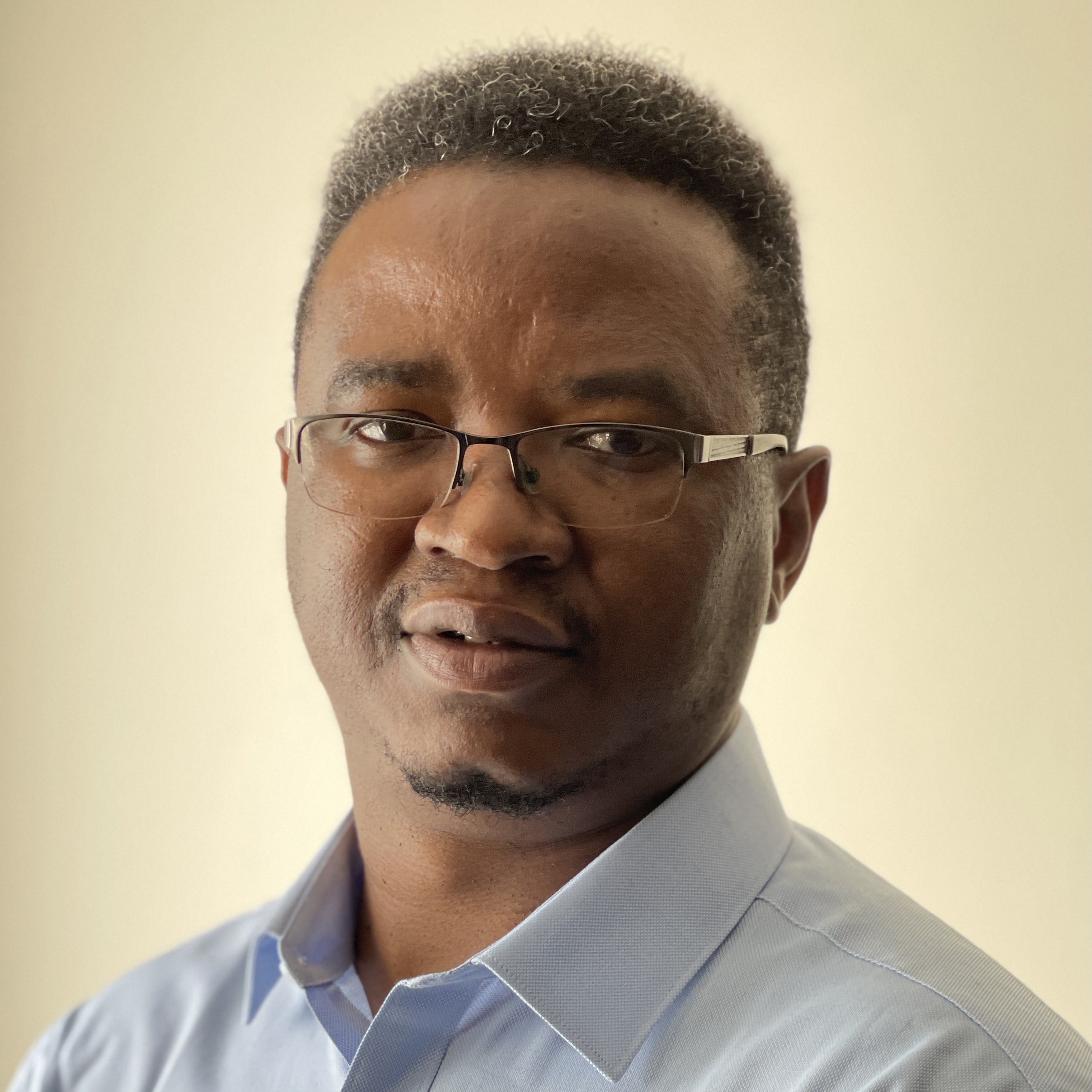
Harvey Kwiyani, PhD, (harvey.kwiyani@churchmissionsociety.org) is a Malawian theologian based in England. He leads a master’s program exploring diasporas in World Christianity, and the Centre for Global Witness and Human Migration initiative for Church Mission Society in Oxford, England. He has authored several books, including Sent Forth: African Missionary Work in the West and Multicultural Kingdom: Ethnic Diversity, Mission and the Church. His weekly blog (harveykwiyani.substack.com) is read by thousands globally.
[i] Matthew Ojo, “Reverse mission,” Encyclopedia of mission and missionaries (2007): 380–382, as cited by Olofinjana, R. I. O., “Reverse Mission: Towards an African British Theology,” Transformation 37, no. 1 (2020): 52–65, https://doi.org/10.1177/0265378819877902.
[ii] Hun Kim, “Receiving Mission: Reflection on Reversed Phenomena in Mission by Migrant Workers from Global Churches to the Western Society,” Transformation 28, no. 1 (December 2010), https://journals.sagepub.com/doi/abs/10.1177/0265378810386295.
[iii] The Embassy of the Blessed Kingdom of God for All Nations, http://godembassy.com/.
[iv] Gina A. Zurlo, Todd M. Johnson, and Peter F. Crossing, “World Christianity 2023: A Gendered Approach,” International Bulletin of Mission Research 47, no. 1 (2023): 11–22, https://doi.org/10.1177/23969393221128253.
EMQ, Volume 60, Issue 1. Copyright © 2024 by Missio Nexus. All rights reserved. Not to be reproduced or copied in any form without written permission from Missio Nexus. Email: EMQ@MissioNexus.org.