EMQ » January–April 2024 » Volume 60 Issue 1

Summary: For 30 years, Clarkston, Georgia has welcomed so many immigrants and refugees from around the world that is it has become known as the most culturally diverse square mile of the US. With 90 different people groups, including many that are considered unreached and unengaged, the community provides unique opportunities for domestic cross-cultural missions. It also offers a chance to engage in ways that challenge assumptions and blind spots.
By Joy and Jaewoo Kim
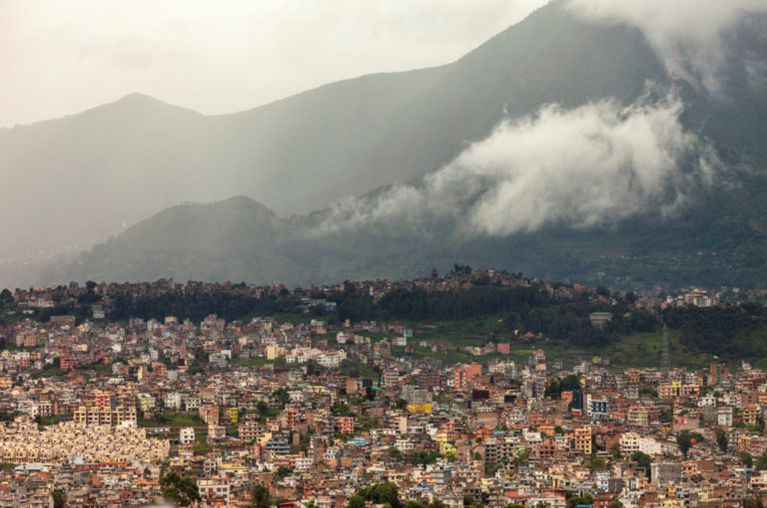
In 2011, war broke out in Syria, and Syrian refugees began resettling. Ten years later, we saw images of people sitting shoulder to shoulder inside packed airplanes – even some dangling on the outer parts of the plane – leaving Kabul, Afghanistan to go to places of safety. For the same or similar reasons, people from Democratic Republic of the Congo, Sudan, Myanmar, Eritrea, Nepal, and other parts of the world fled from their home countries to foreign lands. Many of all these refugees made their way to our town – Clarkston – a community of just under 10,000 located northeast of Atlanta, Georgia.
Over the past 30 years, Clarkston’s welcome of so many people has given it the reputation as “the most ethnically diverse square mile” of the US. In less than 2 square miles, more than 90 different ethnic groups, speaking more than 60 languages, peacefully coexist. People from everywhere are coming here. Clarkston is a living illustration of the nations arriving at our back door.
Many come from unreached and unengaged people groups. This attracts short-term mission teams from US churches interested in domestic cross-cultural missions opportunities. This was especially popular during COVID-19 travel restrictions, but the trend continues. Teams come to share the gospel and help vulnerable people.
Yet they also come with common misunderstandings and blind spots expressed in things such as:
- “We’ve come to preach the gospel to these refugees.”
- “I didn’t realize that refugees could be Christian.”
- “Why do refugees live in apartments and houses like normal people? Why do they own cars?”
- “For the first time, I realize that refugees are just people like us.”
Instead, this is what is true about our neighbors, friends, and colleagues:
- Not all refugees resettling in the US are Muslims or atheists. In 2016, about 40% of refugees resettled in the US were confessing Christians.[i]
- Not all refugees live in temporary tents or shelters.
- Not all refugees are poor. They work hard to rebuild and sustain their lives in a foreign land.
- Refugees are people on the move seeking safety. They are human beings created in the image of God. It is a temporary status of a person, not a label that defines them permanently.
Local cross-cultural missions to displaced people is one way God is growing his polycentric Church. However, participation with him in ministry to people on the move must be approached with wisdom. We challenge those engaging in local cross-cultural missions to consider the following perspectives.
From Either-Or to Both-And
Churches in traditional Western contexts often see themselves as senders of the gospel and other resources. Then they see the people they serve as the receivers. When churches put themselves in a position of a sender only, it’s hard for them to be open to the posture of a receiver. And when churches consider others as receivers only, it’s hard for churches to imagine that people on the receiving end can meaningfully contribute.
It’s time to think differently about sending and receiving. We suggest that churches consider themselves as both senders and receivers of the gospel and other resources. In God’s kingdom, no ethnic group has the whole truth and all the resources, no language group contains all the glory, and no culture possesses all the beauty of God’s kingdom. Churches open to send and receive can collaborate with peoples from different cultures and build the kingdom of God together with mutual contributions and healthy reciprocity.
From Empowerment to Creative Partnership
A common perception is that immigrants and refugees lack resources and need to be helped and empowered. This reveals an underlying assumption that refugees and immigrants lack power. Japanese-American artist Makoto Fujimura explains another view of resources, “I am often asked, ‘How does one create movement?’ In order to start a movement, you need three elements: (1) an artist type with creative capital, (2) a pastor or community organizer type with social capital, and (3) a business type with access to material capital.” [ii]
A refugee community may initially lack material capital (financial resources); however, their abundant creative and social capital can easily be overlooked, under-valued, and neglected. When these resources go untapped, they can be lost along with all the potential synergy and momentum they can offer. But when these unique local resources are appreciated, they can enrich missions efforts. In fact, Christ-following refugee communities offer tremendous cultural knowledge and perspectives that can build bridges to broader communities of glocal diasporas.
We recently took a small group of urban US church leaders to the Karen church in Clarkston. The Karen community come from Southeast Asia, and conflict forced many to flee to refugee camps in Thailand. From there, a number resettled in Clarkston where they started a vibrant church. On the day we visited their church, a heavy rain was pouring outside, but young people were playing volleyball and badminton, not minding being soaking wet.
Inside the church, youth were selling organic, home-cooked meals to church members and visitors to raise funds for upcoming youth retreats. One of the youth leaders said that the youth had also raised money to help the church pay for their recently purchased facility.
Church leaders were impressed with the number of young people involved and their positive energy. They also took note of the creative ways they gathered resources even though most church members, as recent refugees and immigrants, were not financially stable.
We need to reconsider our ideas of empowerment. Who are we trying to empower and why? People on local cross-cultural missions trips may assume that empowerment looks like them sharing their leadership, power, and resources with others. But perhaps we need to see empowerment as moving in two directions. This means we should also expect to be empowered by others to discover our blind spots, grow our imaginations, and learn how to utilize resources we don’t know how to use that may lie dormant.
From Contextualization to Co-Creation
Sensitivity to diverse cultures is a core part of mission agency training. Mission workers learn to be cautious and to avoid Western dominance in their approach to missions. They also intentionally seek ways to contextualize the gospel as they engage cross-culturally with different global peoples. But could there be something more than contextualization that we are missing?
Cindy S. Lee, a spiritual director and a professor at Fuller Theological Seminary, says, “Contextualization … still assumes that the Western way is the standard way, and all other ways are creative deviations …. We are not taking Western norms and adding ethnic expressions. We are going back to what the missionaries should have done in the first place, to allow our experiences of God to be fundamentally changed by sitting and learning from one another.”[iii]
Co-creation is the lifestyle of our worshiping community in Clarkston. Initially, we learned to co-create through learning songs from one another and writing new songs together in different languages, styles, and forms represented by the cultures in our community. We became friends through our mutual exploration of artistic expressions such as visual art, dance, drama, music, and stories and co-creation of new expressions that authentically reflect all of us together. We incorporated creative elements of co-creation in our weekly worship and in our community art programs that reached out to the broader community of Clarkston.
We continue to build our community and reach out to others with whom God connects us through co-creation. Then we share life and walk the journey of faith and healing together. We co-create safe and creative spaces to build bridges between peoples from different cultures to sit and listen and learn from one another. We see transformation happen in all of us and healing and reconciliation is experienced through the relationships that have been built over time.
We’ve built life and community together as co-creators with God and with one another. Together we participate in God’s mission in ways that we have never imagined. As we partner with God in his mission, we co-create kingdom reality here on earth as it is in heaven in our community of diverse believers and seekers.
Toward Reciprocal Transformation
We love the story of Cornelius meeting Peter. In this story, no one has the whole gospel. No one has the whole story. No one has all the pieces of the puzzle. No one has the complete vision. Cornelius is being transformed by meeting Peter. Peter is being transformed by meeting Cornelius. Cornelius needs Peter. Peter needs Cornelius. One person is not only either the giver or receiver. Both give and both receive. They are both hosts and guests. They both follow the Holy Spirit. They are both curious enough to cross their cultural comfort zones and take risks to see what God is up to.
Beyond empowerment and contextualization, we need creative partnership with the people on the move. We need to take the posture of a learner to grow and be transformed together. Human beings, in any vulnerable situations, still possess the image of God in them. If we think of them merely as targets to be reached, or vulnerable ones to be empowered, it becomes difficult for us to imagine them as our friends, partners, and leaders.
Conclusion
In our small town, we are witnessing a glimpse of God’s diverse kingdom on earth every day. Our friends and partners from around the world are eager to share their cultural and spiritual resources in abundant and radical hospitality.
Our Central American friends are teaching us how to passionately follow Jesus without turning back. Refugees in Clarkston from Southeast Asia and South Sudan are inviting us to join with them in locally initiated missions back to the communities from where they came.
A vibrant Arabic-speaking church – with people from Syria, Jordan, Saudi Arabia, and Egypt – is regularly worshipping together with us. And we are observing a growing number of Afghan believers starting house churches.
In his book Marginality, Jung Young Lee says, “The creative core, which is the new center, seeks the people, while the false center is sought by them. That is why the creative core or the new center cannot be found by people who seek it …. Therefore, God is not central to those who seek the center, but God is center to those who seek marginality because the real center is the creative core, the margin of marginality.”[iv]
Instead of seeing people on the move, who are often in the margins of the society where they resettle, as the vulnerable ones to be empowered, we want to see them as creative centers filled with rich diverse resources for God’s global and polycentric mission. Our desire is to move toward reciprocal and creative partnerships with those in the margins and to see Revelation 21:26 being fulfilled in our mission endeavors.[v]
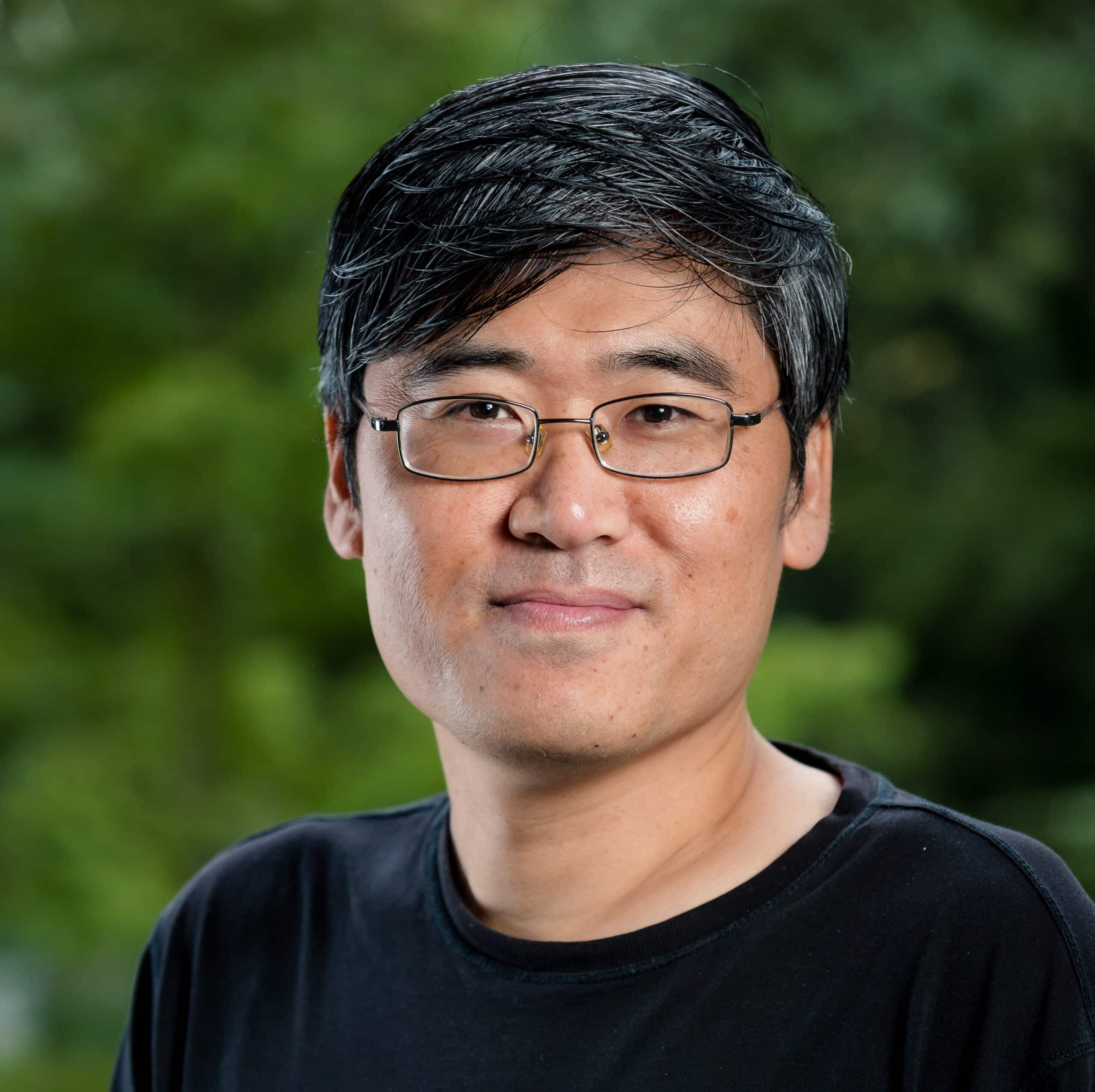
Jaewoo Kim (Jaewoo@proskuneo.org) leads ministry development and is the director of networking for Proskuneo Ministries in Clarkston, Georgia. Jaewoo loves connecting people and worshiping communities locally and globally to spark friendship and partnership. He is passionate about cultivating culturally diverse communities of Jesus worshippers. He is the author of Willingly Uncomfortable Worship and works with the Korean diaspora and other diasporic communities around the world.
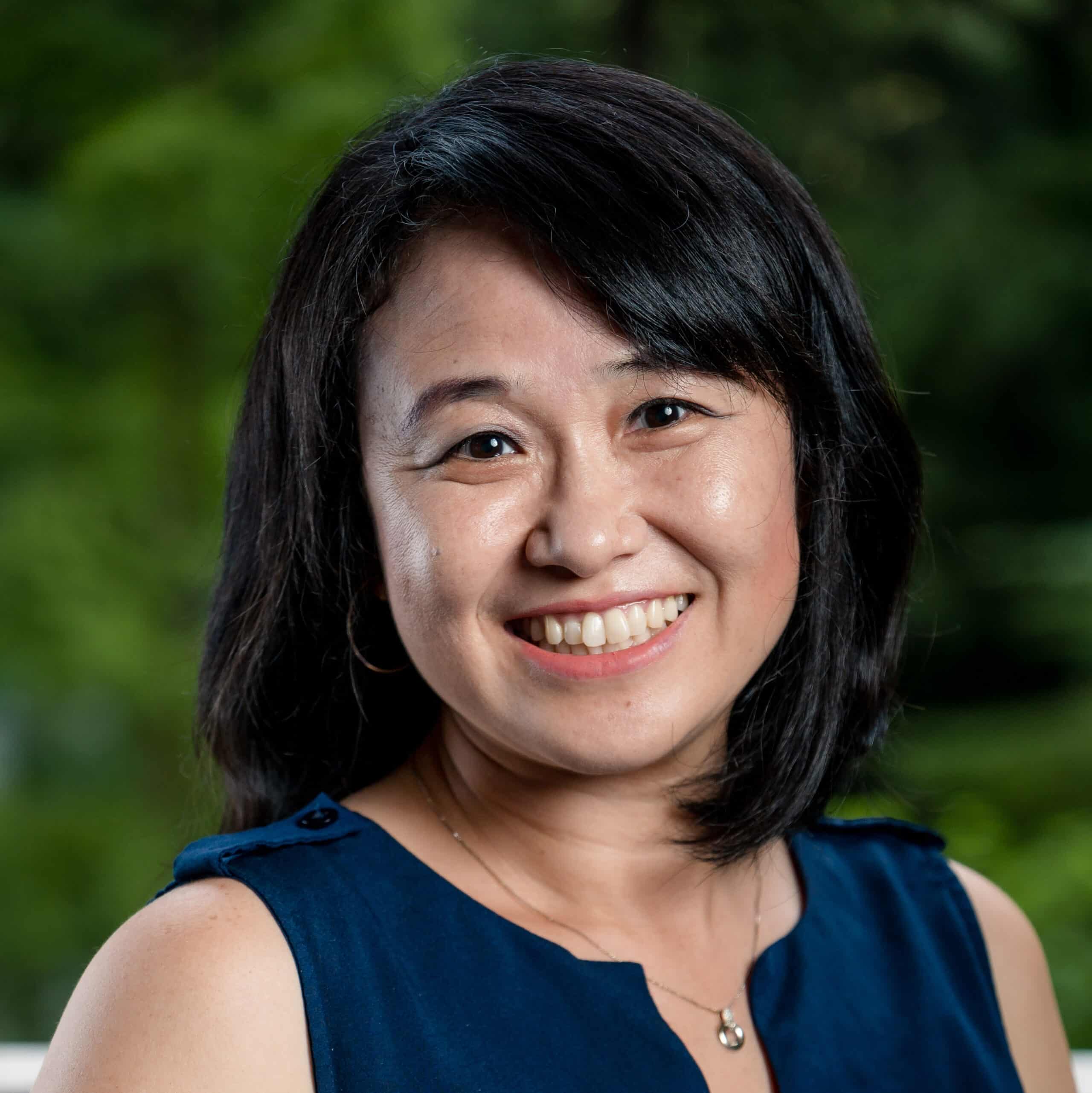
Joy Kim (Joy@proskuneo.org)is an ethnodoxologist and the arts and worldview director for Proskuneo Ministries. She designs and directs arts programs which encourage multimodal co-creation, build community, and develop artists in creative leadership. She works with diaspora artists to engage in global mission together through building multicultural worshiping communities glocally. She desires to promote unity in diversity which reflects our Triune God in all she does with others in community.
[i] Phillip Conner, “U.S. admits record number of Muslim refugees in 2016,” October 5, 2016, accessed October 5, 2022, https://www.pewresearch.org/short-reads/2016/10/05/u-s-admits-record-number-of-muslim-refugees-in-2016/.
[ii] Makoto Fujimura, Culture Care: Reconnecting with Beauty for Our Common Life (Downers Grove: InterVarsity Press, 2017), 118.
[iii] Cindy S. Lee, Our Unforming: De-Westernizing Spiritual Formation (Minneapolis: Fortress Press, 2022), 63–64.
[iv] Jung Young Lee, Marginality: The Key to Multicultural Theology (Minneapolis: Augsburg Fortress Publishers, 2018), 97.
[v] “And all the nations will bring their glory and honor into the city” (Revelation 21:26, NLT).
EMQ, Volume 60, Issue 1. Copyright © 2024 by Missio Nexus. All rights reserved. Not to be reproduced or copied in any form without written permission from Missio Nexus. Email: EMQ@MissioNexus.org.