
EMQ » January–April 2024 » Volume 60 Issue 1
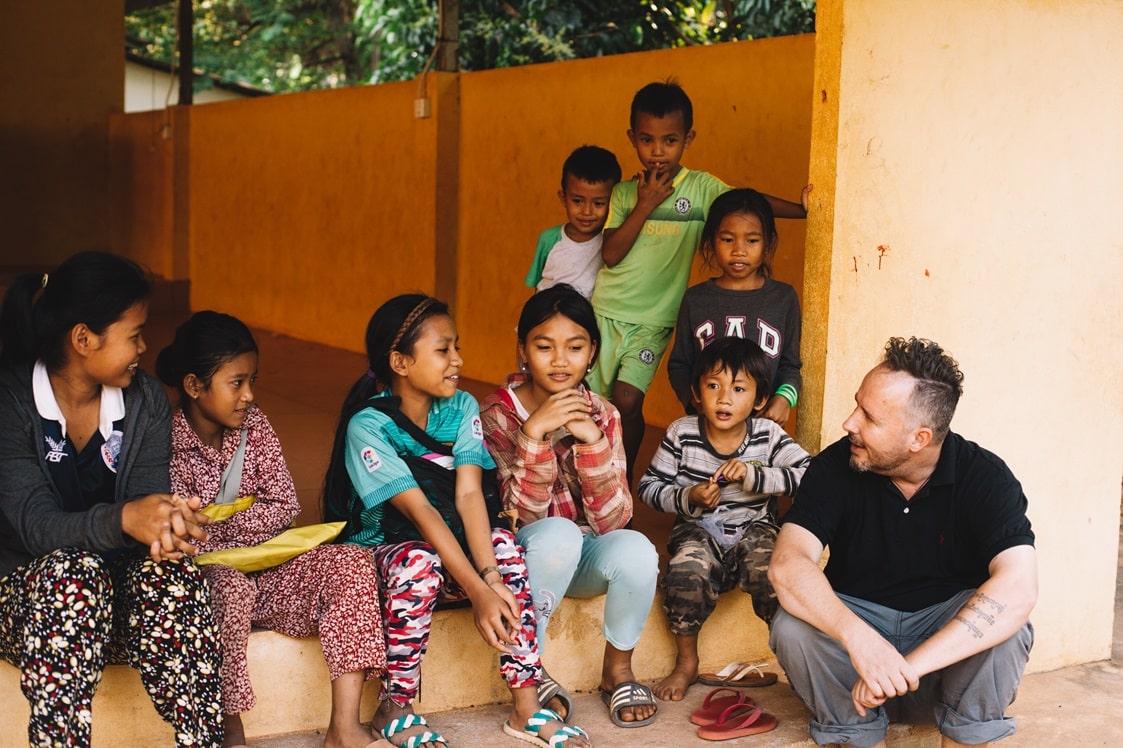
Summary: When every geopolitical nation has a gospel presence, what is the role of an outsider in helping the global Church to continue to grow? How do outsiders, especially from the West, remain faithful to God’s call to love their global neighbors and use wisdom to know how best to serve?
By Craig Greenfield
For many, missions is the story of heroes, martyrs, and gospel advance. For others, it’s the story of colonialism and missionary disasters. At the same time, the context of global mission has changed drastically. The church has spread to every geopolitical nation, and more people from more nations are participating than ever before. The era of the West to the rest is over.
Is there still a place for outsiders, particularly Westerners, to serve in cross-cultural mission? Does this cause more harm than good? How do outsiders now remain faithful to God’s call to love our neighbors – both across the street and across the oceans?
I’ve lived in slums and inner cities as an outsider among the poor for twenty years. I’ve led humanitarian organizations, a global missions agency,[i] and now a grassroots youth movement (called Alongsiders)[ii] that is truly making the world a more beautiful place.
So, I am passionate about finding ways to frame and communicate God’s call to engage in ways that fit today’s realities. Perhaps the framework I have developed to understand the role of outsiders, including Westerners like myself, will be helpful for you and your context, as it has been for many others. But first, let me give you a glimpse of my story…
An Invitation to Preach
My phone lights up and pings with a message. I flick my thumb across the screen and an invitation appears. The backlighting on my phone illuminates my face as I read the invitation of a lifetime.
“Brother Craig,” it begins, as so many messages from my friends in India do. Relationships are everything in this part of the world. “Would you come and speak at our upcoming Christian event in Delhi? You would be our keynote speaker. There will be 20,000 young leaders in attendance. We want you to challenge them to reach out and walk alongside children in their communities. You can really get your Alongsiders message out, Brother!”
Twenty thousand young leaders! My eyebrows lift, and a whistle of amazement escapes my lips. For some, public speaking is their worst nightmare. Speaking to twenty thousand young leaders would be daunting for most people – and frankly, it’s daunting for me, too. But I have been sharing about God’s heart for the poor at conferences, festivals, and churches for years. An opportunity to spread the vision like this is an amazing dream for me, a chance to use my God-given talents to grow the Alongsiders ministry and reach thousands of children.
I start thinking through logistics and imagining the potential impact. And if I’m honest, I begin to imagine myself on that stage, the audience in rapt attention. Some good photos of the crowds for my social media feed wouldn’t hurt at all. I’m only human.
I press my forefinger on the message until it turns a darker shade, then hit the forward button. Before responding, I know that I need to submit the invitation to my mentor and South Indian friend, Paulus.
My connection with India goes back to my paternal grandparents, who were missionaries in South India for 25 years. My father spent his early years in Bangalore. My parents were also missionaries so I guess you might say that being an outsider working for change in the world runs in my blood.
Paulus has been helping me navigate these types of situations in India for years, and as an outsider, I’m careful to listen to his insider advice. But as I wait for Paulus’s response, my heart begins to sink a little as I anticipate what he will say. I know Paulus well.
His message eventually pops up on my phone. “Brother! Call me when you can.” Relationships are everything in India.
I press video dial with trepidation, and within seconds, I am greeted by Paulus’s smiling face and rich, baritone voice. A Tamil by ethnicity, he has a very dark complexion, and he is wearing his thick, trademark black glasses. They frame the kindest eyes, which shine with spiritual wisdom and friendship.
I want to make sure he understands what this invitation means to me, so I almost start to say, “This is the invitation of a lifetime, Paulus!” But I hold my tongue and wait for my mentor to speak.
“Ah yes,” he smiles. “I don’t think this is a good opportunity for us, ahhha? This will put a big spotlight on you as a foreigner. If we want this discipleship movement to take off here as a local Indian movement, it would be better for it not to be presented by you. That will send the wrong impression, Craig.”
His words are understated but crystal clear. They immediately remind me of the ancient Khmer proverb, “It takes a spider to repair its own web.” My chest sinks, and I feel my lips curve into a slight frown. I know Paulus is right, but, frankly, I’m gutted. After I hang up, I sit for a while, letting the disappointment sink in.
Using More Wisdom
Now, at this point in the story you may be thinking, “Needs are needs. Who cares who meets them? Get out there and make a difference! Seize every opportunity to use your God-given gifts to preach the gospel!”
But what if the greater invitation for many of us in this new era – particularly those of us who have power and privilege – is to use more wisdom in the ways we seek to serve others? I’ve had to learn this lesson the hard way as I have served in slums and inner cities and made a lot of mistakes along the way. Though I’ve started ministries around the world, I am still learning.
As a white Westerner, I have always been taught to consider the words I speak on stage as if they stand alone – disembodied – as if I am a neutral messenger bringing the Word of God. After all, it’s not like I would be up there on stage waving a Union Jack – the flag of India’s former colonial power (and the birthplace of my ancestors). And it’s not like I would be flashing wads of cash, implying that by joining this discipleship movement these poor youth could get connected to overseas money.
But I don’t need those props to send the youth a message about power and outside money. My very presence sends that message all by itself. Though 20,000 young leaders would hear my words of love and goodwill, those words would be reinterpreted and misunderstood if I were the person delivering them. I knew in my gut that Paulus was right. The leaders would perceive my words as a foreign message, wrapped in a cloak of colonialism and cash.
The next day, I shoot Paulus a message. “You’re absolutely right, Bro. Who else could we get on that stage to communicate the message? Someone local, of course!”
Paulus replies immediately, “I know just the person.”
The Temptation to Pursue Good in the Wrong Way
Have you ever noticed how the things that Satan tempted Jesus with during his 40 days in the desert were not inherently evil (Luke 4:1–15)? Satan tried to goad Jesus into making bread from stones, but there’s nothing particularly bad about bread, is there? Starving people need food, and the world is full of pressing needs. Only a heartless jerk would deny a starving beggar a yummy bread roll.
What about the promise of safety in the hands of angels? That’s not evil either! Endangered people need protection. Vulnerable children need people to stand on their side when life is tough. They need someone to get up on a stage somewhere and advocate for their well-being.
And what about the opportunity to have the whole world bow before Jesus? That’s not evil either. Imagine if people all over the world knew the love of God. Surely anyone pursuing that end, in any manner, is simply doing the work of God?
And yet, we know from this story that it was the bad guy – Satan himself – dangling all these good things, these valid and pressing needs, in front of Jesus. Still, Jesus resisted. He resisted the shortcuts because he knew there was a better way: God’s way, God’s timing. He resisted the shortcuts because the ends never ever justify the means.
Jesus could have overwhelmed Israel with his power and wonders – a one-man miracle machine. Instead, he chose the slow, difficult route of raising a community of believers and empowering them to take his message to the world. He sparked a grassroots movement that has stood the test of time.
What if the temptation we face as people with power and privilege in a world of need is not so much the temptation to pursue evil – rape, murder, or pillaging? Instead, what if our temptation is to pursue good in the wrong way?
This is a temptation I face every day because, as a Western missionary for more than 20 years, I walk the streets with forms of power that many of my Cambodian neighbors don’t have. I receive invitations and open doors that others don’t receive. With that access comes the temptation to be their savior, to use my power to create miracles, when I’m really called to be something else – something more humble, vulnerable, and much, much better.
This challenge is for anyone who goes into the world seeking to change it while carrying more power than those whom you are trying to reach – whether through a passport or privilege, money, or mastery. The simple fact that you have the ability to buy and read a magazine written in English means you have forms of privilege and power that most people in the world don’t have.
I’ve lived among the poor and marginalized for a long time. I’ve held the dying and walked alongside the desperate. My whole life is geared toward seeking change that will make the world a better place for everyone. And, frankly, I’m impatient! I want a better world for my poor neighbors – and I want it sooner rather than later. I want to see more vulnerable children being reached and uplifted. I want bread for the hungry, I want safety for the endangered, and I long for people to know the boundless love of Jesus.
Yet, I’ve come to understand that there are lots of ways to seek what is good for the world. Over time, I’ve learned that many of the short-term ways I’ve tried to pursue change – such as handing out money or food – have actually resulted in more deeply entrenched systems and structures, which continue to perpetuate poverty and injustice. At times, some of my great ideas have made things much, much worse because I’ve been trying to play god in the lives of the poor.
How is God Calling us to Serve?
So, if we’re no longer standing center stage as outsiders, giving keynotes to 20,000 young leaders, how is God calling us outsiders to serve in this new era? Didn’t Jesus call us to go out into all the world to make disciples and build his upside-down kingdom? Didn’t God call us to bring good news to the poor, freedom for those in captivity, and comfort to those who mourn?
In Ephesians 4:11–13, Paul describes five different types of giftedness for serving God in the world and the church: apostles, prophets, evangelists, shepherds (pastors), and teachers. I believe that these five types continue to provide a promising framework for how we can serve the world even in our post-colonial era, but we need to examine them through different eyes. We can’t simply transplant them into cross-cultural situations that have deeply embedded power dynamics, or we run the risk of disempowering local people.
For example, perhaps you are a gifted pastor or church planter in Portland. Does this mean you should be a pastor or church planter in Bangalore, India? After all, you will eventually return home, and your foreign ways will be hard to replicate by local people with fewer resources. Perhaps a more effective role would be to come alongside local Indian Christians as a midwife, supporting them as they lead and give birth to what God has already planted in their hearts. During the journey to India, the gifted pastor needs to become a midwife.
Or you may be an apostolically gifted entrepreneur in San Francisco. Does this mean you should initiate new projects among African Americans in inner-city Detroit? Perhaps a wiser approach would be to serve as a catalyst, helping local leaders create new initiatives that reflect their own understanding of their local needs so they will have ownership of them going forward. Sometime during the journey to Detroit, the gifted apostle needs to become a catalyst.
Or perhaps you are a prophetic social justice activist in Toronto. Does this qualify you to lead justice work in Nairobi, Kenya? Perhaps a more helpful role would be to come alongside local activists as an ally, amplifying the voices of those who will continue to live in the local context after the struggle. After all, you can leave at any time, escaping the consequences that local people face after a confrontation. Sometime during the journey to Kenya, the gifted prophet needs to be transformed into an ally.
Each of the five ministry gifts outlined in Ephesians 4 – apostle, prophet, evangelist, pastor, and teacher – needs to be reframed for cross-cultural contexts, especially in places of poverty, or where there is a significant power differential. The fivefold ministry types become missional types. Otherwise, we run the risk of playing benevolent gods – taking power away from those who need to be inspired to look to Jesus, the one true savior. In every context, we need to ask ourselves whether we are ministering as an insider or an outsider.
In the urban hubs of Asia, the slums of Haiti, the inner cities of North America, and the rural villages of Mexico, those of us who come as outsiders with access to resources tend to hold dramatically more power and money. We sometimes wield that power in heavy-handed ways, knocking over the carefully arranged banquet set before us by our local friends. This lack of self-awareness leads to the sins of colonialism and the white savior label, no matter what color you are.
Rethinking the Five Roles
By rethinking these five roles from Ephesians with a cross-cultural perspective, we retain the original meanings, which were meant for insiders, but in ways that don’t leave us, as outsiders, hogging the limelight. In place of the traditional translation for Paul’s ministry roles in Ephesians, I propose the following five missional types for outsiders in a cross-cultural context: catalyst (for apostle), ally (for prophet), seeker (for evangelist), midwife (for pastor), and guide (for teacher).
Catalyst (Outsider) / Apostle (Insider)
Catalysts are wired as pioneers for the kingdom, not just the church. In their commitment to God’s people around the world, they are self-disciplined and mature enough to say, not “my kingdom” but “your kingdom come, Lord.” Catalysts refuse to build their own empires but seek to help spark something new in partnership with those insider apostles who will lead the movement going forward. By nature, they are future-oriented and want to work with local people in new and uncharted contexts.
Ally (Outsider) / Prophet (Insider)
Allies know God’s heart for the marginalized, so they seek to come alongside and use their privilege to amplify voices that are struggling to be heard. They care deeply about justice and mercy and are bold enough to speak truth to power in situations of injustice. As outsiders, they are uniquely positioned to question the status quo and call the global community toward God’s kingdom on earth, using their privilege (access, training, and resources) to support the causes championed by local prophets.
Seeker (Outsider) / Evangelist (Insider)
Seekers search for cultural touchpoints as a way of bridging the universal truth of the gospel with local understanding. They seek to discover what conversation God is already having with the people in this place. They are enthusiasts for contextualization, storytelling, and creativity. As outsiders, they arrive as students of language and culture and are more likely to ask questions than to offer answers. They work with insider evangelists to understand and communicate what the kingdom of God looks like in each new context.
Midwife (Outsider) / Pastor (Insider)
Midwives are pastorally gifted leaders who nurture and protect the people of God, helping insider pastors birth, shepherd, and care for communities of faith. As outsiders, they are passionate about cultivating the local church and developing disciples without needing to be in the limelight. They are careful to use church-planting approaches that can be replicated without outside resources.
Guide (Outsider) / Teacher (Insider)
Guides are gifted teachers who can not only understand and explain truth but can guide local people to discover the truth for themselves. Guides communicate God’s wisdom in all kinds of ways as they help local people discern God’s will. Rather than offering prepackaged answers, guides creatively help people work together to discover solutions for themselves.
The Challenge to Serve as an Outsider
I wrote Subversive Mission, to describe this Fivefold Missional Type framework in depth, along with the five most common blind spots that Westerners bring into cross-cultural service. The book tells the story of my own experiments – and many failures – as I have tried to find my place in the world as an outsider.
As followers of Jesus, we are all called to be ready to follow Jesus in loving our neighbors, not only across the street, but also across the oceans – from Vancouver to Nairobi, from inner-city Chicago to Phnom Penh. We can’t afford to isolate ourselves in paralysis any longer. I hope you will join me in seeking a better way, a more beautiful vision for how we can all bear the light we have been given into the world.
Adapted from the first chapter of Subversive Mission: Serving as Outsiders in a World of Need by Craig Greenfield.
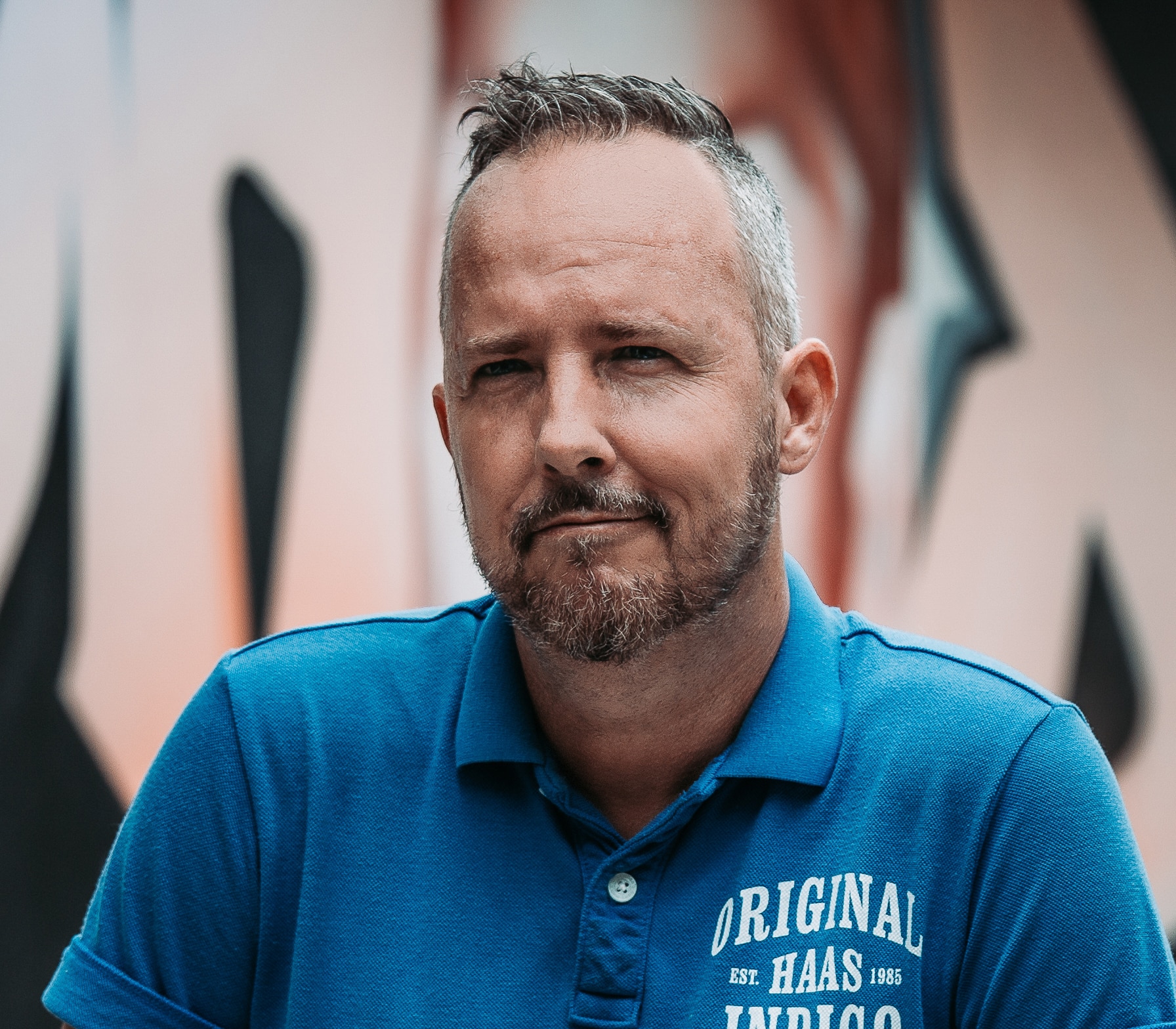
Craig Greenfield (craig@alongsiders.org) is the author of Subversive Jesus, and his latest book, Subversive Mission, published by IVP. He is the founder of Alongsiders International, a grassroots youth discipleship movement that has now spread to 30 countries. You can read more at alongsiders.org or take the free Missional Types test on Craig’s blog at craiggreenfield.com
[i] I was the International Coordinator at Servants to Asia’s Urban Poor from 2005–2012, https://servantsasia.org/.
[ii] I founded Alongsiders International in 2013, https://www.alongsiders.org/.
EMQ, Volume 60, Issue 1. Copyright © 2024 by Missio Nexus. All rights reserved. Not to be reproduced or copied in any form without written permission from Missio Nexus. Email: EMQ@MissioNexus.org.




