EMQ » July–September 2023 » Volume 59 Issue 4
[mepr-show rules=”100329″] [/mepr-show]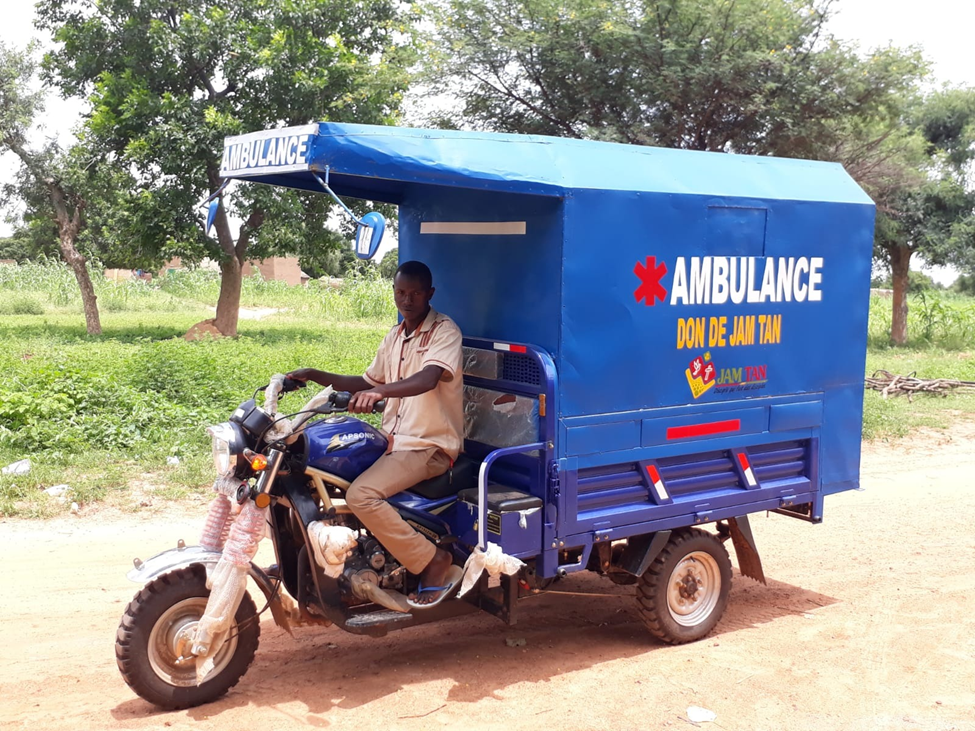
Summary: A fruitful disciple-making movement in Burkina Faso has utilized community health outreaches as part of a holistic strategy to foster peace, make disciples, and plant churches among the Fulani people group. This indigenous and collaborative approach is a strategically significant way to meet whole-person needs in a local context.
By Boureima Diallo and Daniel O’Neill
Jam tan is part of the common greeting in the Fulfulde language meaning peace only. Fulfulde is spoken by the Fulani people group – a semi-nomadic, predominantly Muslim, traditionally cow-herding people of 42 million scattered throughout 22 countries in Central and West Africa.
In 2007 a ministry named with this Fulani greeting (the Jam Tan ministry), started as a disciple-making movement among the Fulani people. They are one of 47 members of the Council of Churches Missions and Ministries of Burkina Faso.
Jam Tan’s ministry addresses issues related to health, social cohesion, and skills training through discipleship, church planting, education, relief work, and accessible health services. Their outreach in discipleship and church planting are specific to the Fulani, but their development services are for everyone (utilizing local languages and Burkina Faso’s official administration language – French).
In 2023, Burkina Faso ranked eighth lowest on the Human Development Index (HDI) and was subject to internal displacement from conflict and violent extremism.[i] Jam Tan continues to serve through these challenges, especially poverty and food insecurity, which were exacerbated during the COVID-19 pandemic.[ii]
Health-related missions are increasingly recognized as a key to fostering movements to Christ among the least-reached peoples of the world.[iii] Jam Tan is a case study in the application of a whole-person collaborative outreach at the community level to facilitate those movements.
Community Health Days
Ten years ago, Jam Tan began to hold Community Health Days (CHDs) once a quarter to help communities in their region without access to adequate health services. It started with one pediatrician, one optician, and two nurses in 2012. Over time, more doctors and nurses were recruited from networks of Christian healthcare professionals in the country. Opticians, dentists, ENTs, dermatologists, cardiologists, physiotherapists, endocrine specialists, gynecologists, and orthopedic surgeons for pediatric disability cases all volunteered to help. People came more than 160 miles (260 kms) to the Jam Tan center to receive services.
Violent conflict and displacement increased the number of patients losing their minds, experiencing nightmares or struggling with substance abuse. So in 2017, Jam Tan added psychologists and arranged for ongoing mental health care. They recruited healthcare professionals through contacts from the university in Burkina Faso’s capital, Ouagadougou, and through Christian Medics and Paramedics of Burkina Faso, with an appeal to assist one day a quarter with these needs in the remote location of Jam Tam and other villages.
All healthcare personnel volunteer their services, and Jam Tan organizes and covers transportation and food. The people receiving medical services are charged 500 CFA (less than US$1) payment for a consultation which would usually cost 15,504–21,705 CFA (US$25–35). The collection of the nominal fee is made during the event and passed on publicly as a small gift to the doctors for the dignity of expressing their gratitude.
Jam Tan’s Community Health Days (CHDs) are filled with other activities which bless the community in addition to healthcare. They arrange land reforms presentations, and deploy agricultural specialists to teach skills for farming in a changing climate especially soil-preserving interventions, and using manure and biomass instead of increasingly costly fertilizer (MPK). These agriculture trainings are set up to branch off in 20 other villages served for five days each.
CHD’s also feature sports events with competitive games in football, cycling, running, foosball, and dance between teams from different villages. These culminate in tournaments creating an opportunity for social cohesion.
Jam Tan also invites the police to come and provide national IDs for people. The local civic government office comes to helping to establish birth certificates for those without them. These services have been greatly appreciated by the population and have allowed them to access public services and enhance their security as citizens. Because the event draws a crowd, local entrepreneurs turn up early to set up stalls on the road outside and sell snacks, milk and vegetables to the people attending the event, supporting the local economy.
Over time, the diseases encountered have been tallied or mapped out. Pharmacists make medications available for treatment based on this mapping, and provide them for sale on site, or make them available for free through a pool of donated or locally-purchased generic medications at the consultation location.
Challenges have been encountered such as getting specialists to come more than once a quarter, due to business in their practices. Yet the perceived needs continue, and the community support has strengthened. National TV has run features on the CHDs and increased the visibility in the country.[iv]
CHDs have welcomed the governor of the region or a representative, as well as key figures from the central government including the Minister of Health, Minister of Religions and Customs, and the Minister of Social Cohesion. Each has affirmed the value of the program, and have identified it as a rising model that brings diverse communities together. In fact, the government issued Jam Tan the Nation Builders Award in 2023.
All of this is especially important due to the rise of violent extremism in the past five years which has increased strained relations among Muslims, Christians, and secularists. Though Burkina Faso is recognized as one of 20 countries with documented violence against health workers,[v] CHDs have had consistent volunteers and no instances of violence.
Disciple Making Movements Integrated with Health Services
The signature verse to guide the healthcare volunteers is Colossians 3:23–24: “Whatever you do, work at it with all your heart, as working for the Lord, not for human masters, since you know that you will receive an inheritance from the Lord as a reward. It is the Lord Christ you are serving.” Local Fulani church planters trained in Disciple Making Movements (DMM) and various practical skills are present, praying, speaking with, and looking for a person of peace. As these people are found, Discovery Bible Studies (DBS) are started, and churches are planted.
Emerging leaders from these church plants are invited to attend DMM courses held each year for three to six months at regional Jam Tan training centers. Discipleship training is integrated with the teaching marketable skills in areas such as shop-keeping, food service, carpentry, hairdressing/barber, agriculture, animal husbandry, tailoring, etc. DMM activities are focused on the Fulani people group, contextualized to their culture, and address their particular needs in their language. However, skills training is available to all.
Keys to a Breakthrough Movement
Jam Tan leadership have observed several elements which contribute to the success and growth of this effort to integrate healthcare and development with their DMM objectives. The first element is prayer. The night before a CHD event, church planters and pastors pray over the site in preparation, and they continue to pray with and for the recipients of care. Health work generates prayer needs.
During CHDs, church planters mingle with the crowd and offer prayer. This is done discreetly and diffusely, not in a designated area with a prayer sign. This approach is generally well received. On the last Friday the month from 9 pm until the early morning, Jam Tan holds a prayer vigil, and which even non-believers attend. They specifically pray for “a disciple in every home” they visit, and they reported that three years ago this was fulfilled. Also, others in those homes have become more open to the gospel.
The next element is access. How is real access to a community achieved? This happens when real needs are met. Hospital services and community health workers (CHWs) are part of the access ministry. For example, during Ramadan – church planters fast and then break the fast with Muslim neighbors. On the last day, they offer food and hospitality in order to gather community. As relationships are built, measurable reductions in persecution and conflict result.
Jam Tan personnel also practice presence as well as being salt and light during the Fulani naming ceremonies, weddings and funerals. At Christmas or Easter celebrations, Muslims reciprocate and give gifts to Jam Tan. This is an example of the good will growing between religions that facilitates more open peaceful dialogue.
Finding a person of peace – a woman or man hungry for God and open to spiritual things – is also a vital element. People of peace are often ready to begin a DBS and explore the person and work of Christ more deeply.
Jam Tan follows the pattern in Luke 10:5–9, looking for peace and proclaiming it, eating what is offered (hospitality), healing the sick (meeting comprehensive needs), and giving them a taste of the nearness of the kingdom of God. Community health workers (31 as of 2023) have been trained to reach people in homes and villages. This serves as a continuation point for health services, and a way to identify more people of peace to engage in a discipleship process.
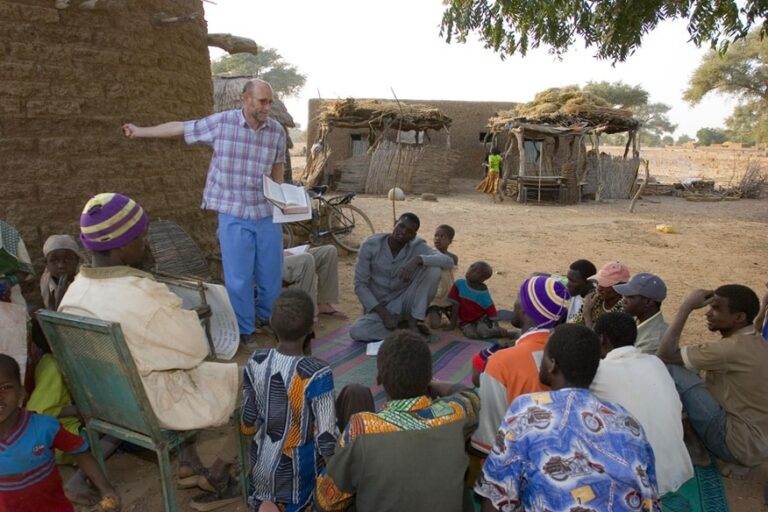
The next element which contributes to success is Discovery Bible Studies (DBS). These studies are in a story-telling format which is well suited for oral learners like the Fulani people. While some begin to follow Christ after dreams and visions, most initiate their journey through a DBS. Biblical stories of health and healing access people’s hearts and touch them where they hurt.
In a DBS, participants study the stories of creation all the way to Christ. Lessons, many of which promote health, are contextualized to the Fulani culture and world view. Their culture values six key virtues, called pulaaku – modesty, patience, kindness, courage, self-respect, and common sense. Each is addressed and affirmed in the Bible study.
This is a slow process that is not about winning arguments. Through sharing stories and parables from the Bible, and trusting in the power of the Holy Spirit, lasting relationships are built. Stories include a theology of suffering and persecution being understood as part of following Christ.
Focusing on health and flourishing is another key element because physical and mental health needs are real. This is what people actually struggle with day to day. Health centers can address a range of health problems in some way – from preventable, to easily treated, to incurable. As Jam Tan volunteers address physical concerns, this naturally becomes a bridge to addressing deeper spiritual needs in the context of Fulani culture and Islamic faith. The skills training provided by Jam Tan also offers a path to flourishing. It enables people to be economically self-sufficient which helps them move away from the influence of radical violent groups.
The final element is collaboration and capacity building. CHDs are branching out into other villages as more ask to host clinics to address their specific health problems. The secular central government encourages NGOs to fill gaps for sustainable development, and encourages faith groups to be involved, as they do with promoting female education.[vi] These are not funded by the government, but the government has facilitated licensure for the school, and for the Medical Centre established in 2022.
Concerns about violent extremist groups in the country against Jam Tan’s purposes remain. However, the good will Jam Tan has developed since 2012 among government officials, local village chiefs, the police, families who have received services, and even the imams (who have been particularly expressive about their gratitude!) has deepened trust and transparency.
The Fruit of this Health-related Collaborative DMM Model
Since 2012, the mobilization through these health and other services has been significant. During the first quarterly CHD in March 2022, over 1,000 people were served, raising the profile and influence of Jam Tan. The second quarter CHD, in July 2022, resulted in even more people served with an increase of the radius of services, considering the new Jam Tan Medical Centre as the epicenter.
The Centre now focuses more on longitudinal preventative and primary healthcare, and training teams of local health promotion workers. These workers regularly visit families in villages and communities to provide advice and identify health conditions in their early stages, address spiritual health, and serve as a witness to the grace of God in Jesus Christ. The Centre continues to host quarterly CHDs to bring access to specialty services and enhanced outreach. Several other countries in west Africa with Fulani populations have come to seek training to multiply this DMM model in their own countries.
Blessed Are the Peacemakers
The Hebrew word for peace is shalom, and this is the whole-person picture of health that the Jam Tan church seeks to foster. They remain faithful in pursuing the vision of Matthew 24:14. They work by the grace of God toward that end, while also loving their neighbor in a tangible way – caring for body, mind, and soul. Jam Tan sees the “oil of the Holy Spirit run through the cracks in society through the love of God” in a country replete with violence and deprivations, as they seek social cohesion and flourishing.[vii]
They are a witness of God in a country challenged by terrorism, disease, food insecurity, and poverty. They extol the value of life, promote health, and demonstrate the coming of God’s multi-ethnic kingdom in a tangible way. Jam Tan sees themselves as the fruit of the harvest from years of prior missionary efforts, fruit harvesters for this people group movement to Christ, and active co-participants of the healing of the nations (Revelation 22:2). They are stewards of the Fulani community and beyond – all in an effort of making peace (shalom), “peace only.”
Boureima Diallo (boureima@jamtan.org) is a Fulani Christ-follower, pastor, founder of Jam Tan in Burkina Faso (jamtan.org), and lead facilitator of FULNET (fulnet.org), comprising several missions and ministries that are making disciples and planting churches among the Fulani in several countries in the Sahel in Africa.

Daniel O’Neill (dwoneill@cjgh.org) is a physician-theologian, managing editor of the Christian Journal for Global Health (cjgh.org), and he is on the board of Health for All Nations (Frontier Ventures). He has worked through SIM in short-term integral mission projects in Burkina Faso
[i] The World Bank in Burkina Faso, “Overview,” https://www.worldbank.org/en/country/burkinafaso/overview#1.
[ii] Elizabeth Gummerson, Carolina Cardona, Philip Anglewicz, et al, “The Wealth Gradient and the Effect of COVID-19 Restrictions on Income Loss, Food Insecurity and Health Care Access in Four Sub-Saharan African Geographies,” PloS One 16, no. 12 (2021): E0260823.
[iii] dMission Frontiers, “Healers and Preachers: Coming Together to Foster Movements in All Peoples” (September 2022), https://www.missionfrontiers.org/issue/archive/healers-and-preachers.
[iv] FULNET, “News & Prayer Requests,” January–May 2020, https://fulnet.org/may-news.
[v] Safeguarding Health in Conflict Coalition, “Health Workers at Risk: Violence Against Health Care,” June 2020, https://www.safeguardinghealth.org/sites/shcc/files/SHCC2020final.pdf.
[vi] Philippe Ouedraogo, “Partnership for Female Education in Burkina Faso – Perspectives from Evangelical Churches and FBOs,” in African Initiated Christianity and the Decolonisation of Development: Sustainable Development in Pentecostal and Independent Churches, eds. Philipp Öhlmann, Wilhelm Gräb, Marie-Luise Frost (London: Routledge, January 2020), 243–252, https://doi.org/10.4324/9780367823825.
[vii] Jam Tan, “Jam Naati Community Health Day,” 1 April 2022, https://www.facebook.com/watch/?v=401852455111726.
EMQ, Volume 59, Issue 4. Copyright © 2023 by Missio Nexus. All rights reserved. Not to be reproduced or copied in any form without written permission from Missio Nexus. Email: EMQ@MissioNexus.org.