EMQ » July–September 2023 » Volume 59 Issue 4

Summary: One of six families struggles to conceive, a journey that can be challenging and filled with uncertainties. However, Premom, a revolutionary fertility app developed by Easy@Home, aims to alleviate the frustrations and guesswork associated with getting pregnant. By providing accurate ovulation predictions and cycle tracking, Premom has become a valuable tool for women worldwide. It also presents a unique opportunity for cross-cultural workers to build connections in communities where the gospel is still unknown in ways that lead to the birth of healthy babies and families transformed by the good news.
By Sherry Liu with Beverly Guy
During a visit to South Asia, Tim,[i] the director of an international missions organization, struck up a conversation with the couple sitting next to him during breakfast at his hotel. Early on, Joanne and David asked him, “Why are you here?”
Tim’s reply was unexpected. He told them he was in town to educate people about fertility planning. “The topic seemed to resonate with them at a core level of their person and marriage,” Tim recalls. “They told me they live in a culture that places a high value on having a child. It is the basis for their future when they grow old.”
But, after nearly 12 years of marriage, David and Joanne had been unable to conceive. The high pressure they faced from family members was putting a strain on their marriage and their relationships within their relatives and their wider community.
Tim pulled out his phone and showed Joanne and David the Premom app – a program designed to help women become pregnant sooner and naturally. Joanne downloaded it on the spot and began reading about the app on the Premom website.
This app didn’t just give Tim an opportunity to help meet a felt need. It also opened an opportunity to talk about spiritual matters with a couple from a Hindu people group – one without a church that proclaims the gospel in the local language and in a culturally relevant way.
Tim shares, “As a cross-cultural church planter, I was stunned by how quickly our casual conversation turned into a deep heart issue for Joanne and David. They asked me more questions that provided a natural pathway for me to share my personal testimony and to pray for them.”
David told Tim that he had never heard of this way of salvation before or met someone who identified as a follower of Christ. Tim recalls, “As we parted ways, I asked for permission to send him a short film in his heart language that would help him remember what I had said about the way of salvation. … This conversation illustrates the power of connecting with a deep need within communities where Christ is yet to be worshiped – a need that exists in every place on the planet.”
Addressing a Universal Need
In an article on community engagement, pastor Chris Trethewey emphasized the importance of identifying the real need in communities that we are seeking to reach.[ii] Regardless of caste, status or socio-economic situation, the issue of infertility is prevalent and pressing worldwide. On April 4, 2023, the World Health Organization reported that one in six people worldwide are affected by infertility.[iii]
The Premom app addresses this felt need of every tribe, tongue, and people. As the CEO and co-founder of Premom, I’m excited by its ability to address a need impacting families around the world. But I’m even more excited by the ways in which it enables followers of Christ to minister in word and deed in his name (Colossians 3:17) by helping women conceive and providing pathways for sharing the hope of the gospel.
The Birth of an Idea
The concept behind Premom originated from the creators of Easy@Home, who launched the Easy@Home Ovulation Test in 2013. While this test gained popularity, the creators noticed a common pain point among users: difficulty in accurately tracking the luteinizing hormone (LH) surge and identifying the fertile window. Many users resorted to taping faded test strips in notebooks, leading to confusion and frustration.
Regardless of caste, status or socio-economic situation, the issue of infertility is prevalent and pressing worldwide.
Driven by the desire to provide a more effective solution based on natural family planning, the creators embarked on the development of an app that would eliminate guesswork and enhance fertility tracking. Despite facing financial constraints, they took the courageous step of initiating the creation of Premom. After nearly two years of dedicated development, the app was successfully launched at the end of 2017. By the spring 2023, Premom had been downloaded over 5 million times worldwide.
The app has quickly acquired a diverse user base, reaching women in over 100 countries. While the majority of users come from North America and Europe, the app has also gained traction in countries like India, Malaysia, Philippines, Nigeria, and Brazil.
Approaches That Fell Short
Before the launch of Premom, women would typically rely on multiple methods when trying to conceive, including fertility apps that track menstrual cycles based on logged data and home ovulation tests that predict the ovulation day. In more complex cases, some have turned to procedures such as IUI (intrauterine insemination) or IVF (in vitro fertilization).
Numerous fertility apps had already flooded the market, helping women track their cycles and predict menstruation or ovulation dates. These apps were effective for users who solely sought these predictions and had regular and predictable cycles based on the logged data. However, they fell short when it came to providing precise information about the fertile window for optimal conception.
On the other hand, a multitude of ovulation tests, including the product offered by Premom’s sister brand Easy@Home, were available worldwide. Easy@Home, a bestseller on Amazon.com, proved successful for users committed to daily testing until they obtained a positive result. But, while it outperformed most ovulation tests, many users faced challenges in conceiving with just a single positive result. Ovulation tests alone couldn’t determine the peak day for conception, as they could produce multiple positive results over several days, influenced by fluctuating hormone levels. Therefore, ovulation tests alone couldn’t accurately identify this crucial period.
IUI and IVF have also fallen short for the majority of those who undergo these procedures. CDC data reveals that the average success rate per assisted reproductive technology cycle is below 25%,[iv] and the cost per live birth can reach up to $100,000.[v] This significant financial burden makes these procedures inaccessible for many families.
Premom offers an alternative solution that is more affordable and can be used as a first-line approach. This empowers women to maximize their chances of conception without the high costs and risks associated with IUI and IVF.
An Innovative Solution
Premom distinguishes itself as the only fertility app that integrates at-home fertility tests, a smart basal body temperature thermometer, professional services and physician-developed education. This comprehensive approach combines advanced tracking technology with personalized insights, eliminating the need for multiple approaches and providing a streamlined fertility journey. This allows women to pinpoint their most fertile window more accurately, even if they experience irregular cycles or fertility issues.
Most importantly, the majority of Premom’s app features are free, making it accessible to families of all financial backgrounds. This commitment to affordability ensures that women and couples can benefit from the app’s innovative tools and resources without financial barriers. By providing no-cost access to essential fertility tracking features, Premom is dedicated to supporting individuals on their journey to parenthood, regardless of their financial circumstances.
I’m excited by the numerous success stories shared by women who had struggled for a long time to conceive through other methods but conceived within a few months of using Premom. One woman in her early 30s and her husband had tried to conceive for two years without success; but shortly after she began using Premom, she became pregnant.
“I cannot begin to tell you how happy I am!” she told us. “I’ve cried so many tears because, after negative after negative pregnancy test, I was afraid I would never get the opportunity to be a mother.”
Stories like these are a testament to the effectiveness and impact of Premom, providing hope and encouragement to women and couples on their fertility journey and demonstrating the ability of this app to address a need that touches the hearts of families around the world.
Another user, Syd, shared: “Premom has been a godsend on our journey to conceive. I knew absolutely nothing about charting my LH and temperature, and they give you all of the info you need and send you boxes of LH test strips periodically. I also bought their basal thermometer, and it works perfectly. I was able to accurately figure out when ovulation was occurring, and my husband and I just found out we’re pregnant after four months of using Premom!”
This year alone, over half a million users are expected to achieve pregnancy with the assistance of Premom. Looking ahead, the goal is to see this number grow by 50% annually, with over 10 million women benefiting from Premom’s support in achieving pregnancy. The continued growth and reach of Premom reflect its commitment to making a difference in the lives of millions of women worldwide. We are excited to witness more success stories and transformations in the years to come.
Providing Personalized Support
Premom isn’t an instant solution, however, and one major hurdle is some users’ tendency to give up too quickly. A minimum commitment to consistently upload test results to the app is required for the program to work as designed. Without sufficient data, the app’s predictive accuracy may be compromised, which can hinder its ability to provide precise fertility information. However, this challenge can be effectively addressed through personalized engagement and professional teaching – services that cross-cultural workers can provide.
By offering personalized support, guidance and educational resources, believers trained to educate others about Premom can help users understand the importance of consistent data input and encourage them to stay engaged with the app for optimal results. With ongoing support and encouragement, users can overcome these challenges and maximize the benefits of using Premom for their fertility journey. And, as cross-cultural workers come alongside families in this way, they’re able to build connections in communities with little or no gospel influence.
An Opportunity for Cross-Cultural Workers
Christian organizations are invited to consider partnering with Premom to help bring this transformative solution to more families struggling to conceive. By joining forces with Premom, ministries can contribute to our mission of empowering women and couples on their journey to parenthood.
But partnering with Premom isn’t only a means to help families on their fertility journeys. It also presents an opportunity to share the gospel and guide them toward a life of faith. It can serve as a pathway for believers to live out their faith in communities where traditional missionaries cannot go.
For church planters, Premom is a tool that paves the way for meeting the eternal needs of couples struggling with infertility. As these cross-cultural workers utilize Premom’s training and portable devices to help families conceive their long-awaited children, meaningful opportunities arise to share the Word of God with many families. By combining the Premom program with biblical teachings, cross-cultural workers can actively engage with couples throughout their entire pregnancy journeys and empower them to easily share their experiences with others in their community after they have welcomed their babies.
In addition, when a baby is born with God’s blessing, it can serve as a catalyst for an entire family’s spiritual journey. My hope, and the hope of many cross-cultural workers who are discovering Premom, is that the children conceived as a result of this app will bring eternal blessing that will continue to flow from one generation to the next.
By combining the Premom program with biblical teachings, cross-cultural workers can actively engage with couples throughout their entire pregnancy journeys … .
Tim sees this potential: “As a follower of Christ trained to bring the Premom solution to communities, I can see that people are clamoring for it. I believe we are showing obedience to the Great Commission and advancing the kingdom through church planting as we use this app to come alongside families in least-reached communities.” Our dream is to share the gospel anytime, anywhere, without limitations. Premom may play a crucial role in fulfilling this dream as it supports growing families worldwide. We pray for the birth of healthy babies and the nurturing of faithful families transformed by the gospel. Please pray with us!
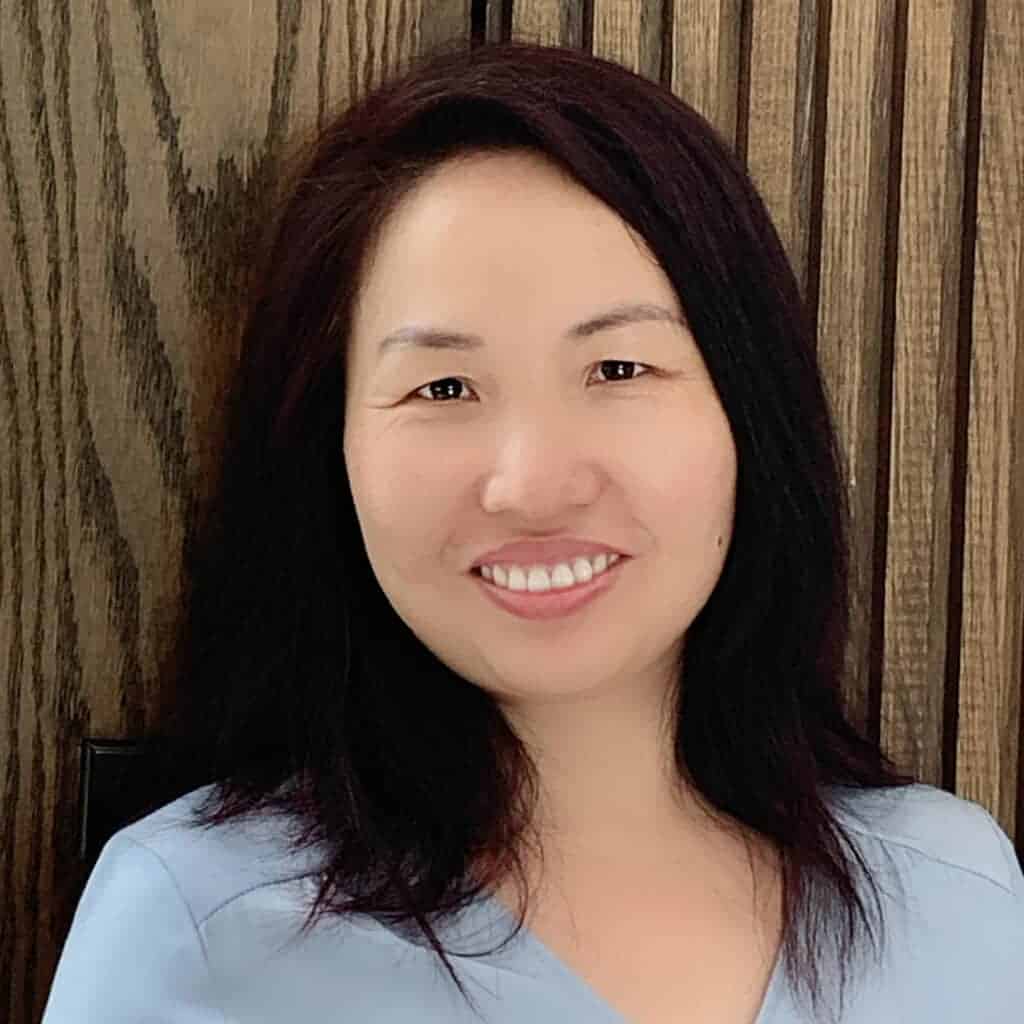
Sherry Liu (sherry@healthcare-manager.com) is the CEO and cofounder of Premom, a fertility app delivering a digital solution that helps women conceive quickly and naturally. She has a 20-year track record of building startups into successful businesses, has worked in global marketing management on numerous continents and has served in leadership roles in digital health, Femtech, and the point-of-care testing industry.

Beverly Guy (beverlyguywriter@gmail.com) has served in communications roles in Christar since 2007 and currently leads the Christar US editorial team. She also has the joy of coming alongside other nonprofit organizations as an editor, writer, and consultant. Her passion is to help believers’ words serve them well for the glory of God and the blessing of his people.
[i] Pseudonym used for security purposes.
[ii] Chris Trethewey, “4 Steps to Amplify Community Engagement,” accessed May 26, 2023, https://careynieuwhof.com/4-steps-to-amplify-community-engagement/.
[iii] “1 in 6 people globally affected by infertility: WHO,” World Health Organization, April 3, 2023, https://www.who.int/news/item/04-04-2023-1-in-6-people-globally-affected-by-infertility.
[iv] “ART Success Rates,” Centers for Disease Control and Prevention, last reviewed February 21, 2023, https://www.cdc.gov/art/artdata/index.html.
[v] FertilityIQ, “IUI or ‘Artificial Insemination,’” accessed June 20, 2023, https://www.fertilityiq.com/iui-or-artificial-insemination.
EMQ, Volume 59, Issue 4. Copyright © 2023 by Missio Nexus. All rights reserved. Not to be reproduced or copied in any form without written permission from Missio Nexus. Email: EMQ@MissioNexus.org.