EMQ » July–September 2023 » Volume 59 Issue 3
[mepr-show rules=”100329″]
Summary: God has been preparing the digital and the metaverse mission fields, and in these digital environments we can reach the world. A handful of innovative church planters with little to no support are leading what can at the very least be called an innovative experiment. Their work is bringing hard-to-reach people encountered in digital spaces into relationships with Jesus. The missional implications of their work cannot be ignored.
By Jeff Reed
Billions of people. Mission fields larger than India and China combined. Massive percentages of atheists, agnostics, and de-churched. Yet the church is hesitant to go? Anyone else confused?
Hold on. Let me back up a little bit.
“Jeff, your view of digital is so small.” I was not prepared to hear those words.
In 2021, I was championing digital discipleship through thechurch.digital (TCD). Through TCD we helped thousands of churches learn to thrive, grow, and multiply in the new COVID world. The first Bible study I ever taught online was way back in the year 2000.
Since then, I dedicated decades of my life to the idea of being a church in digital space. So, when a missiologist from a globally recognized organization called me out for my limited view of digital, I picked my ego up off the ground and listened to what he had to say.
He was right, by the way. I did have a small view of what God could do digitally.
God has been preparing the digital and the metaverse mission fields. But we are missing the opportunity that God has clearly laid before us, because of antagonism toward digital ministry. Matthew 9:37 which says, “The harvest is plenty, but the workers are few,” becomes sadly ironic.
In a mission field where billions of people interact, the Church is reluctant go. But it’s in these digital environments where we can reach the world. And a handful of innovative church planters with little to no support are advancing on the digital mission field.
Digital Church Planting Reaches Different People
When I say digital and metaverse churches, I want to specify that these churches have no physical building. This is not a physical church streaming their church service online. Digital churches are being planted separately from physical churches.
The people planting these digital churches are looking at the digital communities, as well as virtual reality, and are recognizing that these communities are worthy of a church. Why not plant a church in the digital mission field?
These church planters are typically bi-vocational. They usually have no sending organization or denominational support. Their own pastor may be threatened by the idea of a digital church, and their denomination likely has no interest in the idea. The friends and family of these digital church planters often don’t know how to be supportive as they’ve never experienced a digital church before.
Over the past five years, I have built relationships with hundreds of digital missionaries. They’re planting churches in Facebook groups, in virtual reality, running micro church networks on Zoom, and discussing their faith on social networks like Twitch. The oldest digital church I know of started in 2012, in an online gaming platform called Roblox.
The stories I’m hearing from them indicate that hard-to-reach people are finding, sharing, and coming to Christ, digitally. They explain that their churches are mostly comprised of atheists, agnostics, satanists, neo-pagans, and others who haven’t set foot in a church building in more than a decade. And their reach goes beyond the limitations of country borders. Doing something different is enabling them to reach someone different.
Concerns About Digital and Metaverse Ministry
Digital and metaverse churches seek to build genuine relationships and prioritize discipleship, but they face pushback. Some express concern about the authenticity of digital relationships. Can digital relationships be valid or real? While this may be true for certain people, it’s not true for everyone. Among the world’s first digital native generation, Gen Z, no distinction is made between digital and physical relationships, and connectivity is normal.i
These churches also encounter ecclesiological controversy. The idea of digital churches challenges some ecclesial norms, and it may take decades of discussion to reach wide-spread agreement. Even among innovative digital church planters, there are major differences of opinion on ecclesiology and ordinances in digital spaces. Biblical functions are important to digital churches, although it’s re-imagined and mapped across digital tools.
While it’s true that not all the answers exist yet, we also don’t want to miss what’s happening in the digital space. At the very least, it is an innovative experiment that is leading more real people, often missed by traditional churches, into relationships with Jesus. The obvious missional implications cannot be ignored.
Digital Evangelism
In addition to digital church planting and discipleship, digital evangelism is also growing. For those who might feel uncomfortable with the term “church” in the digital space, the idea of digital missionaries doing digital evangelism may be easier to accept.
Earlier this year, I co-authored a book with Dr. John Harris called Sharing Jesus Online: Helping Everyday Believers Become Digital and Metaverse Missionaries (sharingjesusonline.com). It provides practical ways for normal, everyday Christians to relationally connect and share about Jesus with people they know, and even people they don’t know, via social media channels and virtual reality.
We borrowed a simple framework from Dave Ferguson’s book called B.L.E.S.S – Five Everyday Ways to Love Your Neighbor and Change the World (daveferguson.org). In his book he outlines five simple, biblical, and relational practices anyone can use to reach their neighbors. We translated the ideas in B.L.E.S.S. from physical to digital community. We literally give basic instructions on how individuals can bless people in the digital and metaverse mission field.
The average American spends more than 16 hours a week on social media. What if we just spent one of those hours being relationally intentional with the gospel? To reach the people in the digital mission field, we must do something different.
The Digital Church Framework
TCD, and NewThing Network partnered together to launch the Digital Church Network (digitalchurch.network) to help pastors, planters, and practitioners understand ministry in the digital community, and see the ways digital ministry is different from traditional models in physical spaces. A healthy digital church utilizes content to drive people to community where there is an emphasis on disciple-making that intentionally helps people discover their missional calling in digital, virtual, and even physical spaces.
Physicality
A common misconception is that digital churches are against physical contact.ii However, the expectation of physicality does play a part in reaching the digital mission field. What sets digital churches apart here is that they are not limited to physicality. The goal is not necessarily a physical meeting. Instead, it is to see the Holy Spirit move in people’s physical (as well as digital) lives.
There’s a simple principle here: online to offline. The gospel that we hear in our online world must influence our offline relationships. Otherwise, the church creates consumers rather than disciples. We want to see people showing the fruits of the Spirit digitally and physically.
As a result of online to offline, some digital churches are growing into a digital/micro-church strategy. This looks like multiple digital small groups that interconnect in one digital church community. The digital church itself, then, is not a place to gather. Instead, it serves as a digital distribution network for the gospel. Essentially, the Internet is used like the modern network of Roman roads, and digital church planters are the new Paul.
Disciple-Making
At its core, a digital church operates best with simplicity. Through the Digital Church Network, we promote a micro church network strategy for digital churches that starts as a disciple-making movement (DMM) that grows into a church-planting movement (CPM).
I’ve asked virtually every planter we work with this question: Is it better to have a million-person church, or 100,000 churches of 10? While there are pros and cons to both, digital churches have unique opportunities to contextualize their message through intentional disciple-making with small groups.
Barna’s Digital Evangelism report (December 2020) tells us that when people have spiritual questions, they either go to Google/YouTube to find the answers to those questions or they go to their friends.iii A digital church with a solid digital strategy as well as a solid disciple-making strategy can tackle this digital mission field. Relationships are the key.
Community
In 2023, organizational and institutional mistrust is rife. This is magnified at the religious institutional level. Engaging in existing digital or metaverse communities can be a safe space for people to build relationships with digital churches, or more importantly, the Christian leaders within the church.
Today’s churches should be looking at planting churches in existing digital communities with the same enthusiasm that we plant physical churches! When was the last time you prayer walked a Facebook group, or openly shared Jesus in virtual reality? Maybe you should.
Discipling in the digital community can also be highly effective. Jim Wilder and Michel Hendrick detail the brain science behind discipleship in their book entitled, The Other Half of Church. Not surprisingly, they discovered that discipleship is more thoroughly formed in communities.iv
By creating digital communities, churches could strengthen genuine relationships for the purpose of disciple-making. Disciple-making, grounded in the digital community can be a credible and crucial part of seeing the church maximize its reach, as well as multiply its impact and opportunities.
Content
I once asked an executive pastor at a successful megachurch in America how they measured their online attendance. His response? “We don’t measure online at all. We only count people who are capable of putting their pants on.” I’ve heard others say, “Digital church is only consumerism.”
These attitudes are common, even post-COVID, but they are faulty. Consuming content online at home is perceived as lazy, while doing the same in person is not. Content consumption is not only a digital phenomenon. It can happen online and in person. And furthermore, this misses how content in digital churches can actually help connect people with authentic digital community in the digital mission field.
Now, what should the content be? That’s a fascinating question. Digital churches have unique opportunities to contextualize, which greatly impacts missional opportunities. Content is a necessary front door to feed into the digital community. But, if content does not feed into the digital community, then the nay-sayers are right. Digitally we’re just a bunch of lazy people, consuming content while we walk around looking for our pants.
Contextualization: Discipling the Digital and Virtual Mission Field
Do you remember the 100,000 churches of 10 that I mentioned? Let me put some meat on those bones while I explain what we are going to do with those disciple-makers.
In today’s world, no one seems to agree on anything. It often seems like we cannot help but disagree! This is also true in the digital mission field, although contextualization can be used here to our advantage.
Digital communities can be huge! There are more active Facebook users than people who live in China and India combined. Active gamers number in the billions. Even virtual reality is reaching massive amounts of people in 2023, with up to 171 million active users globally.
Seth Godin is one of the world’s top marketing thought leaders.v On a recent podcast, someone asked Seth “How do I get my message heard around the world?” Seth’s response cuts to the point:
“What’s the smallest viable audience, the smallest group of people that you could connect with, that you could inspire, that you could change, that you could make a living with and that would sustain you on your journey? Because the answer is not a billion people. It might not even be 100 million people or 10 million people or a million people. And the place we begin getting trapped is saying this is for everyone. ‘It’s so good. It’s for everyone.’ How do I get the word out? The alternative is to say, ‘It’s for someone.’ How can I be specific?”vi
This is where we come back to 100,000 churches of 10. Instead of reaching everyone, we aim at reaching someone. Targeted ads and personas are commonly used in digital marketing, and are becoming effective in digital ministry helping to reach people in some of the driest areas of the gospels.
Organizations like Global Media Outreach (globalmediaoutreach.com), He Gets Us (hegetsus.com), and Media Impact International (mii.global) are utilizing this method globally. An interesting anomaly we often see in digital marketing is that when we try to reach everyone, more often than not we reach no one. It’s the Seth Godin principle. You’ll never get a billion people to agree. But if we aim at less people, we actually hit more people.
Successful digital churches are simply contextualizing this approach. Rather than focusing on spending money on advertising campaigns, digital churches are focusing on relationally connecting in smaller, more nuanced areas of the mission field. The organic approach of relationships has proven successful.
Churches develop a marketing persona, a target audience they’re looking for, or an affinity grouping to digitally connect more deeply with a smaller group of people. Different church planters put different spins on their persona. Some aim for a de-churched audience. Others home in on more personal characteristics like gamers, truckers, or people who like barbecue. I’ve even met a planter who is starting a digital church aimed at reaching displaced Nigerian refugees scattered around the globe.
How are We Digitally Missional?
It’s been fun seeing these churches grow, and it’s almost equally rewarding when others validate the experience. Sprout Digital (sproutdigital.info), a Christian research firm, is conducting a 5-year research project on digital church and digital discipleship. They’ve found several trends and categories operating in digital church communities, including: vii
- Social Media Churches: These churches operate entirely on social media platforms such as Facebook Groups, Instagram DMs, Twitter Communities, and more.
- Influencer Churches: Don’t let the word influencer scare you off. This model is based on a digital missionary who uses their influence to connect people in a digital community where discipleship and other spiritual development take place.
- Digital/Micro Churches: This is similar to a micro-church model you could see in any neighborhood, except that the neighborhood is Zoom. These churches are heavily missional, regularly mixing physical and digital, and are quick to multiply.
- Gamer Churches: With over 3 billion active gamers on Earth, how can the church reach them? They can use platforms like Twitch and Discord to connect and disciple gamers. There’s also a sub-sector of this group that does church within video games. Want to go to church in the Rust video game?viii That’s entirely possible.
- Virtual Reality Churches – What about churches in VR? This virtually (pun intended) untapped mission field is ripe for churches to connect, engage, and disciple people in virtual communities.
It’s worth noting that most of the innovation in this space is not coming from established churches, but from pioneering individuals with a vision. As the tip of the spear, these pioneers get the chance to carve out the path for tomorrow’s church.
The vast majority of digital church planters and missionaries I know of are underfunded and struggle to find support. They are venturing into new mission fields, and creating new opportunities to learn how to do something different to reach someone different.
A Metaverse Mission Trip?
I recently had a US-based church propose an idea to me for a new type of mission trip.ix I’m sure you all know the concept of the global mission trip. Get a group together, buy some plane tickets, and fly to a global mission partner where you support the mission partner doing street evangelism, medical missions, construction – really any number of tasks. The physical mission trip is an incredible learning opportunity, both physically and spiritually. This church, however, is suggesting doing a metaverse mission trip.
For the metaverse mission trip, there’s no airline ticket. No travel. Cost is whatever VR headset you buy. And for a month or so you spend as much time as possible engaging in the virtual reality mission field. You meet people, build relationships, and talk about Jesus. It’s the same things you would normally do on a physical mission trip, but you’re reaching people that you wouldn’t be able to reach physically.
Perhaps this sounds like a crazy idea. But even something as small as buying a VR headset and prayer walking one of these virtual social worlds like Meta Horizon Worlds or VRchat is a huge step allowing God to reveal a new mission field to you, and the part you could play.
Joining God in His Work
In his book, Experiencing God, Henry Blackaby wrote, “Watch to see where God is working and join Him in His work. If Christians around the world were to suddenly renounce their personal agendas, their life goals and their aspirations, and begin responding in radical obedience to everything God showed them, the world would be turned upside down.”x
God’s fingerprints are all over the digital and metaverse mission field. He is moving in these spaces. The mission field is ripe. The workers are few. Are you ready to go? What’s stopping you?
I invite you to join us.
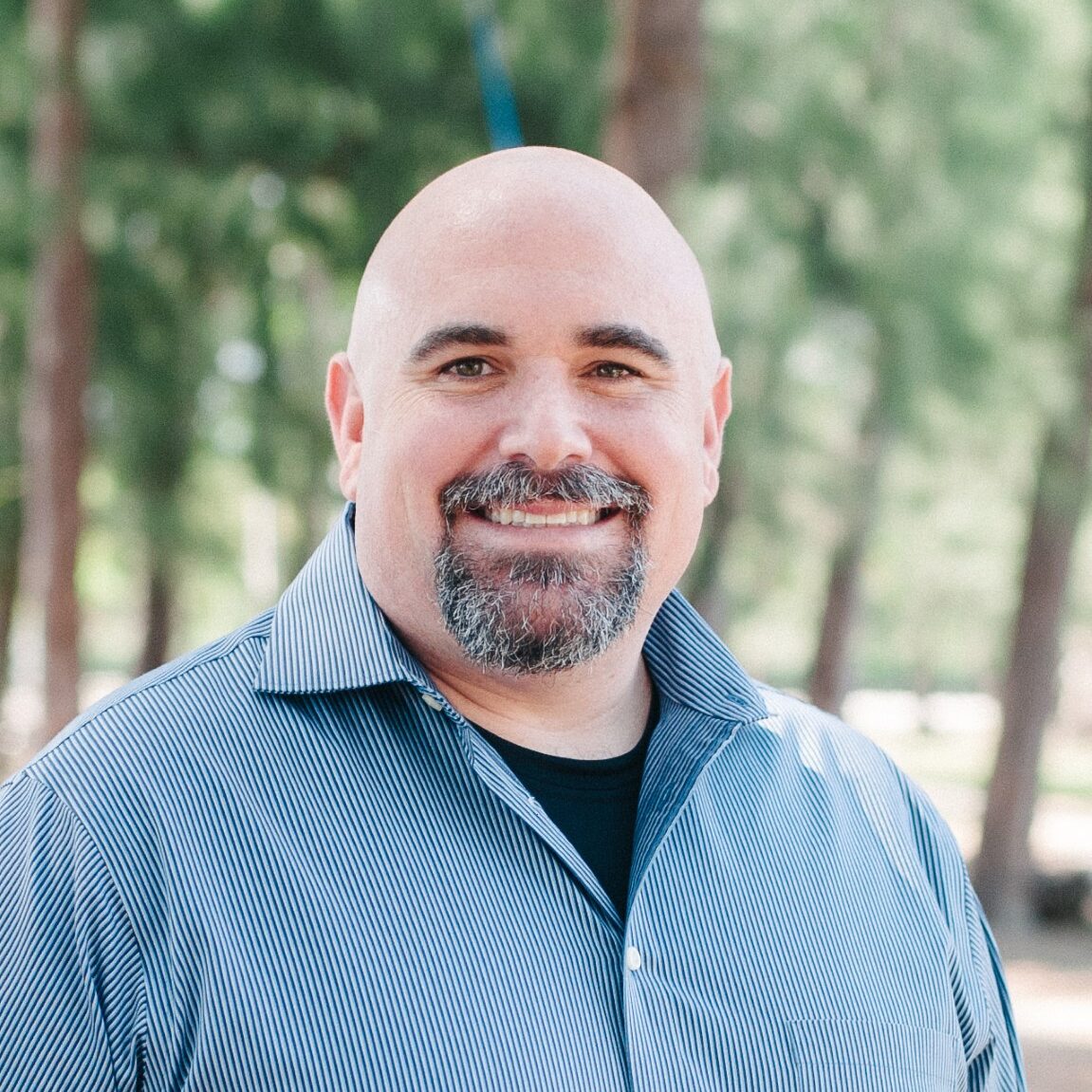
Jeff Reed (jeff@thechurch.digital) led his first Online Bible Study in 2000, taking 75 people through the book of James using a text-based bulletin board system. Founding thechurch.digital (TCD) in 2018, Jeff’s passions evolved into discipling people to find their calling, releasing people missionally and digitally, and planting multiplying digital churches. This pursuit is realized through digitalchurch.network, a network for digital and virtual expressions of the church.
EMQ, Volume 59, Issue 3. Copyright © 2023 by Missio Nexus. All rights reserved. Not to be reproduced or copied in any form without written permission from Missio Nexus. Email: EMQ@MissioNexus.org.