EMQ » April–June 2023 » Volume 59 Issue 2
Summary: As disciples of Jesus Christ in 2023, how must we live in order to halt the disasters that are devastating food security and destroying the web of life on which we depend? How do we preach the good news of the gospel in this context? What is the mission to which God is calling us? The Green Anglican movement, which started in Southern Africa, is responding to these pressing questions on three levels – spirituality, local actions, and advocacy.
By Rachel Mash
We are living in a world in crisis. As we emerge from COVID-19, the reality of climate change and biodiversity loss is more evident than ever. Devastating floods, wildfires, and heatwaves are the face of climate chaos.
In Africa, climate change is not a future crisis, it is a disaster that many millions live daily. For example, northern Kenya has had no rain for four years.[1] Children are so malnourished that they are too weak to walk to school.
In Durban, South Africa, a rain bomb[2] washed away homes and infrastructure killing at least 300 people. Many of the bodies have yet to be found.[3] Recently, Cape Town suffered three years of drought and was threatened by what they called “Day Zero” when all the taps would be turned off.[4]
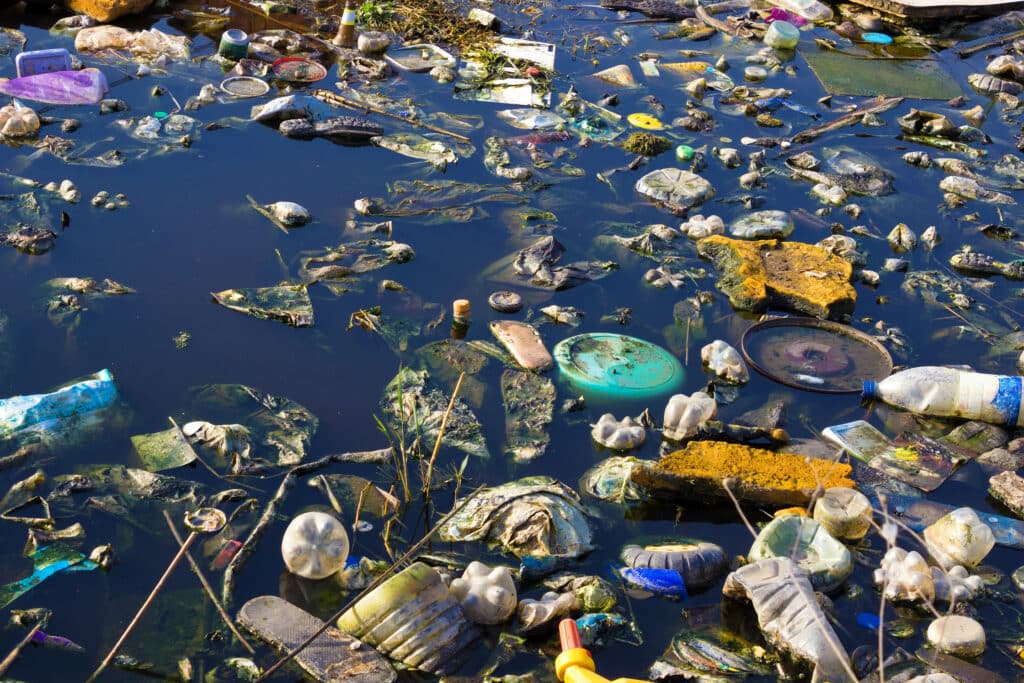
Hunger is on the rise. Deserts are encroaching.[5] Fertile soil is being eroded faster than it forms.[6] Fish stocks are threatened by ocean acidification and overfishing.[7],[8] Living rivers are toxic and polluted.[9]
As Christians we, know that discipleship includes feeding the hungry and helping the destitute (Matthew 25.35). However, the challenges for us in today’s world are more complex. As disciples of Jesus Christ in 2023, how must we live in order to halt the disasters that are devastating food security and destroying the web of life on which we depend? How do we preach the good news of the gospel in this context? What is the mission to which God is calling us?
A movement, which started in Southern Africa, has been growing within the Anglican church simply called the Green Anglicans. It has now spread to 14 countries across Africa and is part of the Lausanne/WEA Creation Care Network (lwccn.com). Green Anglicans have responded to the climate and environmental crisis on three levels – spirituality, local actions, and advocacy.
Green Anglicans and Spirituality
Our spiritual foundation is our love of the Creator, our neighbour, and his creation.
God’s First Mandate – Care for Creation
In Genesis 2:15, God took Adam and Eve and placed them in the garden of Eden on the garden planet. And he told them to work the land and to look after it. They were allowed to drink from the water, eat from the fruit, use natural resources to warm themselves, house themselves, and feed their families. The first commandment that we as human beings were given by God was to care for this beautiful blue planet given into our care.
At its heart, care for Creation is a mission priority in the Anglican Communion, known as the fifth mark of mission: “To strive to maintain the integrity of creation and sustain and renew the life of the earth. This mission priority emphasizes two aspects, protecting what has not been destroyed and renewing what has been degraded.”
Salvation is Holistic
Adam and Eve sinned when they ate beyond the limits. During the Fall, three things took place in Genesis 3. There was estrangement between humans and God. They previously walked with him as friends, and now they are afraid. There was a break-down of relationships between humans – they used to walk freely, naked, but now they blame each other and within one generation murder enters this dysfunctional family.
But what we often fail to note is that there was also a breakdown in relationship between humans and the environment. In Genesis 3:17–18, we read, “Cursed is the ground because of you; through painful toil you will eat food from it all the days of your life. It will produce thorns and thistles for you, and you will eat the plants of the field.”
When Jesus died for our sins on the cross, he brought reconciliation between God and humans, between humans themselves, and also between humans and the land. We can read about that in Colossians 1:20: “Not only that, but all the broken and dislocated pieces of the universe – people and things, animals and atoms – get properly fixed and fit together in vibrant harmonies, all because of his death, his blood that poured down from the Cross” (The Message).
So, our participation in discipling the peoples of the nations, then, must involve bringing people to a right relationship with God, with their neighbour, and also with creation. Caring for creation is not an additional optional extra for the greenies, it is core part of gospel business.
Green Anglicans and Action
Action is Hope
Often people ask, what is the point of one person recycling, or planting a tree, when the environmental challenges are so huge. Personal actions are important because they bring hope. We may indeed feel very pessimistic about the future, but optimism is not the same as hope.
Rabbi Jonathan Sacks explains, “Optimism and hope are not the same. Optimism is the belief that the world is changing for the better; hope is the belief that, together, we can make the world better. Optimism is a passive virtue, hope an active one. The Hebrew Bible is not an optimistic book. It is, however, one of the great literatures of hope.”[10]
This is actually what Christians bring to the environmental movement. So many people are suffering from eco-anxiety and feel hopeless about the future, particularly young people. Seeing the church taking action can bring hope to those who are in despair. So what are Green Anglicans across Africa doing?
Learning about God in Creation
Throughout history the church has believed in natural revelation – that God is revealed in creation. The apostle Paul writes in Romans 1:20: “Since the creation of the world God’s invisible qualities, his eternal power and divine nature, have been clearly seen, being understood from his workmanship, so that people are without excuse.”
Psalm 19 shows clearly that we can hear from God in creation as well as in the written word, with the first half of the Psalm encouraging us to listen to God in creation. Verses 1–2 of Psalm 19 state: “The heavens declare the glory of God; the skies proclaim the work of his hands. Day after day they pour forth speech; night after night they reveal knowledge.”
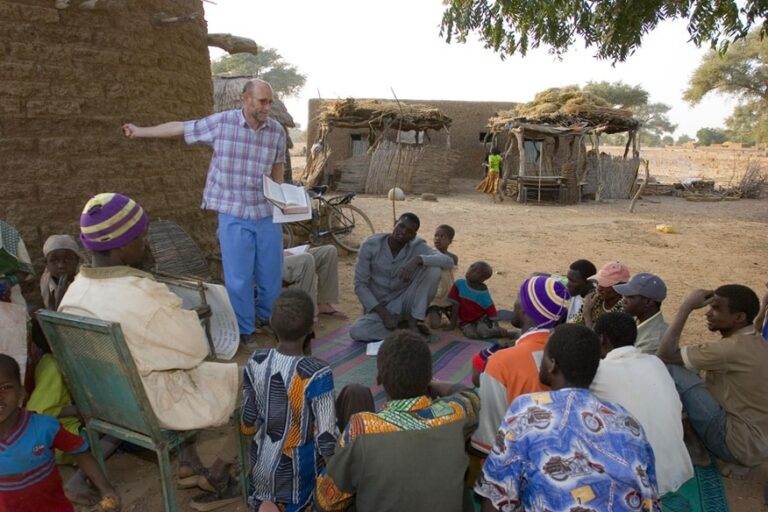
As the Green Anglicans movement, we have taken this very seriously, encouraging people to have outdoor services, to enable people to listen to God as we consider creation. When we have youth events or lay training there should be moments of sitting and learning from God as we consider the fingerprints of the Creator revealed in nature.
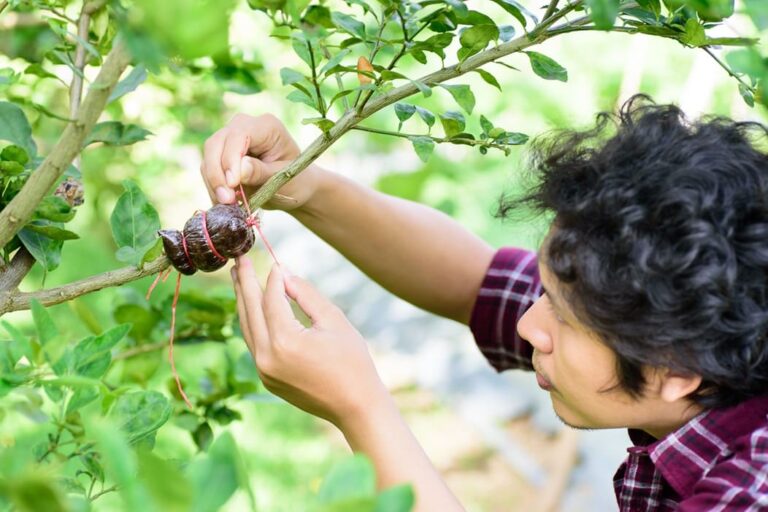
Tree Planting and Protection
The fifth mark of mission calls us to both protect and renew. We have to protect the forests and reduce deforestation, whether by business or to burn for wood or charcoal.
In Kenya, Green Anglicans developed a cooking stove which uses burning twigs to concentrate heat instead of branches. They have adopted areas of forest where they are pulling out alien trees and replant indigenous ones. Then different organisations – such as Mothers Union or Youth – adopt a section and hold prayer walks, and everyone must bring water to water the trees during the walk.
People in Malawi are producing briquettes to stop people using charcoal. They have linked tree planting to spiritual events such baptism, marriage, confirmation, and funerals. Trees create shade and community, reduce the air pollution, and remove carbon from the air.
At one community tree planting, a woman whose son had been murdered in a house break-in called to ask for a tree to be planted in his honour. She said, “…for I need a place to pray and cry.” Her request reflects what the Bible says in Revelations 22:2, “the leaves of the trees are for the healing of the nations.”
Water Justice
During the Day Zero drought in Cape Town, churches held water justice conferences – considering how they could distribute water to the elderly who couldn’t wait in long lines. Congregations raised funds for water tanks, installed grey water systems, and encouraged each other to reduce water usage.
However, one of the important legacies of the drought was to rekindle an awareness of the sacredness of water. We become part of the family of God through the sacred waters of baptism. We all know that Jesus was baptised in the river Jordan, but few consider where the water from their own baptism came from – it just came from a tap! As people reconnected with the rivers of their own baptisms, and they committed to protect and clean them.
Clean Ups and Recycling
In Jeremiah 2:7, God says, “I brought you into a fertile land to eat its fruit and rich produce. But you came and defiled my land and made my inheritance detestable.” This verse speaks with clarity to our situation, today. The world is drowning in waste. It is estimated that by 2050 there will be more plastic than fish in the ocean by weight.[11]
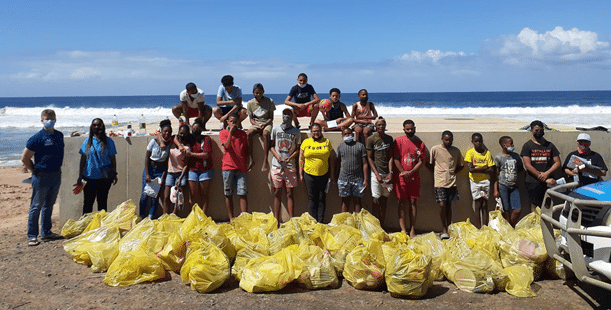
In response to this massive global waste problem, the Diocese of Harare in Zimbabwe has invited every Anglican in their diocese to take a bag to work on Fridays to pick up litter on their way home. They also promote four Rs: reduce, reuse, recycle, rejoice!
We also encourage people to reduce food waste by putting it to compost. This follows Jesus’s example at the feeding of the five thousand when he said to the crowd, “… let there be no waste” (John 6:12). He asked his disciples to gather up the pieces to be distributed to those in need.
Food Gardens
The Old Testament is not just the story of the people of Israel and God, but it is a three way relationship between God, the land, and the people. Across Africa, many churches have land and yet it is often lying empty while people are hungry.
We think of the spiritual actions of a Christian disciple such as prayer and praise, praying for the sick, feeding the hungry. Often working in a garden or healing the land is not considered to be part of our spiritual walk. But consider Isaiah 28:26, 29: “The farmer knows just what to do, for God has given him understanding. … The Lord of heaven’s armies is a wonderful teacher and he gives the farmer great wisdom.”
We are connecting with wonderful programmes, such as Farming God’s Way (farming-gods-way.org), which bring together conservation farming methods with the many Bible passages about farming and land. This creates links with growing your own food, being able to feed others and the spiritual life of followers of Jesus.[12]
Green Anglicans and Advocacy
Local actions by individuals, families, and churches are very important. But they are not enough. They often do not reach to the root cause of the problem. And so, it is important for Christians to be involved in advocacy around climate change, biodiversity loss, and pollution.
Pollution
In Malawi, a group called the Malawi Creation Care Network (MCCN) has become involved in advocacy around single use plastic. The government passed a ban on thin single use plastic, but then did not enforced it. So together with other groups, MCCN members took to the streets and held protest marches until the ban was enforced.
Biodiversity Loss
Around the world, plant and animal species are under threat. The Green Anglicans Movement of Kenya is working to help protect the Karura forest in central Nairobi. They have formed such a good relationship with the Kenyan Forestry Service that they refer to the Archbishop as, “the Chaplain to the forest!”
Climate Change
In 2014, Archbishop Tutu said, “climate change is the human rights challenge of our time.”[13] What’s become clear is that our small actions in reducing travel, electricity use, meat eating, etc are important, but they are not enough. Climate change represents a challenge that will require us to act together.
It is causing already vulnerable people to lose their homes and lives due to drought, famine, flooding, and sea level rise. In Africa, those impacted include many of our mission partners. Around the world, many of the most affected people are among those with whom we long to share the love of Christ. Proverbs 31:8 says, “Speak up for those who cannot speak for themselves; ensure justice for those being crushed.”One way the Church can respond is by amplifying the voices of these vulnerable groups.
We can advocate for the world to move as fast as possible away from fossil fuels, which contribute to climate change, towards renewable energy. For generations, our use of fossil fuels has brought devastation. Renewable energy promises to help healing come to the earth as the quality of air and water supplies improve, to better protect the health of our children, and to create new jobs. Supporting this helps us to again commit to the command God gave to Adam and Eve to “replenish the earth” (Genesis 1:28, KJV).
How do we speed up this transition? As people of faith we can work together. Our organizations and denominations can take their investments out of new fossil fuel projects. We can move our money out of banks that directly fund projects that cause polluting carbon emissions. And, we can collectively pressure politicians to increase national commitments to renewable energy and to pass laws that promote faster movement away from fossil fuels.
Choose Life
We have been called to God’s mission to restore people into to right relationship not only with God and each other, but also the land. This is a core part of the gospel that cannot be overlooked by any of our ministries. The Green Anglican movement shows that the Church can respond, and these actions can help protect those in danger, feed the hungry, and renew life on the earth.
In Deuteronomy 30:19, Moses says to the Israelites, “This day I call the heavens and the earth as witnesses against you that I have set before you life and death, blessings and curses. Now choose life, so that you and your children may live.”
For the sake of those most vulnerable to famine, flooding, and rising food prices…
For the sake of the generations to come…
Let us choose life.
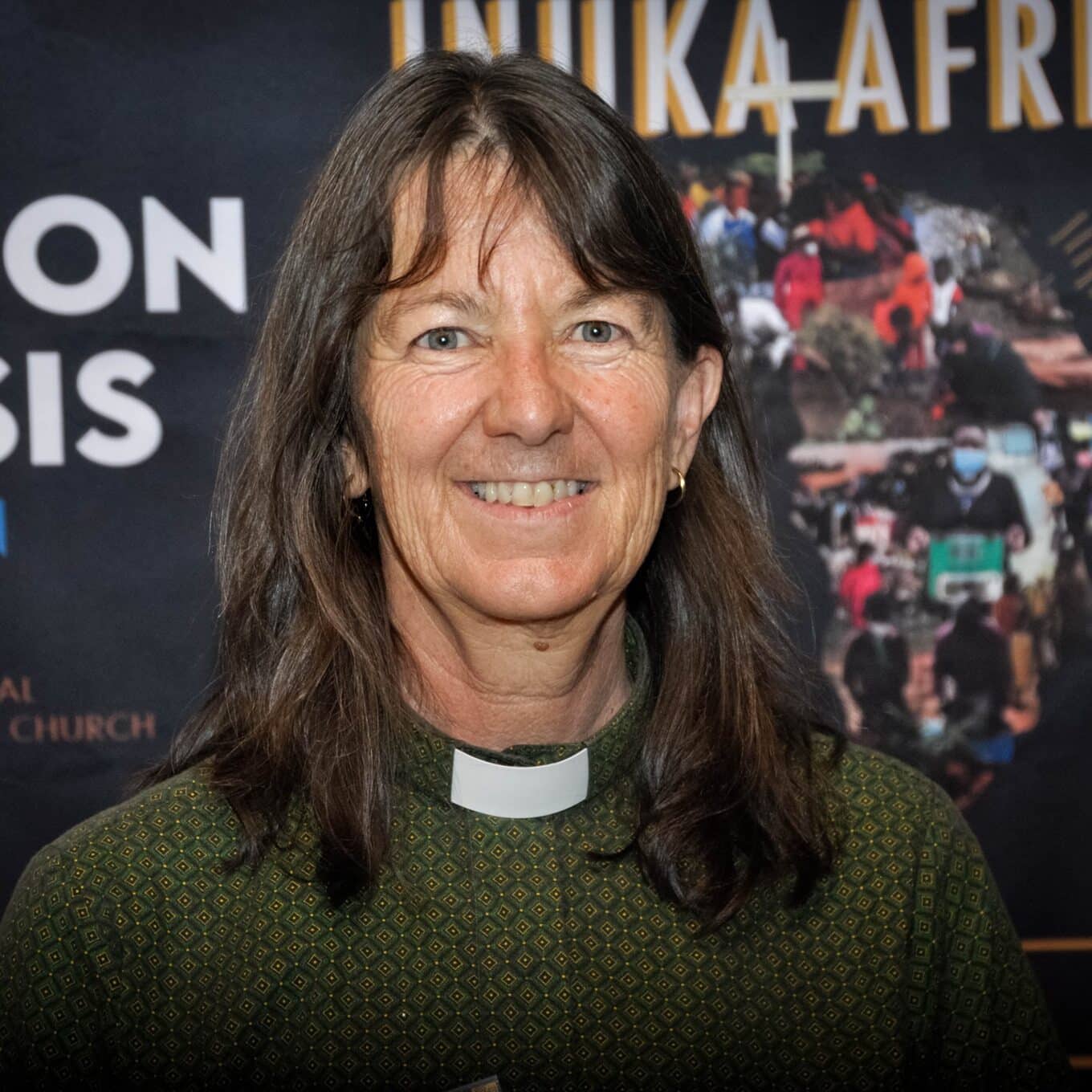
Rachel Mash (rmash@mweb.co.za), PhD, is an ordained Anglican priest and the environmental coordinator of the Anglican Church of Southern Africa (South Africa, Lesotho, Namibia and Eswatini-Swaziland). She works with Green Anglicans movement which has now spread to 14 countries across Africa. She is a member of the ecumenical Season of Creation steering committee and a member of the task team on plastic pollution of UNEP’s Faith for Earth.
[1] “Drought in northern Kenya causing millions to face starvation,” Rédaction Africa News, July 2022, https://www.africanews.com/2022/07/22/drought-in-northern-kenya-causing-millions-to-face-starvation/.
[2] A rainbomb is an intense weather event usually characterized by a wet column of sinking air or a stalled weather front, https://www.gza.com/insights/sheltering-storm-rain-bombs-and-developing-mitigation-approaches.
[3] Mary Galvin and Patrick Bond, “Durban’s Latest Rain Bomb Kills More than 300 and Unveils State Sloth,” International View Point, April 22, 2022, https://internationalviewpoint.org/spip.php?article7626.
[4] “Likelihood of Cape Town Water Crisis Tripled by Climate Change,” World Weather Attribution, July 13, 2018, https://www.worldweatherattribution.org/the-role-of-climate-change-in-the-2015-2017-drought-in-the-western-cape-of-south-africa/.
[5] “Fighting ‘Existential Crisis’ of Encroaching Desert Sands,” UN News, November 1, 2018, https://news.un.org/en/story/2018/11/1024642.
[6] Dede Sulaeman and Thomas Westhoff, “The Causes and Effects of Soil Erosion, and How to Prevent It,” World Resources Institute, February 7, 2020, https://www.wri.org/insights/causes-and-effects-soil-erosion-and-how-prevent-it.
[7] “Ocean Acidification Threatens Fish Stocks,” Geomar, December 11, 2011, https://www.geomar.de/en/news/article/ocean-acidification-threatens-fish-stocks.
[8] “Conserve and Sustainably Use the Oceans, Sea and Marine Resources for Sustainable Development,” The Sustainable Development Goals Report 2022, July 7, 2022, https://unstats.un.org/sdgs/report/2022/goal-14/.
[9] “Top 10 Most Polluted Rivers in the World,” Greentumble, December 28, 2022, https://greentumble.com/top-10-most-polluted-rivers-in-the-world/.
[10] Jonathan Sacks, To Heal a Fractured World (Schocken, 2005), 166.
[11] “Will There Be More Plastic Than Fish In the Sea?” WWF, https://www.wwf.org.uk/myfootprint/challenges/will-there-be-more-plastic-fish-sea.
[12] Farming God’s Way, https://www.farming-gods-way.org/.
[13] Suzanne Goldberg, “Heirs to Rockefeller oil fortune divest from fossil fuels over climate change,” The Guardian, September 22, 2014, https://www.theguardian.com/environment/2014/sep/22/rockefeller-heirs-divest-fossil-fuels-climate-change.
EMQ, Volume 59, Issue 2. Copyright © 2023 by Missio Nexus. All rights reserved. Not to be reproduced or copied in any form without written permission from Missio Nexus. Email: EMQ@MissioNexus.org.