EMQ » April–June 2023 » Volume 59 Issue 2

Summary: Natural disasters, agricultural problems, and environmentally linked health crises impact many of the world’s least reached peoples. These provide pragmatic reasons for missionary engagement in creation care. However, if we look closely at the recent history of evangelicalism, we can find an even stronger reason for involvement. The concept of integral mission, introduced in the ’60s and ’70s, positions creation care as a core gospel issue that is a necessary part of integrated work with the world’s unreached.
By Ed Brown
In every direction we look, today, mission goals are affected and often blocked by concerns related to the environment (broadly labeled as creation care). Those who work with the world’s poor have to prepare for the effects of degraded agricultural land and ongoing weather disasters. Healthcare missionaries must reckon daily with environmental diseases. Even traditional mission agencies focused on evangelism and church planting can grind to a halt when major disasters, like the floods in Pakistan, occur. The pragmatic case for creation care in missions is clear.
But there is another reason why we ought to include it in our mission strategies: the command to care for God’s creation is rooted in our identity as human beings, and even more so as the people of God. When we view creation care this way, it cannot just be a pragmatic issue. It is a gospel issue which we can closely connect to the movement in the late twentieth century known as integral mission.
The Cape Town Commitment and the Jamaica Call to Action
The phrase “Creation care is a gospel issue” is found in the following paragraph in the Cape Town Commitment (CTC), first presented at Lausanne’s Congress on World Evangelization in Cape Town, South Africa in November 2010:
The earth is created, sustained and redeemed by Christ. We cannot claim to love God while abusing what belongs to Christ by right of creation, redemption and inheritance. We care for the earth and responsibly use its abundant resources, not according to the rationale of the secular world, but for the Lord’s sake. If Jesus is Lord of all the earth, we cannot separate our relationship to Christ from how we act in relation to the earth. For to proclaim the gospel that says ‘Jesus is Lord’ is to proclaim the gospel that includes the earth, since Christ’s Lordship is over all creation. Creation care is a thus a gospel issue within the Lordship of Christ.[1] (emphasis mine)
This historically important assertion comes not from a fringe environmentalist faction or a creation care organization, but from the largest gathering of Christian leaders in history. It is rooted in the evangelical movement, which defines itself by its commitment to the gospel. Through this declaration, the movement says (to itself and others) that because creation care is part of the gospel, it is an essential part of the evangelical identity.
… our identity as Christians is bound
up in God’s plan of reconciliation,
which extends to all of his creation.
This statement has received remarkably little push-back considering the historic ambivalence toward environmental issues within the Church, and the radical implications it suggests. Even so, knowing some members of the evangelical family may view this as a novel, dangerous, or potentially heretical idea, the senior leadership of the Lausanne Movement asked me to convene a Global Consultation on Creation Care and the Gospel. This event was held in November 2012 – two years after the Cape Town Congress – and produced the Jamaica Call to Action (CTA).
CTA affirms two convictions. Those are that, firstly, creation care is indeed a gospel issue, and, secondly, creation is in an urgent crisis that “must be resolved in our generation.” Let’s look with more detail at the first conviction. Here it is quoted in full:
Creation care is indeed a ‘gospel issue within the lordship of Christ.’ Informed and inspired by our study of the Scripture – the original intent, plan, and command to care for creation, the resurrection narratives, and the profound truth that in Christ all things have been reconciled to God – we reaffirm that creation care is an issue that must be included in our response to the gospel, proclaiming and acting upon the good news of what God has done and will complete for the salvation of the world. This is not only biblically justified, but an integral part of our mission and an expression of our worship to God for his wonderful plan of redemption through Jesus Christ. Therefore, our ministry of reconciliation is a matter of great joy and hope, and we would care for creation even if it were not in crisis.[2] (second emphasis mine)
The CTA thus makes the implications in the CTC paragraph explicit: our identity as Christians is bound up in God’s plan of reconciliation, which extends to all of his creation. We can trace the initial development of this paragraph to a meeting in Lebanon in February 2010.
Lebanon 2010: Peter Harris and Chris Wright
The CTC was written by Chris Wright, but it was based on several years of work by Lausanne’s Theology Working Group (TWG) of which he was the chair. Since Lausanne’s slogan for many years has been “the whole church taking the whole gospel to the whole world,” the TWG gave itself the task of examining each of these ideas in preparation for the upcoming third Lausanne Congress in Cape Town. By February 2010, they were ready to consider the final section, the whole world, at a meeting in Beirut. [3]
I have had several conversations with Chris Wright about the origins of the section of the CTC we are considering here. In one of them, he said “Oh, it wasn’t me, Ed. That came from Peter Harris.”[4]
Harris is co-founder of A Rocha International (arocha.org), the largest Christian conservation organization. It turns out his participation in the Beirut meeting was critically important, though unplanned. This is how Harris remembers it:
It seemed very strategic to ask Chris if I might join that theological commission meeting in Beirut, although it was a bit of a nerve as I do not count myself as a theologian in any sense. He graciously agreed, but what became obvious during the meetings … was that I was pushing on an open door.[5]
Harris did attend and gave a paper entitled “Towards a Missiology of Caring for Creation” (available online[6]). In it, he addresses evangelical church leaders and missionaries who might be afraid that the creation care movement represents a different gospel or an alternative mission for the Church. He indicates that creation care as a part of mission is already implied in commonly accepted mission frameworks:
I would argue that entirely adequate justification for considering creation care as a normal element of an authentically biblical mission agenda can be found in either of two well-known missiological frameworks. The first is that which stresses the proclamation of the Kingdom of God, and the second sees mission as the church’s proclamation of the Lordship of Christ. Either of these current evangelical missiologies quite naturally provides a foundation for the urgently needed integration of the care of creation into our thinking, and more importantly, gives us a solid basis for action.[7] (emphasis mine)
In other words, Harris says anyone teaching, preaching, or practicing missions already has the theological framework for a vision of mission that includes God’s wider creation, whether their approach is from social action (the kingdom of God) or evangelism (the lordship of Christ).
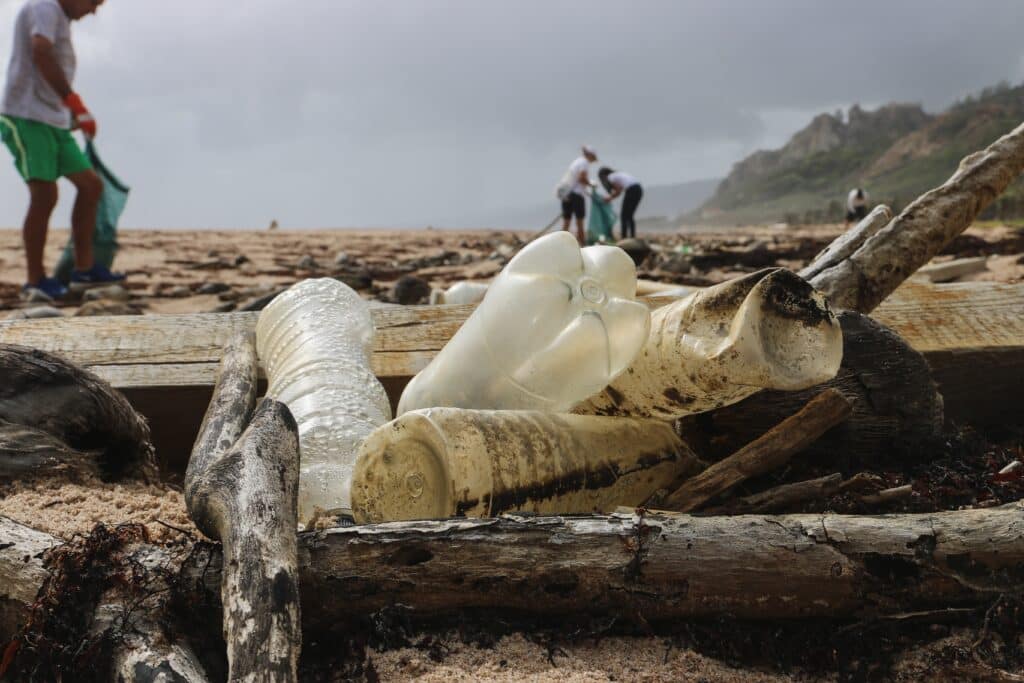
Harris makes another point that supports a pragmatic reason for engaging in creation care. Quoting philosopher Max Oelschlager, he explains that the Church may be the last, best, and perhaps only hope for God’s suffering creation. Here’s Harris again:
If the Christian church world-wide understands that its relationship with God’s creation is an integral part of its worship, work and witness, then there will be immediate hope for some of the most environmentally vulnerable and important areas on earth. If, however, we continue to be as damaging a presence as the rest of human society, then, as I will explain more fully below, there is probably little we can do to arrest the rapid degradation that is proving so devastating for them all.[8] (emphasis mine)
Harris’ paper and the discussion that followed had a direct impact on Chris Wright, and it became the source of the gospel issue phrase that appears in the CTC. Here’s Wright from an email:
If you look at the Cape Town Commitment Part 1.7.A – and the sentences beginning “If Jesus is Lord of all the earth, we cannot separate… within the Lordship of Christ,” I wrote that all down furiously straight from Peter saying it during one of our discussion sessions. The words are pretty much his ipsa verba. It just sounded so true and logical and irrefutable to me, that I thought it had to go into our TWG report, and eventually into the CTC.[9]
Latin America, 1960s & ’70s: Integral Mission
The open door for creation care within the TWG, for which Harris referred, was somewhat unexpected. However, I believe the ground was prepared by a prior development that we now know as integral mission.
For most of its history, the evangelical Church has struggled with two obligations which have been presented at times as if they presented an either-or choice. On the one hand, there is evangelism, the need for personal salvation and the obligation to make this salvation known “to the ends of the earth.” On the other, social action, the call to feed the hungry, clothe those in need, heal the sick, and bring justice to the earth.
This is a false choice. Choosing one or the other is always wrong because Jesus clearly calls us to do both. In spite of this, for many years Christians in North America and in other countries in the Global South that took their theology from there, understood missions to be primarily evangelism. Social action, when considered at all, was simply a way to support the saving of souls.
In the 1960s and ’70s, a group of young theologians in Latin America looked at their world, rife with poverty, injustice, and political corruption, and said, “No, we don’t have to choose.” They argued that both evangelism and social concern must be and are part of the gospel. The main leaders of this movement were Renee Padilla (who recently passed away) and Samuel Escobar. Their movement to integrate these two calls into one gospel became known as Mission Integrale or Integral Mission.
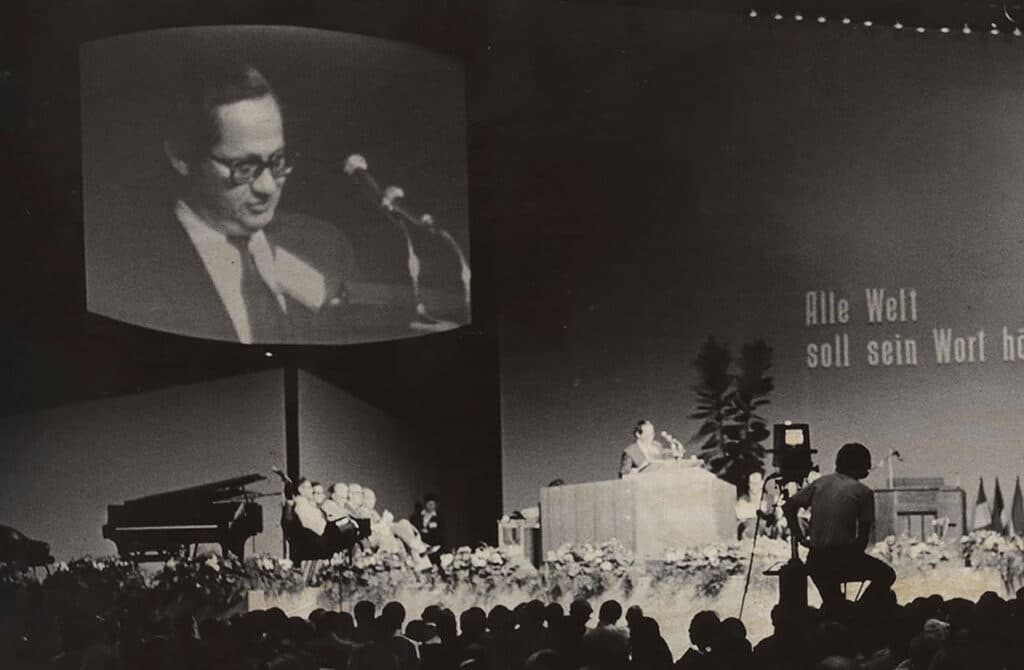
Padilla made the case for integral mission at the first Lausanne Congress in 1974:
My purpose is to show that according to Scriptures the Gospel is addressed not to man as an isolated being called to respond to God with no reference to his life context, but rather to man in relation to the world. The Gospel always comes to man in relation to the world of creation, the world that was made through Jesus Christ and that is to be re-created through him. It comes to man within the present order of existence, immersed in the transient world of material possessions. It comes to man as a member of humanity – the world for which Christ died, but, at the same time, the world hostile to God and enslaved to the powers of darkness. The aim of evangelization is, therefore, to lead man, not merely to a subjective experience of the future salvation of his soul, but to a radical reorientation of his life … .[10]
Padilla later said of the Lausanne Covenant, “Despite its shortcomings – especially its failure to point to the inextricable relation between evangelism and social responsibility – the covenant was a death blow to the traditional reduction of the Christian mission to the multiplication of Christians and churches.”[11] Though tension between the two – evangelism and social engagement – continues to this day in some quarters, most evangelicals now accept that the integral mission vision of a comprehensive gospel is biblical and necessary.
The Micah Declaration (2001) gives perhaps the best summary and definition of integral mission:
Integral mission or holistic transformation is the proclamation and demonstration of the gospel. It is not simply that evangelism and social involvement are to be done alongside each other. Rather, in integral mission our proclamation has social consequences as we call people to love and repentance in all areas of life. And our social involvement has evangelistic consequences as we bear witness to the transforming grace of Jesus Christ. If we ignore the world, we betray the word of God which sends us out to serve the world. If we ignore the word of God, we have nothing to bring to the world.[12] (emphasis mine)
Unless we are preaching and
practicing evangelism, social action,
and care for God’s wider creation,
we are presenting an incomplete
and less-than-biblical gospel.
A Three-Dimensional Gospel
The CTC starts with this definition, but then it adds something new. Here we find an assertion that there really are not just two dimensions of the gospel that needed to be integrated. The gospel needs to include evangelism, social action, and care for God’s wider creation. This is how this was expressed in the CTC:
Integral mission means discerning, proclaiming, and living out the biblical truth that the gospel is God’s good news, through the cross and resurrection of Jesus Christ, for individual persons, and for society, and for creation. All three are broken and suffering because of sin; all three are included in the redeeming love and mission of God; all three must be part of the comprehensive mission of God’s people. (CTC I-7-a, par 3) (emphasis mine)
The gospel stool doesn’t have two legs, it has three. Unless we are preaching and practicing evangelism, social action, and care for God’s wider creation, we are presenting an incomplete and less-than-biblical gospel. The world’s unreached desperately need the whole gospel including that third leg of the stool.
… anyone teaching,
preaching, or practicing
missions already
has the theological
framework for a vision
of mission that includes
God’s wider creation …
Why it Matters
Seeing creation care as a gospel issue has significant strategic and practical implications for global missions. This brief historical survey primarily reminds us of two things.
First, our own recent evangelical history reminds us that our global church family has broadly agreed that the gospel of Jesus Christ is comprehensive, having an impact on individuals, on society, and on the wider non-human creation. If we are to be true followers of Jesus in his mission vision, we must embrace a gospel that begins in the human heart but extends to all of creation.
Second, creation care is not optional. It is part of our identity as Christians and involves the very core of the gospel. It cannot be assigned to a few specialists, but is an obligation for every Christian, whatever their specific ministry calling might be. Missions cannot be exempt. It is an obligation we all need to take up. All creation is waiting.
For the creation was subjected to frustration, not by its own choice, but by the will of the one who subjected it, in hope that the creation itself will be liberated from its bondage to decay and brought into the freedom and glory of the children. (Romans 8:20–21, NIV)
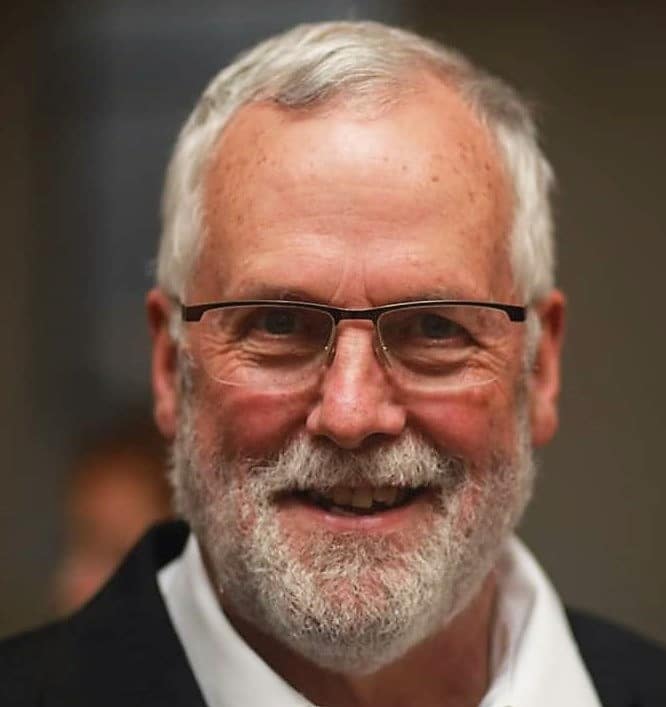
Ed Brown (ed@careofcreation.org) is executive director of Care of Creation and was a Lausanne catalyst for creation care from 2012 through 2022. He is the author of Our Father’s World: Mobilizing the Church to Care for Creation (2018, Doorlight) and When Heaven and Nature Sing (2012, Doorlight). He is working on a forth-coming volume entitled Is Creation Care Really a Gospel Issue? Ed lives in Madison, Wisconsin with his wife, Susanna. He has four adult children and three grandchildren.
[1] Julia Cameron, ed., The Cape Town Commitment: A Confession of Faith and A Call to Action, Lausanne Movement, (Didasko Files / Hendrickson Publishers, 2011), 32, https://lausanne.org/wp-content/uploads/2021/10/The-Cape-Town-Commitment-%E2%80%93-Pages-20-09-2021.pdf.
[2] Lausanne/WEA Creation Care Network, “Creation Care and the Gospel: The Jamaica Call to Action,” Lausanne Movement (November 2012), https://www.lausanne.org/content/statement/creation-care-call-to-action.
[3] Lausanne Theology Working Group, “The Whole Church taking the Whole Gospel to the Whole World,” Lausanne Movement, https://lausanne.org/content/twg-three-wholes.
[4] Chris Wright, email to author, August 12, 2021.
[5] Peter Harris, email to author, June 12, 2021.
[6] Lausanne Theology Working Group, “Lausanne Occasional Paper: Towards a Missiology of Caring for Creation,” Lausanne Movement, https://lausanne.org/content/lop/towards-a-missiology-of-caring-for-creation-lop-63-c.
[7] Peter Harris, “Towards a Missiology of Caring for Creation,” Evangelical Review of Theology (ERT) 34, no. 3 (2010): 224.
[8] Harris, “Towards a Missiology,” 231.
[9] Chris Wright, email to author, August 12, 2021.
[10] C. René Padilla, “Evangelism and the World,” presented at the Lausanne I – Congress on World Evangelisation, Lausanne Switzerland, July 16, 1974, https://lausanne.org/wp-content/uploads/2007/06/0134.pdf.
[11] C. René Padilla, Mission Between the Times: Essays on the Kingdom (Langham Monographs, 2010), 3.
[12] Melba Padilla Maggay, “Integral Mission: Biblical Foundations,” M-Series (Micah Global, 2007), 12.
EMQ, Volume 59, Issue 2. Copyright © 2023 by Missio Nexus. All rights reserved. Not to be reproduced or copied in any form without written permission from Missio Nexus. Email: EMQ@MissioNexus.org.