EMQ » April–June 2023 » Volume 59 Issue 2
Summary: The peoples of Uganda have a distinct tie to the land, and their cultures have generation upon generation that tended to creation with care and respect. But the land and its creatures that we so deeply depend on are suffering, and in need of help. And while the Church has engaged in aspects of creation care, most Christians do not understand the connection between caring for God’s creation and their faith. Through education, practical projects, advocacy, and much more, A Rocha Uganda seeks to guide the Church in Uganda towards a more integrated gospel and a more unified engagement in caring for creation.
By Sara Kaweesa
In the Ganda culture, environmental conservation was written into life. For example, we retrieved eggs from free range chickens before that was popular! And we tended to our animals (like cows and goats) with the utmost care and respect. We learned to harvest vegetables, medicinal plants, and other natural resources in sustainable ways.
Different groups of people avoided certain foods which preserved the land from certain kinds of over-cultivation. We fetched water from springwells and cared for those water sources. And when we harvested matooke (bananas), we made sure to protect saplings. These every day practices reflected biblical values for caring for creation, and they lasted for centuries. Some traditions continue even now.
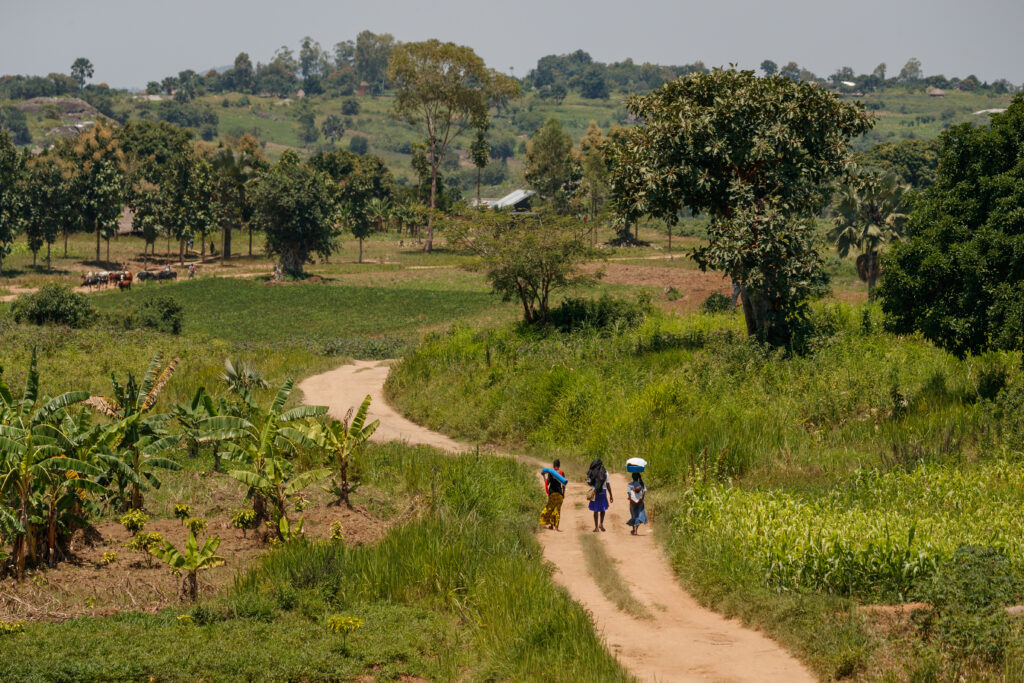
Ugandans remain closely linked to the land. Most people derive their livelihoods directly from natural resources. Many are farmers, and nearly every household depends on charcoal from the forest to cook.
But parts of the land they so depend on need attention and restoration. Human-centered destruction harms biodiversity, soil quality, and ultimately, the survival of many people. We also must recognize that the source of some of these issues is beyond their localities.
Environmental degradation also creates other surprising problems. I will never forget the teenage girl that told me that as girls travel longer distances to fetch water for their homes, they become more susceptible to being raped.
The Church in Uganda
The Church in Uganda traces its roots back to the arrival of missionaries from the Church Missionary Society in 1877. Today, most Ugandans consider themselves Christian. The East African Revival that started in 1935[i] and the Pentecostal movement of the 1960s,[ii] continued to spread the gospel across the country while simultaneously increasing the diversity of Christian expressions in our context.[iii]
Yet during the Ugandan Church’s decades of the tremendous growth, it became more and more disconnected from creation care. This is not entirely of its own making. Societal factors have also contributed.
We’ve discovered a few wonderful exceptions. For example, in the highlands of Western Uganda, a part of the country that deeply experienced the gospel revival, we’ve observed good practices in caring for land. In their banana plantations, we saw that the terraces which reduce erosi on the hilly land had been mulched. This helps the soil maintain nutrients and improves soil biodiversity amongst other benefits.
It is hard to tell if the farmers have made an intentional spiritual association between these good farming practices and the gospel, or if this arose out of necessity due to the steep slopes, population pressure, or deforestation among other reasons. One study indicated that perhaps the decision was influenced by the level of education available in the area. [iv]
A Rocha Uganda Begins
A Rocha Uganda (ARU) began in 2007 as one of the earliest registered entities in Uganda dedicated to caring for God’s creation. It entered into a period when creation care was hardly thought of, and rarely discussed from its biblical roots.
We started from our own conviction that the word of God has a solution to the environmental problems we saw at that time. Later, we learnt that those are shared by many others particularly by the Lausanne movement. They put it this way: “Stewardship of God’s creation (creation care) is a clear biblical command and an integral part of what it means to follow Jesus as Lord.”[v]
Lausanne’s Cape Town Commitment (I-7-A), adds, “If Jesus is Lord of all the earth, we cannot separate our relationship to Christ from how we act in relation to the earth.”[vi]
With certainty in what God called us to do, we began our work. In those first years, we spent much of our time providing education about creation care to a variety of groups, and demonstrating what it looked like in reality. Our work included environmental education in schools, sermons in churches, workshops, conferences, and gatherings focused on listening to concerns.
We did practical demonstrations like restoring bare grounds by planting trees,[vii] grasses, vegetables, flowers, sack gardens, and demonstrated Farming in God’s Way (FGW, farming-gods-way.org) among other activities. We took part in conservation advocacy. We fought for the protection of wetlands. We taught practical community conservation including how to make bio-sand water filters, briquets, and fireless cookers to reduce charcoal usage.
We helped people plant kitchen gardens, and organized rubbish clean ups of land and water. We showed people how to recycle plastic, and educated them about the importance of doing so. We organized environmental missions experiences, and trained communities and churches in creation care principles. In every venue and at every event, I sensed how we all grew together as we learned more about caring for God’s earth and participated in doing it together.
From time to time, I also fielded hilarious questions like:
“What should I do about the huge python on my land? Can you come and take care of it?” Another asked if we could help them manage monkeys that indulged on their neighbor’s fruit trees. I smiled when I imaged our small team, made up mostly of young people, wrangling pythons or chasing monkeys. I responded to both people that we would call the Ugandan Wildlife Authority (UWA) on their behalf.
Other times, the questions were trickier. A man stood up in a meeting, and told me that the wetlands we’d fought to protect had been usurped by an informal open market. Market stalls and foot traffic posed a serious threat. He looked directly into my eyes and said, “A Rocha Uganda, where are you? Will you do nothing?”
Our team had just prayed and fasted about this very place for a different reason. A couple of notorious witchdoctors in that area along with their followers had begun spreading intimidating rumors that we were cursed and would soon die. They believed we’d gone against the gods by rehabilitating the spring wells in that place without offering sacrifices to the local python spirits.
We’d used this project to show how the springs were God´s creation. While they were useful to man, they also had value to the wider environment, and need to be cared for no matter the cost. The spring wells are still used by several surrounding communities who load trucks of jerrycans to fetch water when water supplies are low or the local water system fails.
I didn’t always have answers to these questions. But what this feedback from the community did was provide greater clarity about their perceptions of what it means to participate in caring for creation. Although we’ve seen progress, education clearly needs to be one of the most important objectives of our work. With one of the youngest populations in the world, education in Uganda presents a grand opportunity for significant future change.
Engaging the Church in Creation Care
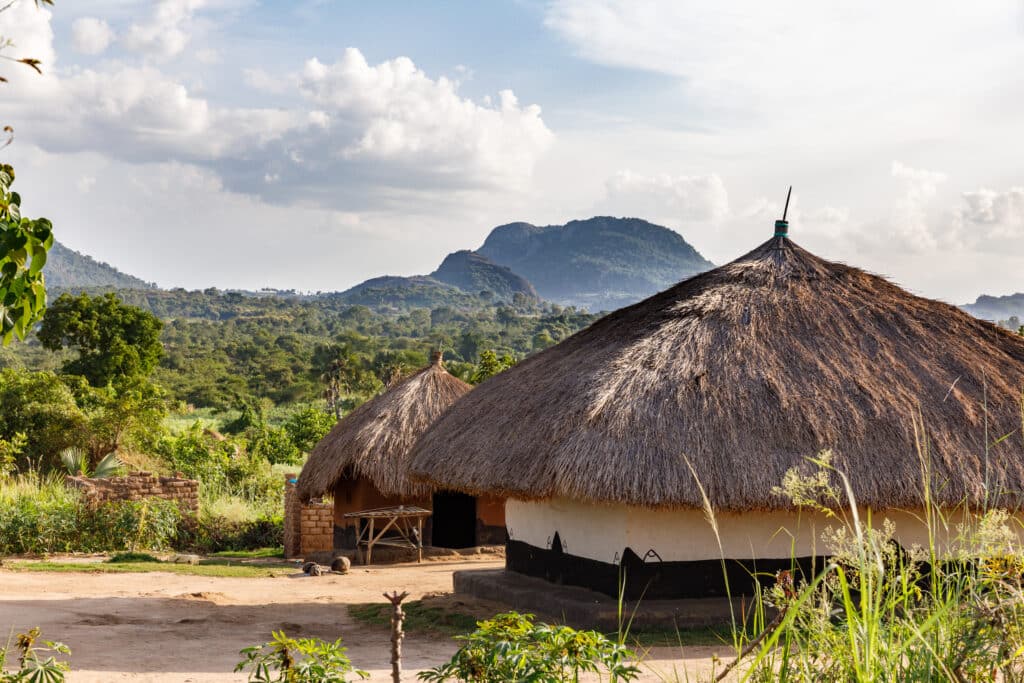
We began to engage more directly with pastors. Initially a few questioned the biblical foundations of our work. Others saw it as another program that would burden the church. We have also seen churches making tremendous efforts. However, some of these are uncoordinated, and they hardly document what they’ve done which keeps others from learning from it.
Sometimes intensions do not align with scientific knowledge, and they do more harm than good. Other times, churches may be doing great creation care work, and we should expect this given that Uganda has an agriculture-based economy. But most have not correlated the gospel with why they should be caring for creation.
In fact, some of the questions we have to answer include how creation care contributes to livelihoods when the country and Africa at large is where it is now? The questions on environmental justice, emissions, climate change, right to development, and others need to be humbly responded to as soon as repentance happens. Dignity is key. Love is our mark.
We’ve also seen pastors respond with helpful initiatives. Indeed, there are churches occasionally hosting creation care Sundays to inform and mobilize their congregations. We want to see more churches involved. So we’ve designed a short-course curriculum for Bible colleges to use in pastor training to support future involvement from pastors and their churches in creation care.
One area that has brought us great encouragement is the response from mainline churches in Uganda. Andrew Omona wrote about the ways these churches are getting involved in climate change activism. They have studied the environmental threats, and are sharing a holistic gospel that includes participating in critical intervention at all levels of the Church. God is working![viii]
A New Phase of Work
We’ve gained so much ground since we began. As we move into a new phase of our work, it is clear that the time is ripe for working more collaboratively. But the challenge of our diverse Christian landscape can make this feel unattainable. Yet, we continue to pray for divine unity, and expect God to move. The time for the people of the Church in Uganda to realign ourselves to each other and the gospel of the kingdom of God is now.
Paul’s words in Romans 1:20 give me so much hope and joy. He says there that the created world reveals the divine character of God. While some of my ancestors might not have heard of Jesus, they certainly saw the qualities of God in nature. Aspects of their culture, traditions and even the names they gave God before the missionaries arrived echo that truth.
Perhaps like Simon of Cyrene or the Ethiopian Eunuch, they feared God. If Philip did with my ancestors what he did with the Eunuch, then maybe the conversion of my people would have come sooner. However, these lessons in our traditions and cultures still remain even if for some they are more distant. We can still be like Philip and make the connections between their beliefs and practices and the gospel.
Even for people who are already Christians, we need to tie things up – how Jesus, the gospel, and the kingdom of God fit together. When we explain that Jesus is reconciling heaven and earth, and challenge the notion that we are destined to escape the earth, perhaps the gospel and creation care will then make more sense.
In all of this, God is calling us to be rooted and grounded in love. We build on his love, and his wisdom as found in Jesus. This love points us to life without divides. The glory of God as seen in a healthy and flourishing creation reminds us that creation care is not separate from the gospel. It’s integrated with it. May our care for the earth God gave us to tend reflect the love of Christ for our neighbour, ourselves, and creation itself.

Sara Kaweesa (sara.kaweesa@arocha.org) founded A Rocha Uganda (uganda.arocha.org), a conservation organization engaged in biodiversity conservation, research, advocacy, and practical community projects. Her convictions to do creation care run deep. She grew up doing family farming in rural Uganda and later become a secondary school teacher before starting A Rocha Uganda.
[i] The East African Revival Through 80 years, Eds: Manuel Muranga and Patrick Mbaasa, (Kampala: Mwesigwa Mugabi Publications, 2018).
[ii] Hugh Layzell and Audrey Layzell. Sons of His Purpose: The Interweaving of the Ministry of Reg Layzell, and His Son, Hugh, during a Season of Revival. (CreateSpace Independent Publishing Platform, 2013).
[iii] David Zac Niringiye, “The Church in the World: A Historical-Ecclesiological Study of the Church of Uganda with Particular Reference to Post-Independence Uganda, 1962-1992.” (1997).
[iv] Johnny Mugisha, and Sarah Alobo. “Determinants of Land Management Practices in the Agricultural Highlands of Uganda: A Case of Kabale Highlands in Western Uganda,” (2012).
[v] “Creation Care.” The Lausanne Movement, https://lausanne.org/networks/issues/creation-care.
[vi] “7. We love God’s world,” The Cape Town Commitment, https://lausanne.org/content/ctc/ctcommitment#p1-7.
[vii] Patrick Mucunguzi, Adrine Musiime, and Laster Ogola. “The Role of the Faith-Based Organisations in Tree Planting in Uganda,” in International Journal of Environmental Studies (2021): 1-14.
[viii] David Andrew Omona, “The Mainline Churches and Climate Change in Uganda,” in African Perspectives on Religion and Climate Change (Routledge, 2022): 104-19.
EMQ, Volume 59, Issue 2. Copyright © 2023 by Missio Nexus. All rights reserved. Not to be reproduced or copied in any form without written permission from Missio Nexus. Email: EMQ@MissioNexus.org.