EMQ » July–September 2022 » Volume 58 Issue 3
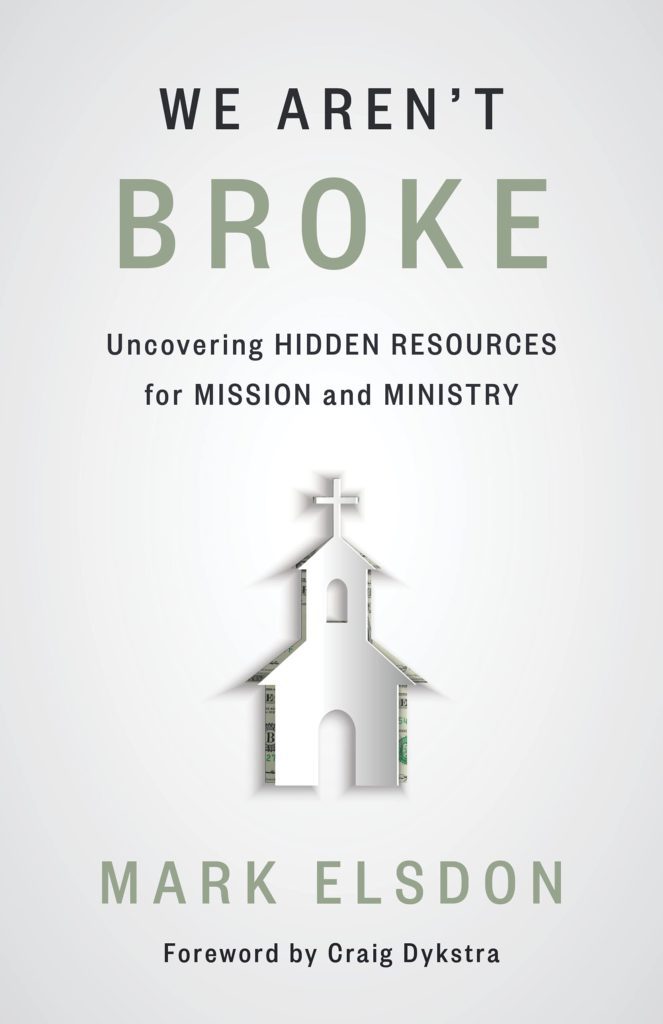
We Aren’t Broke: Uncovering Hidden Resources for Mission and Ministry
By By Mark Elsdon
Eerdmans, 2021
239 pages
US$18.99
Reviewed by Geoff Hartt, executive director of Hispanics for Christ (resourcing church-planting among Hispanics), affiliate faculty at Kairos University, and director of the Kairos Project –Spanish Program.
I approached this book from my perspective as an Executive Director of a small mission organization, as a pastor of a suburban church, and as a missiologist. However, this book is fairly limited in scope, primarily focused on established urban churches and denominations with assets and proximity to social ministry opportunities. This review will focus on the contributions the book makes to those constituencies.
Elsdon proposes a way to “redeem” the decline in American Christianity: “The closing and selling of churches will free up millions of dollars of ‘new’ money and unused property in the next decade. Shifting the primary use of a church property from Sunday services to coworking space that creates community is not a failure – it is transformation.” (88)
The author presents a vision for transforming the way churches use their money. Elsdon states, “I believe the primary purpose of church capital is to transform lives and communities.” (140) The mechanism for this use of capital to transform lives is a blending of social enterprise and impact investing, which he explains and illustrates.
After assessing the current situation and presenting a vision for the future, Elsdon looks at the barriers churches might encounter in this effort. He discusses a lack of access to capital, a lack of knowledge, and investment values that reflect the culture more than the kingdom. The final section of the book turns practical. He challenges redemptive entrepreneurs, on one hand, to plan their work and be accountable to goals they set, in order to give investors confidence in their project. On the other hand, he challenges impact investors to re-evaluate their values. They should learn to expect strong social impact returns as well as strong financial returns.
This book may be difficult for non-business-minded leaders to follow as it is very focused on financial issues (he includes a substantial glossary of financial terms), but it firmly challenges the church to engage in social justice through its use of its capital. As Eldon states well, “For every moment our capital is in the hands of Jeff Bezos and Mark Zuckerberg, it is not at work for good in our communities.” (142) For aging urban churches and denominations, this book offers some inspiring and practical steps to re-engage with mission in the city.
EMQ, Volume 58, Issue 3. Copyright © 2022 by Missio Nexus. All rights reserved. Not to be reproduced or copied in any form without written permission from Missio Nexus. Email: EMQ@MissioNexus.org.