EMQ » July–September 2022 » Volume 58 Issue 3
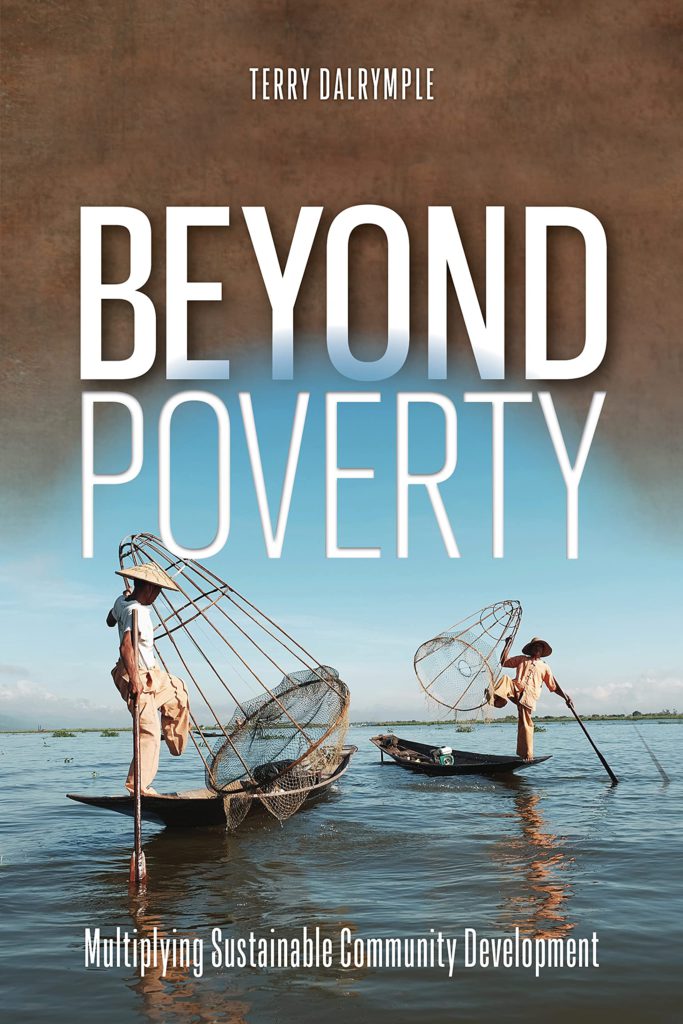
Beyond Poverty: Multiplying Sustainable Community Development (find it on Amazon)*
By Terry Dalrymple
William Carey Library, 2021
140 pages
US$12.99
*As an Amazon Associate Missio Nexus earns from qualifying purchases.
Reviewed by Mark A. Strand, professor, North Dakota State University, Fargo, North Dakota.
Communities around the world face challenges in improving human flourishing. This is true in small rural communities in the United States experiencing population decline as well as in rural villages in other countries struggling with poor health, stagnant economies, and poor living conditions. What is to be done to bring sustainable development to these communities? Terry Dalrymple, formerly with Community Health Evangelism (CHE) and currently coordinator of the Global CHE Network (www.chenetwork.org), believes he has the answer which he explains in this powerful little book Beyond Poverty.
In Beyond Poverty, Dalrymple makes the case that every community has the resources necessary to develop their community. He opposes the injection of money, technology, and resources from outside, which may improve the situation in the short run, but do not result in sustainable development. To that end, he describes the core elements of transformational development (58): integrating the physical and the spiritual; asset-based development; local ownership; and multiplication.
Integration means keeping faith and works together so that people not only develop their community in material ways but also in spiritual ways. Asset-based development means that the local people need to be involved as responsible participants, and not passive recipients. It also emphasizes local assets, not local deficiencies. Local ownership means that local people have the vision and the skills, but they need assistance in identifying needs and seeing the opportunities before them. They also might need help getting the people to work together. Finally, multiplication means using local resources and skills so that whatever is done can be multiplied in similar villages. These four elements are to occur in a context of participatory learning.
This book refers to successful development in poor communities in Viet Nam, the Philippines, Indonesia, Cambodia, Myanmar, Papua New Guinea, Kenya, Burkina Faso, and Uganda, providing evidence of the transferability of the approach to many different countries and cultural contexts. I was privileged to participate in a conference where CHE leader Stan Rowland rolled out his plan to establish the Collaborative for Neighborhood Transformation (neighborhoodtransformation.net), implementing CHE work in urban communities in the United States.
This book successfully demystifies poverty, helping the reader understand that people living in these poor communities are also talented individuals who want to improve their communities. While lifting up the dignity of these persons, it also repositions the outsider as a catalyst and connector, not an expert. The outsider is to work toward local ownership, using local resources, building the capacity of the local people, and focusing on their own perceived needs.
The CHE method has a few limitations, which are not acknowledged in this book. Anecdotal reporting of villages where it was successful may be susceptible to confirmation bias. With all due respect to the successes of CHE, which I am well aware of, a carefully designed evaluation study might reveal that the success of the CHE approach is not as sure as the book implies. As CHE was introduced to the expatriate community in the country where I served, many medical doctors stopped doing medical work and switched over to the CHE approach.
Over time, many of them were disillusioned with both the underutilization of their skills, as well as the limited impact of the approach. While evangelical Christians would agree that ultimate human flourishing depends on a personal relationship with Jesus Christ, there are many examples around the world of communities that have developed materially, and socially, in the absence of the gospel. Moreover, traditional large-scale development projects have reduced poverty globally, but the book assumes the CHE approach operates in a vacuum, without dependence upon, or the benefit of resources such as piped-in water, universal electrification, paved roads, and so on.
Despite these limitations, I highly recommend this book. It is appropriate for all Christians working in community development or who aspire to serve their communities in the name of Christ. This book presents many valuable ideas, such as the importance of the humility of the outside expert, trusting in the talents and motivation of local people to be able to develop their own communities, the importance of a renewed view of the Christian life which includes the material world in which one lives, and the confidence that God provides all that a community needs.
EMQ, Volume 58, Issue 3. Copyright © 2022 by Missio Nexus. All rights reserved. Not to be reproduced or copied in any form without written permission from Missio Nexus. Email: EMQ@MissioNexus.org.