EMQ » April–June 2022 » Volume 58 Issue 2
By Paulo Feniman
In a world where our spiritual and emotional lives are constantly under attack, creating processes of mutual care that involve different players (sending churches, sending organization, field leaders, etc.) is fundamental to the care of our most valuable asset – people. However, we also must keep in mind that people react to situations and difficulties in different ways, and culture plays a very significant part in that. So many problems can be avoided when we remember this! As a Brazilian who has served in missions for more than 20 years, I’ve seen this play out many times.
For example, Latinos, like me, come from cultures where sharing our needs and problems is an expression of relationship. In fact, we are so relationally open that we share our difficulties with many people including those who may not be equipped to help with what we’ve shared! In our cultures, burdens are carried together in community. But as I’ve talked with Western colleagues, I’ve learned that their response to problems and ways to seek support are often not the same. What can feel like hiding behind a wall to me, they explain as privacy. Needs and problems are expressed within more defined structures, typically to fewer people, and in some cases not to anyone except maybe a spouse.
[memberonly folder=”Members, EMQ2YearFolder, EMQ1YearFolder, EMQLibraryInstitution”]Culture Affects Care
This is just one example of the multitude of cultural issues we must consider in how we care for missionary staff. Missionary care (or member care) is frequently viewed in western cultures in the context of supervision. Whereas in Latin cultures, care is focused on the pastoral. Latin Americans serving within organizational cultures that see member care more as a logistical/administrative issue than pastoral care can experience relational challenges. I’ve seen this grow difficulties to point that they become extremely difficult to resolve, because leaders focus only on measuring ministry results and are not open to discuss relational problems. Rudy Girón wrote the following about this:
Pastoral care is one thing and supervision is another. It is typical that the work done by a field leader or supervisor focuses on administrative or functional issues, and not on pastoral care. A supervisor’s visit to the field is usually used to check how things have been done. Very rarely does a supervisor take time to inquire about the well-being of the missionary’s family or the problems that the couple of missionaries may be facing to educate their children. Of course, supervision is necessary to ensure that the work assigned to each missionary is successfully completed, but in the long-term pastoral work is even more important than supervision.
Pastoral work requires field leaders aimed at people and not only at targets. In a society where targets and programs take precedence over people, we need to be careful not to be caught up by models of the world when we do our job. We need to pray that Jesus’ attitude towards Peter (John 21) dominates our hearts when pastoring missionaries in the countryside. What a challenge, to follow the example given by Jesus when Peter and his companions returned to their networks. They felt discouraged, but Jesus searched for them and restored them to his kingdom.[1]
Mentoring is one way that organizations can provide relational mechanisms for care and monitoring to their members in the field. This is often done separately from the supervisory and logistical/administrative aspects. Implementing mentoring can remove some of the barriers to care that staff coming from relational cultures identify.
Caring for Latin American Missionaries
Missionaries sent from Latin America face a series of physical, emotional, spiritual, and logistical challenges before, during, and after their time on the field. Let’s look at a few:
Raising Support
Most Latinos live in uncertain economic contexts. The value of their nations’ currencies is weaker than the dollar, euro, and pound; and their currencies’ value may frequently fluctuate. This makes it very hard for Latin American missionaries to raise funds for costs like airfare, health insurance, etc., which are often based on currencies like the dollar, euro, and pound. Then even after Latin American missionaries arrive on the field, they must live with the ghost of currency depreciation. The funds they raised could at any time lose their original value. This can leave them without enough for essential expenses, or even funds for a flight home.
I know Brazilian missionaries who had to mobilize more than 50 church and family financial partners in order to serve in a part of the world that many would consider inexpensive. Mobilizing so many partners took a long time. They raised more funds than their organization required to try to stay ahead of currency depreciation, but will it be enough? They live with constant uncertainty.
Language
Some missions organizations require their missionaries, no matter where they will serve, to learn English because it is the organization’s official language. For Latino missionaries, this may mean the added pre-field step of going to an intermediate field to learn or improve English. When they arrive at their final field destination, they must then learn the local language. But they are already mentally exhausted and physically worn out.
I am not against Latin American missionaries learning English. In fact, I have encouraged several of our missionaries to learn English so that they can actively participate in discussions and even be able to lead multicultural teams. However, I question whether this always needs to be a pre-field requirement. If we want our organizations to encourage and sustain the engagement of Latin Americans in missions, we must find ways to relax this. Perhaps certain roles or fields could be exempt so that Latin American missionaries can have more success in their first assignments. Then one step in pre-field training can be eliminated.
Children’s Education
The children of many Latin American missionaries have to study at international schools near to where their parents serve. These schools usually teach in English and use American or British curriculum. When a Latin American family leaves the field or a child returns to their home country for university, integrating into local education systems is not simple. A child may find themselves behind and need to do extra studies.
Let’s consider what happens when a Brazilian missionary kid (MK) returns to Brazil for university. In Brazil’s current system, one way to enter university is to take a national exam that includes questions about Brazil’s history and geography. Brazilian MK’s do not study these subjects at most international schools. So, to pass the exam, they have to search for supplementary support, and this is often difficult to find.
Organizations that send Latino missionaries need to equip families to successfully fill these education gaps. That may include providing resources, access to tutors, or even developing programs for parents and students. And these options must be discussed with families ahead of time, so they can prepare.
Home Assignment
Many organizations require their missionaries to return to their home countries every three or four years to rest, attend to health needs, and visit their sending church and financial partners. For Latin American missionaries, visiting every financial partner requires significant time because they often need so many partners to maintain their financial goals.
These visits can quickly squeeze out opportunities for rest. Home assignment can be very depleting. More flexibility in home assignment requirements as well as people who can help plan this time, can help Latin American missionaries keep space for critical periods of rest.
End of Ministry
When missions service ends, many Latin American missionaries lack adequate resources for their transition home. Retirement or settling into a new career as well as a wide variety of other repatriation issues are difficult to navigate.
Most Latino missionaries don’t have a good retirement plan. When their service ends before retirement, few resources are available to help them move in a new direction. And sending churches are often unequipped to come alongside them on any of these issues.
When missions organizations partner with sending churches in planning for the end of a missionary’s service, these beloved missionaries are protected from feeling abandoned or useless. Care at this moment makes it easier for these missionaries to be channeled into new or continued service.
Conclusion
Challenges and care needs exist in all cultures, but some factors that need our attention are specific to certain groups of missionaries. When care is provided in more personal and organic ways, no one gets overlooked.
While policies and procedures are important, from a Latin American perspective, relationships must come first. Open dialogue, conversations, and a willingness to adjust requirements give missionaries from Latin America, as well as other cultural contexts, the support they need to be successful.
The new generation of missionaries are increasingly from the Global South. This includes people eager to participate in global missions from nations across Latin America. If organizations are not proactive in understanding and dealing with the unique challenges of this community, they will become a barrier to greater involvement in the Great Commission.
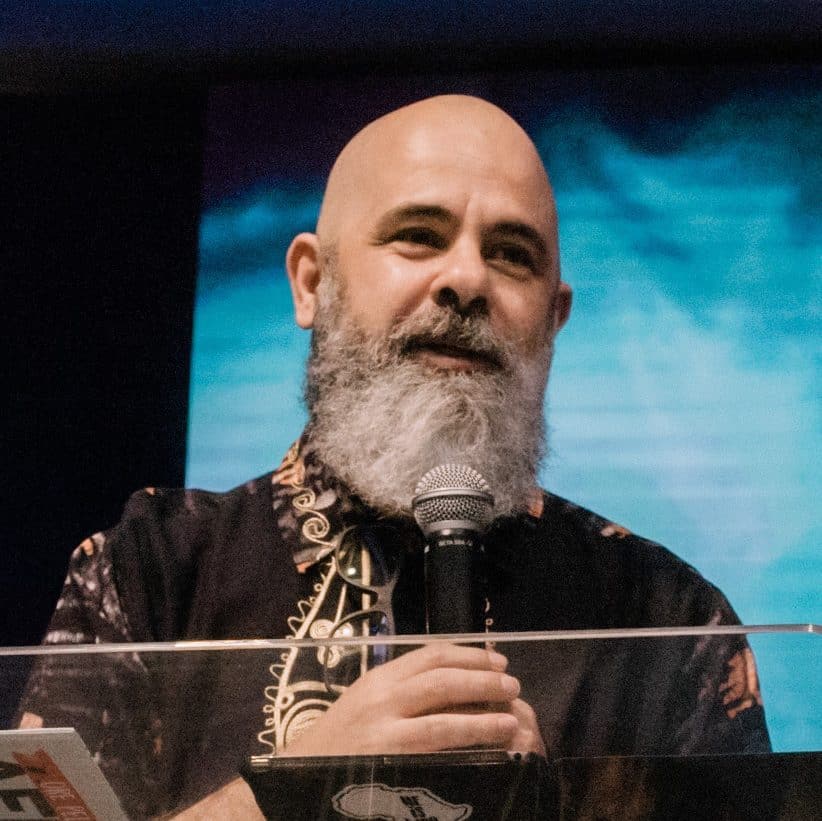
Paulo Feniman (paulo.feniman@aimint.org) is the executive director of Africa Inland Mission’s South American headquarters. He is also involved in International Partnering Associates (IPA), the Ibero-American Mission Alliance (COMIBAM) and the Association of Brazilian Transcultural Missions (AMTB). Paulo graduated from South America Theological Seminary (FTSA) with a degree in theology and from UNOPAR with a degree in computer graphics. He and his wife, Patricia, have two children: Felipe and Gabriela.
[1] Rudy Girón, “And Integrated Model of Missions,” in Too Valuable to Lose: Exploring the Causes and Cures of Missionary Attrition, ed. William Taylor (Pasadena: William Carey Library, 1997), 38.
EMQ, Volume 58, Issue 2. Copyright © 2022 by Missio Nexus. All rights reserved. Not to be reproduced or copied in any form without written permission from Missio Nexus. Email: EMQ@MissioNexus.org.