EMQ » April–June 2022 » Volume 58 Issue 2
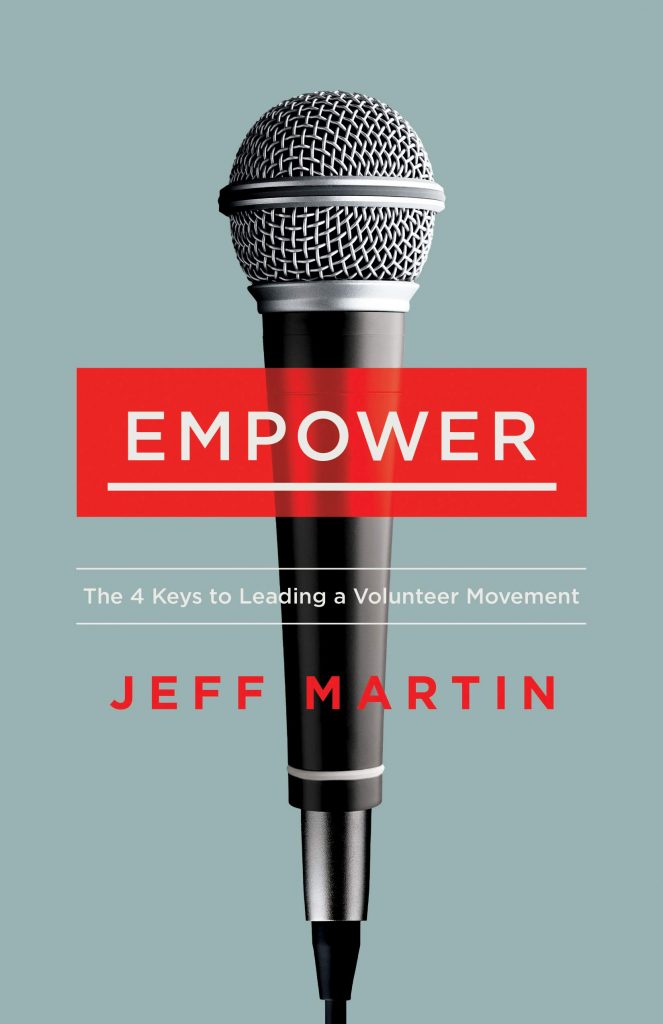
Empower: The 4 Keys to Leading a Volunteer Movement
By Jeff Martin
B&H Publishing Group, 2021
179 pages
US$18.00
Reviewed by Cameron L. Smith, pastor, and a doctoral candidate at Evangelical Seminary, Myerstown, Pennsylvania.
Empower is a collection of wisdom gleaned from experiences in starting and leading volunteer movements. Author Jeff Martin is an Executive Director with Fellowship of Christian Athletes and founder of the Christian youth movement Fields of Faith.
By reflecting on his life, ministry, and career, Martin’s book is an attempt to uncover key principles that motivate organizational movement. Simply put, the goal of the book is to humbly show that starting and growing a movement in an organization or business involves value, simplicity, commonality, and ownership. If leaders can embrace and take risks in these four areas, a movement of empowered volunteers has a chance to succeed.
Empower is framed on these four principles and Martin weaves Bible stories, personal life lessons, and wisdom from others to illustrate his points. The balance is well done as he is not redundant in his claims and his stories are not overbearing. The book is straightforward and enjoyable to read. A nice touch at the end of each chapter includes a brief recap section with key ideas.
At the beginning of the book, the author subtly brings awareness to the mission of God and that people have the desire to be a part of something bigger than themselves. Martin sees this particularly in students, many of whom have the passion and interest in pursuing a mission. He goes on to recognize and assert that ordinary students, volunteers, and untrained people are a significant source of influence. Trained leaders and hired guns, so to speak, have their place, but as this book suggests, ordinary people are an important and effective resource.
Those involved in missional engagement and contextual theology will particularly find the author’s discussion on simplicity interesting. Drawing from basic military tactical principles, he addresses the concept of critical nodes. A critical node is a center of gravity; an important feature in a particular context. If a critical node is taken out, the whole system fails. This idea works both ways, as a tactic to advance the gospel and as a defense. For example, for Martin, the Bible is a critical node. If the Bible is removed out of the hands of volunteers, there will be spiritual stagnation or collapse. Or conversely, if the Bible as a critical node is accessible and available and placed into the hands of volunteers, spiritual movements become possible. Other threads of insight like this are woven throughout the entire book.
As popular literature, the recommended audience for this book is rather broad – any person in a leadership role will agreeably absorb the information. With that said, this book is recommended for any leader who specifically works with limited to no staff and mostly volunteers, such as a small local church pastor or even those who lead short-term mission trips. Empower will spur ideas in one’s own context and the stories will indeed bring encouragement. Clear ideas that inspire will be delivered, especially to those who are ambitious to see the genesis of the next new movement comprised of everyday people.
EMQ, Volume 58, Issue 2. Copyright © 2022 by Missio Nexus. All rights reserved. Not to be reproduced or copied in any form without written permission from Missio Nexus. Email: EMQ@MissioNexus.org.