EMQ » July–September 2020 » Volume 56 Issue 3
By Alex Peterson
Everyone has a desire for justice, and most people seem to have an innate sense of what is or is not just. People crave to know that wrongs have been righted, that punishment is dispensed for wrongdoing, that sin is contained and confronted. While most people will give lip service to forgiveness, a lack of justice can make forgiveness seem hollow. It seems that, at times, this is how justice is treated in the Qur’an — forgiveness with no justice. This article will consider how the Qur’an treats God’s[1] justice. To understand justice in the Qur’an, the nature of God and man will first be considered. Using that foundation, punishment and forgiveness in the Qur’an will be discussed, providing a more nuanced understanding of justice in the Qur’an, and comparing it to Biblical concepts. The article will conclude with suggestions for practice in presenting the Gospel to Muslim friends.
The Nature of God
God in the Qur’an is described as just. On the day of judgment, “every soul will be compensated for what it earned, and they will not be treated unjustly.”[2] God also calls Muslims to act justly as well. “Oh you who believe! Stand out firmly for justice, as witnessed to Allah, even if it be against yourselves, your parents, and your relatives, or whether against the rich or the poor…”[3]. One might wonder how a Holy God can punish some, and not others, and still retain his title of “All Just.” To understand this, one must first consider the nature of God.
The dominating characteristic of God in the Qur’an is the oneness of God, or Tawheed. “Say: He, Allah, is One. Allah is He on Whom all (beings and things) depend. He does not beget, nor is he begotten. And none is like him.”[4] Derived from this is the idea that God is separate and transcendent. Mark Anderson comments, “The Qur’an asserts his untrammeled glory and unapproachability, making its creator-creature distinction as sharp as possible.”[5]
The second characteristic of God that is relevant to this article is that of Holiness. The Holiness of God only appears twice in the Qur’an. Surah 59:23 says “He is God: there is no god other than Him, the Controller, the Holy One…” Surah 62:1 says “Everything in heaven and earth glorifies God, the Controller, the Holy One…” Jalalayn comment on 59:23 that God is “the one sanctified from what does not befit him”[6], and on 62:1 that God is “the One Who transcends what does not befit him.”[7] One scholar notes that it is difficult to determine how “good” in the Qur’an (which is related to Holiness) is defined. Some say it is authoritarian[8] – whatever God says is good is good. Some say it is utilitarian[9] – whatever is useful is good. Some say it is natural[10] – good is inherently good and evil is inherently evil. Obaidat acknowledges that it is the Mu’tazilites who held that “God cannot order the bad.”[11]
Anderson notes that the Qur’an does not distinguish between God’s “ontological or ethical holiness.”[12] To put it another way, is what God tells us to do good because God says it (ethical holiness), or does God tell us to do good because it is, in fact, good (ontological holiness). In the first case, God can identify anything as good. In the second, God is bound by what is good, as defined by His Character. It seems that the Jalalayn commentary’s concept of God fits more with ethical holiness — God is separate from what does not befit him, but God does not seem to be beholden to any ethical framework.
An example within Islamic society might be the number of wives that a man is allowed to have. Men are allowed to marry up to four wives, presuming that they are able to treat them equally and justly.[13] However, Muhammad was allowed to marry more than four women.[14] So is the limit to four wives an outworking of God’s ontological holiness or his ethical holiness? In this case, it seems that he arbitrarily decides what is right. However, in Hebrews 6:8, God is bound by his loving and good nature, and cannot act outside of this nature.
The Nature of Man
Sin and the nature of man in the Qur’an must next be considered. The Qur’an gives a behavioral framework for Muslims, such as giving to charity[15] or helping orphans.[16] The Qur’an also acknowledges that man is prone to disobey the commands of God. Man is ungrateful, and if he does not repent and obey, he will be sent to hell. Man is also able to obey and to do good, and if he does so, his actions will allow him to enter paradise after he dies.[17] That said, there is no verse in the Qur’an that resembles the creation of God with God in paradise as it does in Revelation 19, where the feast of the lamb shows God communing with his people.
So what is the conclusion on the nature of man? In a theological exposition of humanity’s goodness Mutahheri says, “The Holy Qur’an is of the view that potentially man has all the good points, but he has to actualize them.”[18] While man is prone to commit sins (and thus needs to repent), the fundamental nature of man is not sinful. Man is separate from God because God is so far above creation that man cannot be “with” God. In the Bible, man is separate from God because of their sin.
We now have two important pieces of the puzzle to understand the nature of justice in the Qur’an. God is not holy by nature, but rather decides what is good and bad based on criteria that are unknown to man. Man is not by nature sinful, nor does man need to be redeemed in order to be in God’s presence as God is too far above us. We will now consider the element of justice, considering God’s nature and Man’s nature as a backdrop.
Justice and Forgiveness
In the Qur’an, the word “justice” appears twenty-two times. Most of these references are instructions for people — either Muhammad or the followers of God — to treat people with justice. The context of these passages define justice either treating people equally or punishing those who have treated others unfairly and correcting what is wrong. There are three verses that point to God’s action on justice. The first is 6:115, “The word of your Lord is complete in its truth and justice. No one can change His words: He is the All Hearing, the All Knowing.” The context in the Qur’an is that God is saying that scripture was sent down (v. 114), and therefore everyone has the truth and can be held accountable. The Jalalayn[19] further explains that there was a disagreement in which “they” asked for an arbiter to be appointed. Muhammad’s response is that the revelation of the Qur’an is enough, in part because it is just. However, neither Jalalayn nor Maududi[20] elaborate further on why the revelation is just — simply that it is just.
Another Qur’anic teaching of justice is 10:54: “When they see the punishment, they will repent in secret, but they will be judged with justice and will not be wronged.” As with the previous passage, the context is the punishment received for evil deeds, and God’s judgement is just, or it is right. Neither Al-Mahalli [21] nor Maududi[22] comment on justice, but both acknowledge that God’s judgement is correct. In other words, God’s judgement is just.
The last passage to consider is 15:8: “But we send down the angels only to bring justice and then these people will not be reprieved.” The context of the passage is that God is explaining that people have had opportunities to hear the message from the prophets — there is justice and equal treatment before the law. The translation of the Jalalayn commentary replaces the word “justice” with “chastisement”[23] at this point, suggesting that God is punishing wrongdoing, and that is a part of justice. Maududi replaces justice with “truth”[24], and also comments that those who are sinful will be punished, indicating that a part of justice is punishment against some sort of external criteria.
The conclusion from these three verses is twofold. First, justice is punishment for wrongdoing. If someone does something against the commands of God, and does not repent, then they should be punished. Second, justice is equal treatment — all people should be equally treated. Next, two stories from the Hadith will be considered to illustrate how Muhammad dealt with issues of justice.
In the first story[25], the nephew of Muhammad’s wife Aisha asks about Qur’an 4:3, which requires justice to be done to those who want to marry an orphan. The question of justice here is about how much dowry to offer. It seems that some men wanted to marry orphan women without paying the appropriate dowry. However, Aisha reminds her nephew that the women must be treated equally and should not be taken advantage of. In this case, justice is about correct treatment before the law. However, one must emphasize that this is correct treatment within the specific context. One does not get the sense from this story that justice is based on their shared humanity, but correct treatment in their roles as men and women, free or slaves, family or orphans.
In the second story[26], Abu Bakr asks Muhamad how to pray. Muhammad teaches him to pray thus: “O Allah! I have done great injustice to myself and none except You forgives sins, so please forgive me and be Merciful to me as You are the Forgiver, the Merciful”. Injustice here seems to refer to sin that has been committed, as the person praying is then asking for forgiveness. If this is true, justice is doing anything that God says is correct. In both of these stories, we see justice as closely linked to the wishes of God. While Christians would agree with this whole heartedly, the question then becomes, “What does God want?” Are God’s instructions true for all people at all times (i.e. it is based on his ontological holiness) or is it based on what he instructs in a given situation, which can change from event to event (i.e. it is based on an ethical holiness).
Safraz Bachus defines justice three ways in the Qur’an. First as theological: the Qur’an states that God’s actions are just,[27] though there is no indication that God is bound by certain aspects of his character. Is there anything that God does that is unjust? To answer this question, the author quotes Imam Ghazali, “Who would command God? Justice is not some value which God observes and respects; rather, it is He who creates justice.”[28] The second is jurisprudential: prophets have been sent to tell mankind what is good and what is evil, what is just and what is unjust.[29] So justice is defined as those actions which God has deemed good, and this echoes the thought from Imam Ghazali. The third principal is ethical — “justice mediates human-to-human relationships insisting on the principle of equity.”[30] In conclusion, justice in the Qur’an is based on what God requires, and what God requires may in fact be a bit of a moving target.
In conclusion on the justice of God in the Qur’an, justice is not complete, at least not in the way it is described in the Bible, but the theology seems to be internally consistent. God is not “Holy” in the same sense that the Bible describes holiness, Man is not by nature fallen, and God does not bring people to live in his presence with him, so than there is no need in the Qur’an to reconcile God’s forgiveness of people’s sins and his justice. His justice concerning people is as He pleases, since he is not welcoming fallen creatures into his holy presence.
One might wonder if there is a need for salvation if God is not Holy in the Qur’an, and man is not sinful. However, this misses the largest theme in the Qur’an — God’s wrath. God will judge those who disobey and send them to hell.[31] How does one avoid punishment? How does one obtain mercy from God? It is the righteous that will obtain paradise.[32] But what if one has committed sins? How does one obtain God’s mercy? If sins are committed out of ignorance, the sinner will find mercy.[33] The Qur’an says that God loves those who repent.[34] There is also a need to remove sins with good deeds.[35] According to the Hadith, forgiveness can also be obtained by saying prayers, saying “ameen,” completing ablutions, and gathering in circles with other believers.[36]
Are all sins equal? Is everyone eligible for forgiveness and mercy? The Qur’an seems to indicate that there are big sins and little sins — and big sins will not be forgiven.[37] Citing Qur’anic passages, Syed Mu’azzzam Hussain lists three types of people who will not be granted forgiveness: confirmed sinners, infidels, and polytheists.[38] The line, then, is the line that seems to be those that continue sinning. Hussain also argues that lists of unforgiveable sins do not reflect the Qur’an, citing 39:53, “God forgives all sins.” Al-Mahalli does not have any particular comment on this passage,[39] nor does Syed Qutb seem to disagree with this assessment.[40]
Implications for Practice
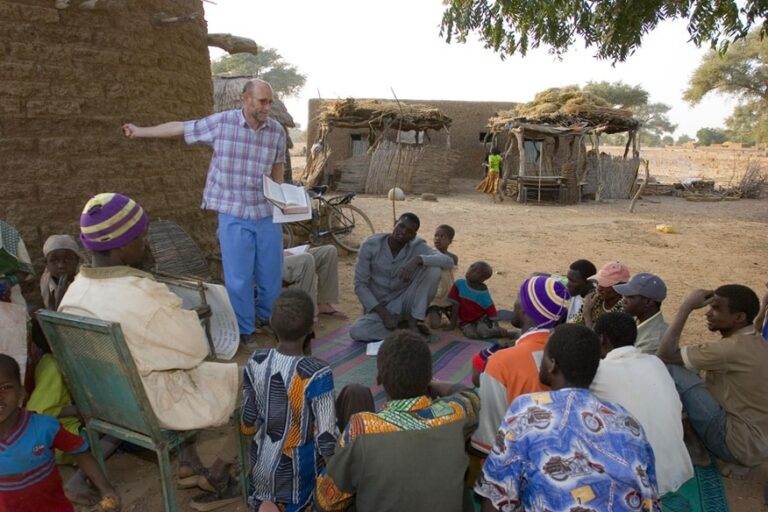
Statements from Christians such as “God cannot tolerate sin in his presence,” or “the death and resurrection of Jesus satisfy the need for God to punish sin” might be met with indifference. So how does one address this issue with Muslim friends? Ravi Zacharias, in his DVD series on apologetics[41] identifies three ways in which we know that something is true. The first is through experience. Do people intuitively feel a lack of justice in the Qur’an? If so, people might chafe against the injustice in Islam as God is forgiving people without punishing them, and find resolution in a biblical conception of justice, grace and forgiveness. However, since God does not forgive major sins, there is a sense in which people just might be able to be good enough in Islam. Unless someone is at a major crisis point on this particular issue, experience alone, might not be enough for most people to turn to Christ.
Second, Zacharias suggests we might connect truth of Scripture with truth of what someone already believes. Certainly, Muslims will not object to God being just and being holy, and those ideas provide a platform from which to build. However, the nature of man in the Qur’an and the Bible are decidedly different. Three concepts that will need to be more developed will be the ontological holiness of God, the sin nature of man, and God’s desire to relate and be with people.
The third avenue from Zacharias in sharing truth is through evidence. In the context of this discussion, the evidence is revelation from God. Through study of the scripture, people will need to be shown first that man has been separated from God through original sin (and certainly it does not take much evidence to show the sin nature of any man or woman). They will need to be shown that we are unable to attain God’s forgiveness, and that God is holy and sinless. It may be that it is only through scripture that a Muslim will be able to shed Qur’anic ideas of God’s nature, man’s nature, and God’s justice.
Conclusion
In the Qur’an, God is not bound by ontological holiness. Nor is he a personal God that is looking to have his creation join him forever, and therefore there is no pressing need to resolve holiness and sinfulness. Man is not, by nature, sinful, though the issue is moot if there is no paradise that is “with God.” It all sounds very hopeless. But there is a great reason to hope in sharing scriptural evidence. Scripture is powerful, and should be preached, taught, and shared far and wide. That will be the only way to overcome such large barriers.
Alex Peterson (pseudonym) has worked and lived in the Arabian Peninsula for over ten years, primarily in the field of education. He is married with three children.
Notes
[1] The author has chosen to use the word “God” in this article to refer to the Muslim deity of Allah. The author recognizes that while there are strong arguments to be made in distinguishing Yahweh and Allah as separate beings, many Muslims (and many Christians) genuinely perceive them to be the same being. Indeed, in the author’s experience, even Christians who do not believe they are the same rarely speak with Muslims as if they are different. Rather, they would take the approach of correcting inaccurate doctrines through scripture. As such, this article uses the word “God” in recognition of this reality “on the ground,” emphasizing practical implications toward the end of the article.
[2] The Qur’an, trans. M.A.S. Abdel Haleem (Oxford: Oxford UP, 2005), 2:281.
[3] Qur’an, 4:135
[4] Qur’an, 112:1–4
[5] Mark Anderson, The Quran in Context: A Christian Exploration (IVP Academic, 2016), 63.
[6] Jalal Al-Mahalli and Jalal al-Suyuti, Tasfir al-Jalalayn, trans. Feras Hamza (Amman: Royal Aal al-Bayt Institute for Islamic Thought, 2007), 625. Written in fifteenth century, this commentary is widely regarded as one of the most accessible commentaries on the Qur’an.
[7] Al-Mahalli, Tasfir, 665.
[8] Ahmed Obaidat, “Defining Good in the Quran,” Journal of Quranic Studies 14, no 2: 112.
[9] Obeidat, “Defining Good,” 113.
[10] Obeidat, “Defining Good,” 114.
[11] Obeidat, “Defining Good,” 116.
[12] Anderson, The Quran in Context, 76.
[13] Qur’an 3:3.
[14] Qur’an 33:50–52.
[15] Qur’an 102:1.
[16] Qur’an 89:17.
[17] Qur’an 73:10.
[18] Murtaza Mutahheri, An Introduction to the Islamic Worldview (Qum: Ansarian Publications, 2008), 219
[19] Al-Mahalli, Tasfir, 149.
[20] Sayyid Maududi, Tafhim Al Quran, trans. Chaudhry Akbar Khan (1972), accessed October 5, 2018, http://www.englishtafsir.com/Quran/6 /index.html.
[21] Al-Mahalli, Tasfir, 220.
[22] Maududi, Tafhim, http://www.englishtafsir.com/Quran/10/index.html.
[23] Al-Mahalli, Tasfir, 270.
[24] Maududi, Tafhim, http://www.englishtafsir.com/Quran/15/index.html.
[25] Sahih Abu Dawud, Book 12, Hadith 23, https://sunnah.com/abudawud/12.
[26] Sahih Al-Bukhari, Vol 1, Book 12, 796, http://www.sahih-bukhari.com/Pages/Bukhari_1_12.php.
[27] Safraz Bacchus, The Concept of Justice in Islam (Victoria: FriesenPress, 2014), 140.
[28] Bachuss, Concept, 198.
[29] Bachuss, Concept, 208.
[30] Bachuss, Concept, 227.
[31] Qur’an 76:12; 44:16; 67:10.
[32] Qur’an 38:49; 50:31; 67:12.
[33] Qur’an 6:54.
[34] Qur’an 2:222.
[35] Qur’an 11:114.
[36] Sahih Al-Bukhari, Vol 6, Book 60, Hadith 2, http://www.sahih-bukhari.com/Pages/Bukhari_6_60.php.
[37] Qur’an 53:32.
[38] Sayed Mu’azzam Hussain, “The Effect of Tauba (Repentence) on Penalty in Islam,” Islamic Studies 8, no. 3: 189–198, 194.
[39] Al-Mahalli, Tasfir, 542.
[40] Sayyid Qutb, In the Shade of the Quran, vol. 14, trans. Adil Salahi (The Islamic Foundation, 2003), 360.
[41] Ravi Zacharias, Establishing a World View, vol. 4 (Peabody, MA: RZIM, 2011) DVD.
EMQ, Volume 56, Issue 3. Copyright © 2020 by Missio Nexus. All rights reserved. Not to be reproduced or copied in any form without written permission from Missio Nexus. Email: EMQ@MissioNexus.org.