EMQ » July–September 2018 » Volume 54 Issue 3
[memberonly folder=”Members, EMQ2YearFolder, EMQ1YearFolder”]Information is powerful. We’ve all experienced moments where the discovery of a particular piece of information has radically shifted the direction of our lives. Many of us in the mission community had our lives transformed when we discovered the theme of God’s global mission that runs from Genesis to Revelation. The realization that God has always been a missionary God continues to challenge countless Christians to consider the direction and purpose of their lives. Or maybe it was the discovery of the unreached, that millions of souls lived beyond the reach of the local church and had little to no access to the gospel that was the watershed moment in your life. State of the World talks that educate and inspire Christians are a regular feature of mission conferences. Thankfully, God has raised up hard-working men and women who dedicate themselves to helping transform Christian worldviews through powerful and up-to-date information.
Since their first 32-page prayer guide in 1964, Operation World has been informing and inspiring Christians around the world to join God in praying for the nations. For more than twenty years, the Joshua Project has helped awaken the Church by defining the unfinished task of the Great Commission among the unreached. Both of these resources, and others like them, have contributed to mobilizing laborers, guided mission strategies, and awakened countless hearts to God’s global purpose. I know many Christians who became involved in global missions after using Operation World to pray for the nations. God used their prayers, guided and informed by Operation World, to stir their hearts to greater involvement among the nations. Similarly, the research into unreached and unengaged people groups done by the Joshua Project has guided the strategies of many mission agencies, directed the deployment of countless missionaries, and drawn the Church’s attention to those who have little to no access to the gospel message. The research done by these organizations and the information they provide the Global Church is powerful and has shaped twenty-first centurymissions.
The Global Church is seeing tremendous growth, and today there are tens of millions of evangelical believers spread throughout the world. We’ve seen the Church’s center of gravity shift from Western Europe and North America, south to Asia, Africa, and Latin America. And according to Operation World, the evangelical Church continues to grow the fastest in the Global South.
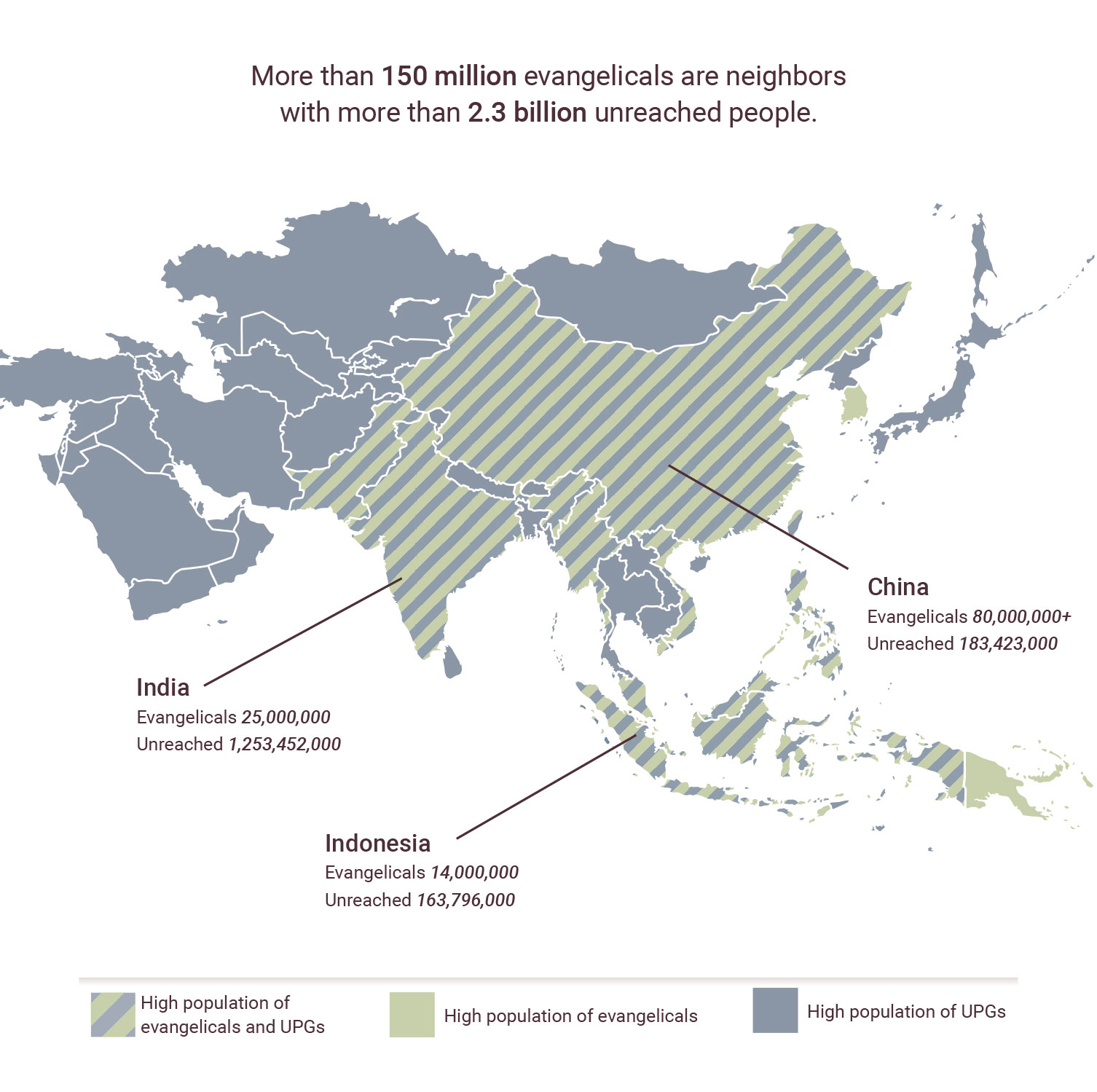
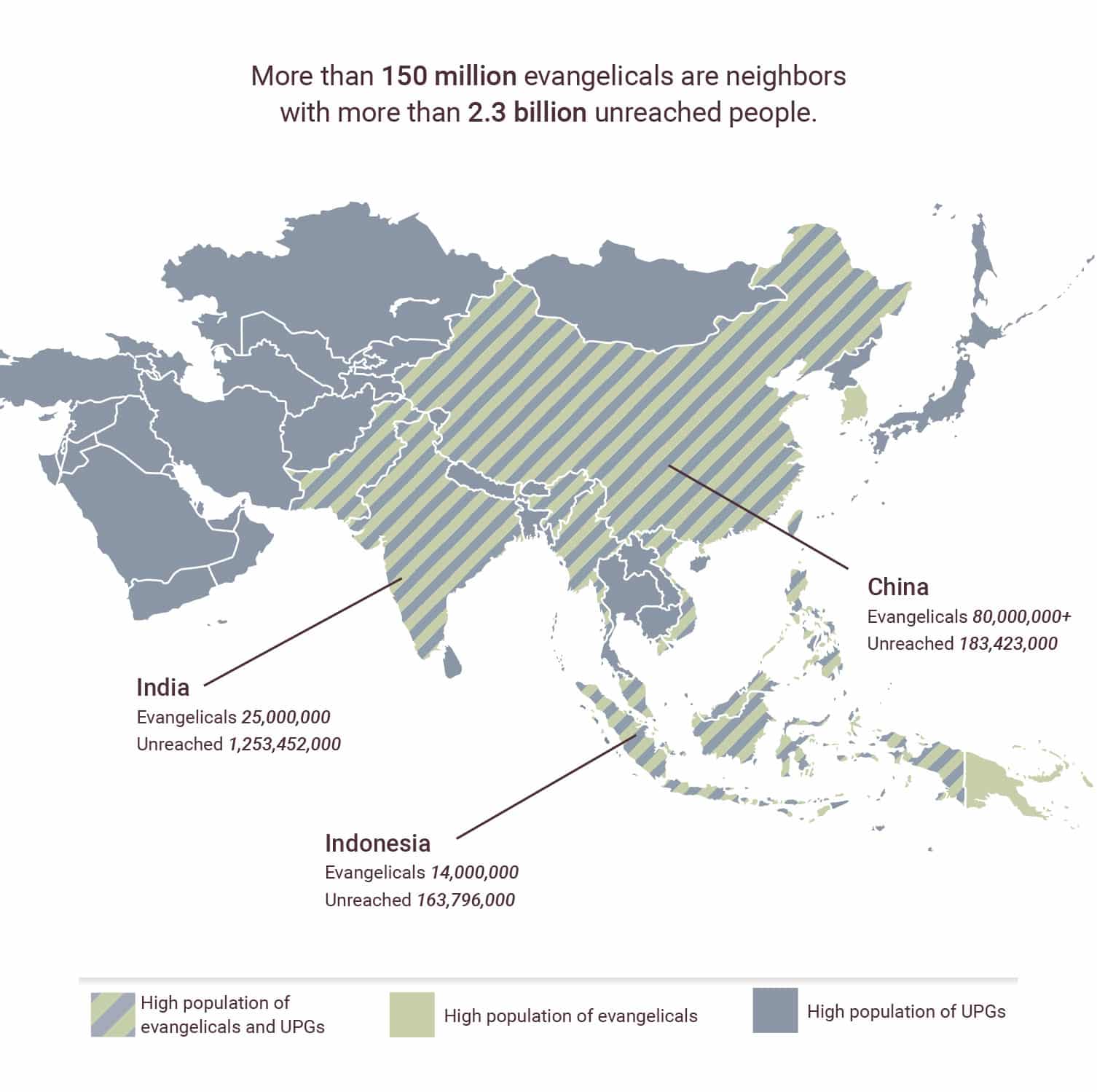
It should therefore not surprise us that missions sending has begun to shift as well. Gone are the days where mission work was primarily “from the West to the rest.” The WEA, in their publication Worth Keeping, calls this advancement in missions the “New Sending and Old Sending countries.” We are seeing mission movements of Brazilians going to the Arab world, Indonesians going throughout Southeast Asia and beyond, and many African nations are strategically sending workers across the continent to share Christ among some of the least reached peoples.
The Mobilization Index seeks to join Operation World, the Joshua Project, and other mission research initiatives and further the cause of Frontier Missions. Specifically, the Mobilization Index wants to identify the countries and locations around the world with greatest mission sending potential and thus locations where the Church is ripe for mobilization. By recognizing these strategic locations and profiling their unique potential, we hope to see new and renewed mission mobilization and sending movements. The goal of the Mobilization Index is simple: to see an increase in global mobilization that leads to more laborers being sent to the nations to proclaim Christ among the unreached.
Measuring Potential Not Ranking Importance
Currently, we have identified sixty locations that have more than one million evangelicals or are strategically situated. We believe that each of these locations has the unique potential to raise up and send out laborers for God’s Harvest. The Mobilization Index is not a ranking of which countries are most important for mobilization or who can send the most missionaries. Each of the sixty nations on the list has unique mission sending potential. Each of these sixty nations will face their own unique set of challenges and obstacles as they raise up and send out missionaries. And each of these sixty nations is worthy of our prayers. The Mobilization Index desires to be a tool that mobilizers and church leaders can use to fuel mission prayer, encourage greater commitment to the unreached from all believers, inform leaders about the current state of sending, and guide the placement of future missionaries.
History of the Mobilization Index
The concept for the Mobilization Index began a few years ago as a tool that the Center for Mission Mobilization (CMM) could use to help identify the most strategic locations for future mobilization efforts. As mission mobilizers, we were looking for places where the Church was large and growing and where we could join God and the national church in raising up more laborers. We started by going to Operation World and looking for countries with large numbers of evangelicals. Early on, we set a threshold of one-million as the minimum number of evangelicals needed to make the Mobilization Index. While this was somewhat of an arbitrary figure, it was felt that one-million evangelicals gave a national church sufficient numbers and resources to sustain an ongoing mission mobilization and sending movement. As this list of countries with great potential was developed, we began to realize that this could be a valuable resource for the Global Church. We wanted to create a resource that other mission agencies and mobilization movements could use that would lead to more laborers being sent to the unreached from every nation on the Mobilization Index.
In its original form, the Mobilization Index was a comprehensive Microsoft Excel spreadsheet. The CMM commissioned Chris Maynard with Transforming Information to gather the initial data. This information was presented by Chris in 2013 at the first Global Mobilization Consultation in Surabaya, Indonesia. Over the years, the project has evolved both in the countries on the list and in how we measure a nation’s unique mobilization and sending potential. Along the way, many excellent researchers and missiologists contributed to the development of the project. We partnered with Global Mapping International to create a series of missiographics called the “New Harvesters” (missionexus.org/new-harvesters). Currently, we have a number of data points or sub-indexes that we believe help paint a more accurate picture for each of the nations on the Mob Index. In profiling each nation, we wanted to move beyond merely the number of evangelicals in a country and look at a wide range of factors.
Our goal with the Mobilization Index is to capture as complete and accurate of a profile as possible for each of the nations on the list. To do this, we gathered data from a variety of sources highlighting a wide range of factors. The data used in the Mobilization Index comes from several reputable and trustworthy sources, so we feel confident that our conclusions are based on solid information. When looked at holistically, these sub-indexes bring to light the unique role that each nation has in seeing Christ proclaimed among all peoples.
Currently, the Mobilization Index is made up of the following sub-indexes:
- Numbers of evangelical Christians.1
- A nation’s prosperity ranking.2
- Access to Unreached People Groups, both in-country and regionally.3
- Cultural distance from nations with large populations of unreached peoples.4
- Percentage of the population under the age of fifteen.5
- Religious freedoms and persecution.6
- A nation’s generosity ranking.7
- Numbers of missionaries sent, both in-country and out of country.8
Sub-Indexes
As mentioned, the Mobilization Index began by using Operation World to identify the locations around the world with large and growing evangelical populations. But we also understood that many factors, other than the size of the church, can impact mobilization and mission sending. The Mobilization Index has expanded to include elements we believe paint a more accurate and complete picture of each nation’s unique potential.
A nation’s prosperity should be considered when profiling mobilization and sending potential. But prosperity is more than just economic wealth. Therefore, we chose to use data from Legatum’s Prosperity Index. Legatum determines overall prosperity through what they call the “nine pillars” of prosperity that considers factors such as economic quality, education, health, and governance. Early on, we observed a correlation between a nation’s prosperity level and their mission sending. The more prosperous a nation, the more missionaries they were able to send. However, this only applied to external sending. Prosperity does not appear to be a factor when looking at internal mission sending.
Which leads us to our next sub-index, measuring a nation’s access to unreached peoples. To determine this, we turned to the Joshua Project for both in-country and regional access data. The goal of most frontier mobilization is to help all Christians find their most strategic role in seeing the gospel preached to all nations. Moreover, many of us who serve as mobilizers give particular attention to mobilizing towards the unreached. But once a believer has been mobilized, exactly how difficult will it be for them to build relationships with unreached peoples? Are there significant populations of UPGs near where they live or will they need to travel? A nation’s access, both in-country and regional, will play an important role in the mobilization tools and strategies employed. Furthermore, issues of prosperity become less significant if mobilized Christians have immediate UPG access. Interestingly, there are Mobilization Index countries located in every region of the world except for Central Asia. The Church has never been more strategically placed geographically to see the Great Commission fulfilled.
Cultural distance to the unreached was another factor we felt highlighted each nation’s mobilization and sending potential. To do this, we used Geert Hofstede’s research into the six dimensions of national culture. By comparing the cultural data from each nation on the Mobilization Index with a list of countries with large populations of UPGs, we were able to determine most nations overall cultural distance. Some locations, like Tanzania and Brazil, are very close culturally to the unreached. While other countries, Australia and the U.K., are further away culturally. We want to be clear that cultural distance should not be used to determine where a nation should send missionaries, nor does it determine who will be successful and who won’t. But cultural distance can be used as a way of opening the eyes of Christians by showing them that maybe the unreached are not so different after all. Perhaps, the way a Brazilian was raised and looks at the world is similar to that of an Arab Muslim, and these commonalities could be a bridge to a gospel friendship.
The Mobilization Index also uses population demographics. Looking at the percentage of the populations under the age of fifteen gives us an idea not only of who the potential mobilization audience is but also what mobilization strategies and resources are best employed. Nations with high percentage of youth might find it challenging to sustain a large sending movement. Perhaps children and family mobilization ministries should lead the way in these countries.
Religious restrictions can potentially play a significant role in a nation’s ability to mobilize and send out workers to the unreached. The Pew Forum has researched both government restrictions and social hostilities and how they interfere with religious beliefs and practices. Nations like South Africa and Brazil have virtually no restrictions, while other countries, China and Indonesia being two examples, severally restrict their population’s religious freedoms. Using this data, we were able to determine to what degree the nations on the Mobilization Index are religiously restricted. This will no doubt influence the mobilization and sending methods the church employs.
The Mobilization Index also considers a nation’s overall generosity. The CAF World Giving Index measures a nation’s generosity in three areas: helping a stranger, donating money, and volunteering time. One might assume that the nations with the highest prosperity would be the most generous, but it does not appear to be the case. Myanmar, arguably one of the world’s poorest countries, has consistently been ranked as the world’s most generous nation. Kenya also ranks in the top fifteen on World Giving Index. Mobilization is more than just raising up new laborers for the harvest. Mission mobilization is about raising up believers who will also pray, send, welcome, and give towards missions. Looking at a nation’s overall Generosity score can provide mobilizers with insight into key areas that could impact long-term mission movements.
The last area the Mobilization Index considers is current numbers of missionaries sent, both in-country and internationally. As with the numbers of evangelicals, the Mobilization Index draws on data provided by Operation World. Today most would agree that the harvest is still plentiful and the workers are still too few. Looking at the sending numbers provides mobilizers with a snapshot into the current state of mission mobilization and sending. Some nations have very high internal mission sending but lower external sending. This makes sense when looking at nations with high numbers of unreached such as China and India. Other countries, like South Korea and the U.K., send many more missionaries externally than they do internally. One limitation of the current mission sending statistics is that we don’t know the breakdown numbers of workers serving among reached peoples and unreached peoples. It is possible that while a nation’s mission sending numbers might be high, many of the workers could be serving mainly in areas where the Church is firmly established.
Regardless of the current numbers, let’s work together to see each nation on the Mobilization Index raise up and send out more laborers into God’s harvest. Imagine if just one in 1,000 believers were to be mobilized to the unreached. That’s only 0.1% of the evangelical population. Even the countries with the lowest Prosperity could find ways to sustain one missionary for every 1,000 evangelicals. While this number might seem insignificant, it represents a massive increase in laborers. If one in 1,000 Indonesian was mobilized to the unreached, we would see a labor force of over 14,000 being sent out to proclaim Christ! If one in 1,000 Kenyan was mobilized to the unreached, over 20,000 new workers would be added to the harvest. At just 0.1% of the evangelical population mobilized, both Brazil and Nigeria would each send out 50,000 gospel messengers.
These numbers are mindboggling. Alone, each of these nations above has the potential to fuel a mission movement not seen since the days of William Carey and the Student Volunteer Movement. Together, these four countries have a combined sending potential of nearly 140,000 new goers! Now imagine the Church in every nation on the Mobilization Index raising up tens of thousands of believers, each participating in the Great Commission in their most strategic way. When Jesus and his disciples looked at the vast need in ministry, “He said to His disciples, ‘The harvest is plentiful, but the workers are few. Therefore, beseech the Lord of the harvest to send out workers into His harvest.” We want every person to have the opportunity to hear the Gospel. The nations on the Mobilization Index are poised and ready to send those gospel messengers!
How You Can Help
Anyone who has been involved in mission research, whether conducting or using, knows that information quickly goes out of date. While we are confident that information we have gathered comes from reliable sources, there may be other groups unknown to us that have conducted more recent research. If you have access to updated statistics that we could use, specifically with regards to numbers of evangelicals and missionaries sent, you can email us at mobIndex@mobilization.org. We desire the Mobilization Index to be as accurate and up-to-date as possible.
Things That Cannot Be Measured
There are many factors that the Mobilization Index cannot gauge. The chief of these is the God factor. God’s will supersedes every one of our strategies and long-term plans. The Mobilization Index is a tool to help guide our prayers and our ministry strategies, not dictate them. What we are attempting to accomplish with this research initiative is identify key factors that can impact mission sending movements. Each nation has unique potential, and each nation will face unique challenges. But as God opens the doors for mission sending, we must be ready to walk through. After all, our God has a history of using the unlikely to do the impossible.
Moving Forward
The Mobilization Index is currently in the process of building profiles for each of the regions and locations on the list. These profiles will be similar to what you see in Operation World, populated by the data being collected, a bit of analysis and discussion regarding the potential of each nation, and invitations to join in praying to the God of the harvest that He would raise up believers passionate about the lost.
We also want this information to be accessible and inspirational to those who use the Index. In the coming months, we plan to launch a dedicated Mobilization Index website that will be data-driven, interactive, and visually informative. The site will be a mix of narrative profiles, interactive infographics that communicate complex ideas, and the ability to sort and weigh the data based on your ministry’s priorities and needs. We are endeavoring to move the Mobilization Index from spreadsheets full of data and numbers, to stories and images that inspire Christians to greater involvement in God’s mission.
Information is powerful. Lord willing, the Mobilization Index will be a dynamic tool that guides and informs mission sending from the Global Church for God’s glory.
Jason G works with the Center for Mission Mobilization where he serves as the Director of Operations for the Southeast Asia Catalytic Team. He is the co-author of Go Mobilize and the Project Leader for the Mobilization Index. Starting July 2018, Jason will join the Executive Leadership Team of the Global Mobilization Network. He and his family currently live and serve in Southeast Asia.
Notes
1. http://www.operationworld.org/
2. http://www.prosperity.org/
3. https://joshuaproject.net/
4. https://www.hofstede-insights.com/models/national-culture/
5. http://www.worldpopdata.org/index.php/map
6. http://www.pewforum.org/2016/06/23/trends-in-global-restrictions-on-religion/
7. https://www.cafonline.org/about-us/publications/2017-publications/caf-world-giving-index-2017
8. http://www.operationworld.org/