by Carole Sparks
Everyone agrees that we must work together to accomplish the task of Matthew 28:19-20 so that we may move closer to the end goal found in Matthew 24:14. Furthermore, we all know God did not give this task solely to missionaries or pastors.
Photos courtesy Carol Sparks

Everyone agrees that we must work together to accomplish the task of Matthew 28:19-20 so that we may move closer to the end goal found in Matthew 24:14. Furthermore, we all know God did not give this task solely to missionaries or pastors.
In this post-modern world, many in the Church are ready and willing to go “to the ends of the earth”—at least for short periods of time. However, as I’ve mingled with both cross-cultural workers and church leadership, one recurring emotion surfaces: frustration. Some cross-cultural workers dread the next team’s arrival and some church leaders long for a vibrant, influential role in reaching the nations, but feel stymied by overseas personnel.
It does not have to be this way. A healthy partnership finds the cross-cultural worker actively anticipating and preparing for the short-term team. He or she prays that God will multiply his or her expectations, and trusts God to work—both among the people group and in the volunteers.
In the same partnership, the church body knows they play a strategic role in fulfilling God’s will for that community and area. They care little about costs and time because they are invested in the local people and God’s work among them. They trust the cross-cultural worker to create opportunities for sharing, and they are prepared to follow the Holy Spirit as far as he leads them.
A good church-field partnership is like a marriage. It takes work. It demands seemingly excessive amounts of communication, which leads to trust. And while it may not always be comfortable, there is a sense of ‘rightness’ on both sides. Below I examine a healthy church and cross-cultural worker partnership and offer a step-by-step guide to establish and maintain a partnership that glorifies God and fulfills his vision for the world.
Case Study
In 2001, the lead pastor of River Vista, a large church in the West, traveled to an Arab-influenced area in Africa. He had one day to spend with the only cross-cultural worker in the area. That new worker had no special plan for the pastor. He simply invited the pastor to accompany him on his almost-daily prayer walk through the streets of the ancient city.
They visited shops, talked with locals, and listened to the Holy Spirit. The pastor was skeptical of the cross-cultural worker’s approach, but by the end of one day, the pastor saw the worker’s heart for the people and, through him, God’s design for the work there.
Within a few months, the pastor invited the worker to speak at his church, which led to a vision trip with other church leaders. (On a vision trip two to four influential and spiritually-mature people travel to the field and spend time with the worker. Both they and the worker focus on prayer as the Holy Spirit reveals his heart for the people group and the church.)
Every time he interacted with church members, the cross-cultural worker shared God’s vision for the people group and the purpose statement which arose from that vision. He intentionally exposed the raw lostness of the city and watched for those whose hearts connected to the Father.
He would ask, “What are you seeing that is of him?” This was never spiritual tourism, never something to check off a list of religious accomplishments. After the vision trip in early 2002, River Vista officially partnered with the cross-cultural worker and his team. That relationship continues to this day.
The cross-cultural worker has characterized the relationship as one of continual communication (usually weekly) in which hearts became connected to God’s vision. When that happened, they “took a seat at the table,” and were equally invested in the vision alongside the cross-cultural worker. They offered feedback and suggestions on every major strategy decision. While the worker focused on the vision on his side of the world, the partners at River Vista drove the vision on their side, making connections with other churches as well as denominational and para-church leadership. These secondary relationships strengthened the vision and led to other partnerships.
Other ministers often asked the mission pastor at River Vista, “How do you know where to connect?” He replied,
I connect with people of passion. Only with people of passion. The characteristic of a person of passion is that he has seen what God is going to do and he simply lives it out. They become Jesus people in the middle of it, where they become genuinely real. It looks like there’s not any effort to it. They just live life within the lostness.
As I reflected on both this case study and my own experience, a series of steps has emerged through which I believe the cross-cultural worker and the interested church progress toward a healthy, productive, enduring partnership. I share these in the form of two checklists.
The Cross-cultural Worker’s Checklist
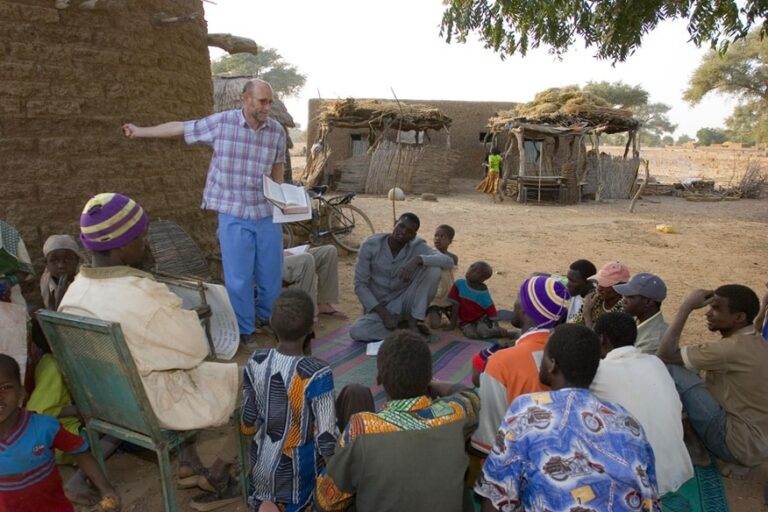
1. Establish a clear vision for reaching your people. Why are you serving where you do? Ask God for an easily-communicated end vision that is specific to your people group. (An end vision describes the time when you have worked yourself out of a job. It should be specific.)
Usually, this will include your call to serve among these people. Your passion becomes more contagious as you express it more clearly. If the cross-cultural worker has national partners, he or she should involve them in this and all subsequent points. The benefits are many, including (a) for you, cultural insight regarding how short-term teams are viewed; (b) for them, a model for how to engage as a volunteer team; and (c) for the church, a continuing relationship with the people group even if the cross-cultural worker moves away.
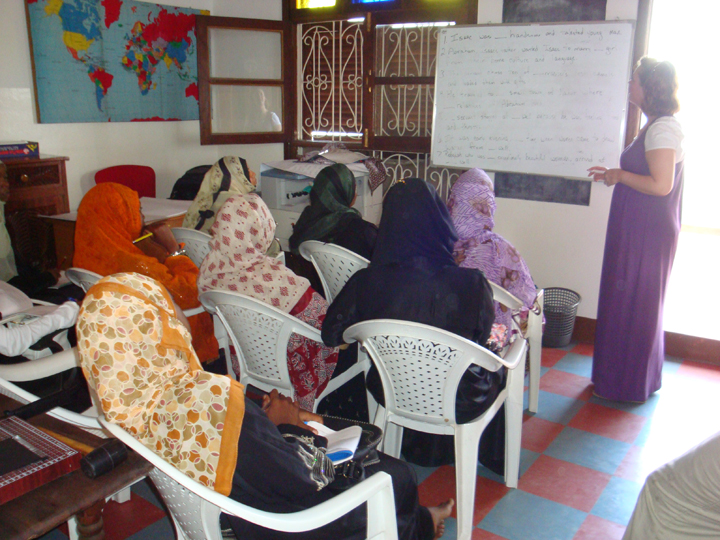
3. Examine your strategy. Where is your relationship/evangelism focus: families in homes, college students, athletes on the court, or homeless people under a bridge? How do you access those people? Can you walk down the street? Does it take extreme intentionality? Dream! Be creative! Examine the Early Church’s strategy in Acts or consider the layers of effort that initiate a CPM. Most teams start with broad ‘seed sowing’ and move toward small groups that become churches. Different layers require different strategies, and perhaps you need to consider just the next few years, but the vision remains the same.
4. Communicate your strategy. Start with, “Here’s how God has led us to engage our people in order to fulfill the vision he has given us.” You may not be sure it will work; that’s okay. Take a risk. Let people join you in the effort—including the risk—and your potential multiplies.
5. Expand the plan to include short/medium-term workers. Prayerfully stretch your thinking. How can short-term workers participate in God’s vision through God’s strategy in your place? Compare the ideal version of ‘how I live my daily life’ to your reality. How can volunteers fill the gap? Are you frustrated about not gaining access to your people group? How can volunteers propel you into deeper relationships or establish your platform authenticity in that place?
Let me share an example. Josh loves basketball and sees God working among the basketball players in the local league; however, as an outsider, he does not have a strong voice. Josh invited a team of men from his church to play and coach basketball in his town. Their skills and Christ-like attitudes cemented Josh’s presence in the league. Even before the team got back on the plane, Josh found himself having spiritual conversations with other players. That team created a wave, the surge of which propelled Josh—and Jesus—further into players’ lives.
6. Communicate your God-given ideas. Succinctly, how do short-termers fit into your strategy? Put this information in your newsletter, on your blog, and on every prayer list that supports you. See which individuals, small groups, or whole churches latch on to what you’re doing. If you sense a like-heartedness with those who contact you, proceed to number seven.
7. Extend an invitation. As church members connect with your vision, invite them to participate in your strategy, but keep it open-ended. Strategy is not as important as a heart-level connection.
You might say, “Visit us for a few days, and together we’ll learn if God wants you to join us in his work here.” On this crucial vision trip, walk the streets of your city with them; talk about what you see God doing but also about your heart for the people. Show them what you enjoy about your city…and what breaks your heart. Pray; then pray some more.
Do not assume, however, that a vision trip means the church is ready to partner. This is the time to ‘cut bait’ if the Holy Spirit does not indicate the partnership is God’s will. If there is a heart-level connection, but your ideas on using teams do not match the giftedness of the church, then reevaluate. You likely missed something because the Holy Spirit does not make mistakes. Be willing to adjust your strategy.
8. Communicate. During and after the vision trip, talk to the church leaders regularly and frequently. Keep the vision in front of them, but also begin laying out the spiritual and practical expectations for short-term teams. How long will they need to stay? What should they wear? Who can they talk to? You may not worry about these things, but the team will have many questions. Be willing to answer every one.
9. Expose the lostness. When the short-term team finally arrives, ensure every volunteer has face-to-face time with individuals of your people group. Let them sit where (and how) your people sit, walk where they walk, and eat what they eat. Without prompting, the volunteers will put themselves in people’s situations and become the best possible advocates for them (and, by association, for you). Names may fade, but faces will remain in their memories. Even years later, expect volunteers to ask about people they met.
Also, expose the volunteers to all of the long-term personnel on your team. You may have been the point person in forging this relationship, but the partnership will endure beyond you if the volunteers connect with your entire team.
10. Communicate. Along the way, ask the volunteers what the Father is showing them or saying to them. Yes, you must translate for them, take them everywhere they need to go, and repeatedly explain why things are the way they are. Be transparent about your struggles and successes. Treat them as spiritual equals, with just as much access to God as you. In particular, let them articulate changes the Holy Spirit is working within their hearts. Encourage their exploration of authentic engagement, especially in areas that feel risky to them. In this, you are creating a circle of prayer supporters that is unequalled!
11. Enjoy the volunteers. Have fun together. Include down time so you can just be American (or whatever). Ask them to show you the latest funny YouTube videos. Take them to your favorite restaurant or tourist attraction. Let them see your life for what it really is. Let them love on your children or bless you with that enigmatic date night. Through actions and attitudes—not just words—make sure they clearly understand how you value their contribution, their effort, and their presence.
12. Communicate. The airport is not the termination point of your partnership. Let the volunteers know the lasting impact of their efforts. Show them how they did actually fit into the strategy you so clearly articulated before they came.
The Church’s Checklist
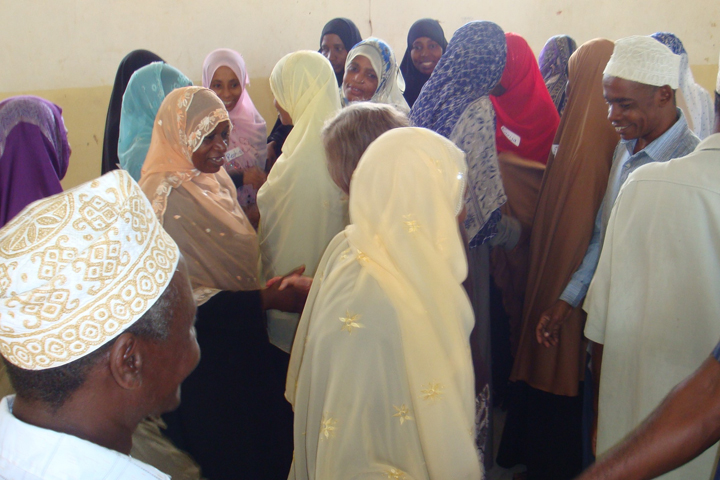
2. Communicate. Talk to sending organizations. Reach out to church members’ cousins, acquaintances, etc. who are serving overseas. Attend a large church’s world missions conference or similar event and be intentional about spending one-on-one time with cross-cultural workers there.
3. Entertain the possibilities. Dream big; God can do it! What story connects with the heart of the church leaders and will motivate the church to respond in obedience? Is it Mexico or Mongolia? Israel or Indonesia? Deaf people? Muslim college students? European agnostics? Perhaps geography will be the key factor, but instead you may be drawn to a certain religion, culture, social condition, or special need. Do not question it or try to over-explain it. If God presses that group or place into your heart, there is a reason.
4. Communicate. Go on a vision trip or two and ask lots of questions. What role does the worker envision for partnership teams? What expectations does he or she have regarding the team’s level of engagement? Be honest about finances and feasibility, but know God may do far more than you currently expect through your church! If a connection is made, continue, but remember that not every church is suited for every field. We cannot force a partnership where God is not forging the bonds.
5. Evaluate the giftedness of your church. Is it basketball? Education? Medical care? Hairstylists? Coffee/tea-drinking? Adventure sports? Business acumen? Counseling? The list is endless. Consider strong groupings within your church: college-age, senior adults, families, singles. How does the age/gender/education of potential short-term teams affect the strategy?
In most Muslim countries, for example, college students will not be effective in reaching the religious leadership of the community; however, if the strategy involves spending time in secondary schools, college students are the perfect fit! Take what you know of God’s vision and the worker’s strategy and lay it across the demographics of your church. Let the Holy Spirit break down the box into which you have placed missions work. He will show you something amazing from the way he has assembled your church and connected you with this specific worker and people group.
6. Communicate the church’s giftedness to the cross-cultural workers. Finish this sentence: “We have a lot of Christ-loving people who….” How does the worker sense God using that giftedness in his strategy?
7. Equip your volunteers. They will need spiritual and logistical preparation for the specific project, but don’t forget cultural preparation. The less distracted they are by cultural differences, the more effective they will be for the kingdom. The cross-cultural worker should help you with this, but also reach out to other sources such as travelers, retired cross-cultural workers, or internationals from that area.
8. Communicate. Communicate your team’s excitement about the upcoming trip and your preparations with the cross-cultural worker. Communicate to the team the church’s enthusiastic support of their efforts and commitment. Share specific prayer needs and consider a prayer vigil for the duration of the trip. Publicly commission the team for their overseas assignment.
9. Engage the people group. Volunteers cannot be standoffish, shy, or fearful. How sad to see local people standing around, waiting on an English lesson to begin while all the volunteers laugh and joke in the next room! The cross-cultural worker will arrange for short-term personnel to meet people, have conversations, enjoy local food, etc., but the volunteers must fully enter into every situation. They must collect names and stories, listening for opportunities to pray or share truth with individuals.
10. Communicate. Ask questions. Stay alert. Is there something you do not understand? Ask the cross-cultural worker or—better yet—ask a local person; it might lead to a spiritual conversation! Talk to each other and to the cross-cultural workers. Open up about your hesitations in coming, about how God is working in your life and the life of your church, and about what you are learning by travelling abroad. Many cross-cultural workers receive very little nourishment from other believers. Pour into their lives as much as possible. Spend time in worship together. Many volunteers find that group worship takes on a different significance in a cross-cultural setting.
11. Encourage the worker afterward. After you return to your passport country, send a note or email describing the impact of the trip on your church (not just those who traveled). Make sure the cross-cultural worker knows you appreciate his or her efforts in hosting you.
Also, encourage the team and other church members to engage the same people group in your hometown. With internationals at universities, refugees, and other migrants, it’s highly probable that your international experience applies locally. This will ‘fan the flame’ of commitment to the people group and further the completion of the vision!
12. Continue communication. With the church body, persistently advocate for the people group and the workers. If the cross-cultural worker was not a member of your church before the trip, he or she is now! Share prayer requests and updates from your church. Send care packages and personal notes. Do not wait for the cross-cultural worker to contact you; reach out to him or her if you think communication is slipping. And start dialoguing about your next trip.
Conclusion
A healthy partnership benefits the cross-cultural worker and the church, but most importantly, it glorifies God by expanding his kingdom around the world. Short-term volunteers are not tools the cross-cultural worker borrows from a neighbor, returning slightly worse-for-wear. They are the neighbor him or herself, joining the cross-cultural worker in the task.
Like a barn-raising, everyone ‘owns’ the barn forever. On the other hand, cross-cultural workers are not tour guides or personal assistants who live solely to serve the short-term volunteers. Their personal lives and continuing ministry on site must be considered—even prioritized—by the church.
From both the case study and checklists, it’s clear the essential element on both sides of this partnership is trust. Clear lines of communication create and maintain the God-honoring trust that is essential to marriage, to missions, and to any other healthy partnership.
. . . .
Carole Sparks and her husband twice found themselves ‘walking Jesus’ in coastal African cities, always connecting their people group with stateside partners. Currently, they live in the U.S. and still prioritize partnerships. You can connect with Carole through her website, www.carolesparks.com.
EMQ, Vol. 53, No. 2. Copyright © 2017 Billy Graham Center for Evangelism. All rights reserved. Not to be reproduced or copied in any form without written permission from EMQ editors.
|
Questions for Reflection 1. Reflect on your previous experience, if any, with partnerships. On a scale of 1 to 10 (with 1 being very frustrated and 10 being very satisfied), how would you rate your partnering interaction? Recall one aspect of your interaction that went particularly well. 2. If you are stateside: What is the prevalent attitude in your church today toward cross-cultural mission work? If you are serving cross-culturally: What is the prevalent attitude on your team or in your organization toward partnerships with churches in your sending country? Is that attitude healthy? Is it open for growth? 3. Think of an existing partnership (or imagine one). What will it take for you to authentically trust the other side? What do you imagine he or she needs in order to fully trust you? 4. Moving forward, which element of the checklist will be most difficult for you and/or your church? |