
Leadership Legacies: Why Character Trumps All
Whatever else one may say about Paul’s logic, he makes it clear that all the credit and glory for his work belongs to God. Every person in ministry would humbly acknowledge the same truth. And yet, how often do we seek to position ourselves so that when the report, article, or book is written, we will receive significant credit for the breakthrough? We can’t seem to help wanting to take some of what should be God’s glory alone.
The Religious Pluralization of America: Implications for Preaching, Teaching, Writing, and Reading

A 2015 published Pew study on America’s changing religious landscape spanning from 2007 to 2013 indicates that the Christian population in the U.S. is shrinking from 78.4% to 70.6%, a 7.8% decline. This is in contrast with the world religions category, which saw an increase from 4.7% to 5.9%, a growth of 1.2%.
Transnational Adoption: A Noble Cause? Female Missionaries as Pioneers of Transnational Adoption, 1945-1965

All theology is based on autobiography. All theology has its unique color and context, and so does my missiology. My missional focus for this article is transnational adoption in the larger context of the ministry of compassion.
The LAUNCH Survey: Helpful and Hindering Factors for Launching into Long-term Missions

A few years ago the founder of our training program said, “We have a lot of people who come to us with a desire to serve God internationally, but not all end up overseas. How can we help people get to the mission field? What things are helpful? What things hinder? How can we help address these issues?” These simple questions led to a search for how to appropriately steward the gifts and resources of people God has called and support them all the way into long-term missions. Out of these simple questions, the LAUNCH Survey was born.
Paul’s Seven Missionary Journeys with Seven Implications
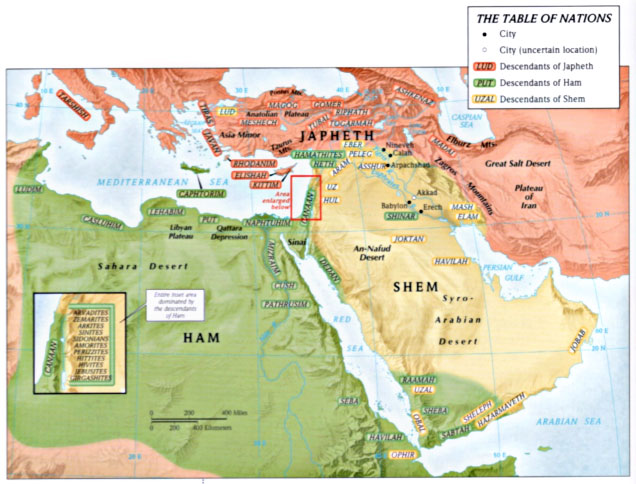
Not everything in our Bibles is inspired. The words certainly are, but the chapters, verses, footnotes, references, and maps are not. This is particularly true when it comes to Paul’s missionary journeys.
Preaching the Word in Season and Out: The Portrayal of Missionaries in Contemporary Fiction

The Christian religion has been developed mainly from scriptural sources—the writings that form the Bible. Secondary sources have included such works as the Nicene Creed, the Chalcedonian Formula, the Catechism of the Catholic Church, and the Westminster Confession of Faith.
The Culturally Intelligent Mission Organization: Five Factors to Evaluate

The phenomenon of globalization is impacting all sectors of society, and mission agencies are no exception. Of course, mission agencies have always been concerned with culture—we have been talking about cross-cultural communication and strategies for reaching out across cultures for as long as we’ve existed
Fruitful Near-culture Church Planters: A Qualitative Study

It is a fundamental principle of church-planting movements that workers for the harvest are in the harvest (Garrison 2004, 172; Cole 2005, 149). We have the privilege of living in a time when more and more missionaries are emerging from the harvest itself.
Piercing the Purdah: Empowering Women for Active Engagement in Christian Mission through Enterpreneurship
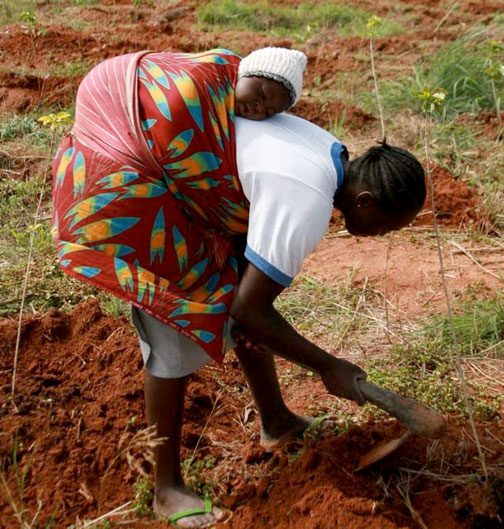
While women continue to sacrifice immensely for God’s mission, they are victims of sexism and marginalization.
Reflections on Latin American Member Care
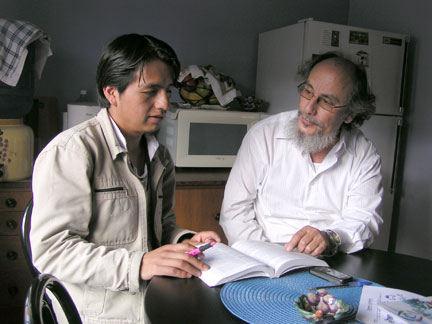
It is recognized that the member care movement in Latin America started around the 1999-2000s (O’Donnell 2011). In this article, I would like to introduce the idea that, symbolically, we could say that as a movement, Latin member care workers are in an adolescent stage. We have a lot of passion, but we are not well integrated or mature, and we do not have a clear identity.