
Four Ways to Keep Up with Change
by By Gilles Gravelle These days, many well-established mission agencies and faith-based non-profits operate on the assumption that the funds they raise will achieve good results. Yet the goals they set and the strategies they use are rife with unspoken assumptions. Mission is driven by practices built on time-honored tradition. Organizational legacy keeps them within tried-and-true […]
The Challenge of Empowering Congregations for Mission
There is an obvious disconnect between the resources being disseminated on the topic of mission, and the actual mission-izing of local churches. Publishers continue to make printed resources available, and conferences and seminars are regularly offered.
Adventures of an Urban Church Planter: The Gospel in the Concrete Jungle

As I was teaching at a local college and seminary in New York, I felt an intense prophetic call to plant a church in the city that would reach urban professionals and university students who were far from God and cynical about Christianity and the church.
Dark Side of Diaspora Missions: Challenges for Korean-Americans

My experience in addition to stories I heard led me to reflect on the difficulties that KA missionaries face on the field. My hope is that by doing so, KA missionaries can be better equipped and the people around them can better understand KAs.
Co-Mission: The Sharing Economy & The Mission World
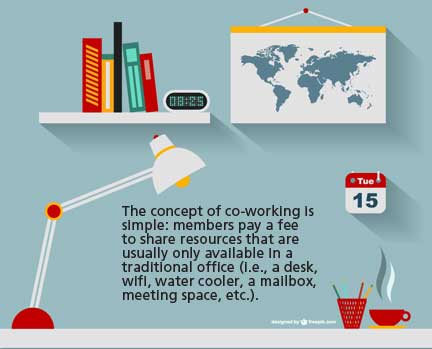
It was a Christian artist who first got us to think about creating a coworking community. She was preparing to move to Germany to work and minister through a coworking space in the heart of Berlin. We had heard of the coworking movement, but were not very familiar with the concept. Our friend suggested that we contact the founder to learn more. We did, and we were blown away by the vast new possibilities that were before us.
The Workplace PRIEST: Activating Our God-given Identity as Priests at Work

In this article, I look at the God-given role identity of New Covenant priest. I delineate what aspects of following Jesus are particularly priestly and recommend how this can be applied in our workplaces.
Evangelism in Asia: Developing and Living Out Relevant Theologies

The key to reaching Asia will be evangelism through local churches adopting methods relevant to Asia.
Business Is Mission: An Integrated Model

When an organization decides to develop a business in a country that does not allow missionary visas, it must understand why that business is created.
The New Testament, Fiscal Strategy, & the Majority World

Buying church buildings, paying pastors, and providing material encouragements to move people to attend services do not make a church. Without sacrificial body life (which takes time to develop), a building (no matter how beautiful) will not be a church. Without proven character (which takes a lot of time to develop), a person (no matter what title he or she receives) will never be a biblical pastor/shepherd. Without faith in God (which takes a lifetime to develop), people who attend weekly preaching services will never develop into mature disciples of the Lord Jesus.
Scripture, Global Mission, and Black Swans

“Black Swan” is a term coined by Nassim Taleb (2007), a writer, thinker, and former city trader who deals in the unpredictable and the improbable. For thousands of years, most people believed that all swans were white. All the evidence confirmed it. The discovery of even one black swan confounded the old certainty, but it was easily accepted and explained once it became known.