by Todd Jamison
For many Christians in Central Asia, house churches are the best church planting strategy.
David Garrison (2004) and Rad Zdero (2004) have demonstrated both the biblical and missiological basis for house church methodology. The amazing advance of the gospel in places such as China and parts of India are clear evidence for the validity of this approach, even in an Asian context. Zdero and others believe that a second reformation is occurring as we enter the twenty-first century, a reformation of basic ecclesiology (Zdero 2004, 1-5).
So what about Central Asia, an area encompassing some 220 million people, the vast majority of whom are Muslims?1 Is it possible to see a Church Planting Movement (CPM) of house churches in this region? Are there any documented cases of CPMs in this area? What are the current attitudes and efforts toward house churches? What does the future hold? In this article I will seek to evaluate these questions.
For the person unfamiliar with the Central Asian context as it relates to the spread of the gospel, a brief summary is in order. Christianity in its Nestorian form existed in Central Asia for almost one thousand years. In the fourteenth century, due to a number of factors, including large-scale persecution by the Turko-Mongolian ruler Timur, Nestorian Christians disappeared from Central Asia. Various Protestant denominations sent missionaries to Central Asia during the nineteenth century, with limited or no success (see Foltz 1999). The remoteness of the region, combined with hostile governments that restricted missionary access, contributed to the difficulty. Today, Central Asia percentage-wise is the most unreached place on earth. The total number of believers is thought to be only .03% of the population.
The number of evangelicals increased discernibly in the past decade. This was mainly due to three factors. First, the collapse of the Soviet Union in 1991 contributed to a new wave of religious freedom and expression. Second, various mission agencies developed new ways of entering previously restricted regions, thus enabling direct evangelism and church planting to take place. Third, the composition of the mission force of the last decade of the twentieth century was also quite different from the previous century’s efforts. Missionaries from Korea, Singapore, South Africa, Latin America and India have entered the region along with large numbers of westerners. The rapid and even exponential increase in the number of laborers resulted in a rich harvest.
Church Planting Movement experts have noticed this growth, especially among the Kazakhs (Garrison 2004, 107-110). Because Garrison listed an advance among the Kazakhs, some have wrongly assumed that a CPM is taking place there. Garrison never admits this, but says there are “encouraging signs” (110). Others have also declared that a CPM was taking place because their definition of CPM could more accurately just be called “church planting” as opposed to a movement of rapidly multiplying churches.
So why has Central Asia not seen a Church Planting Movement? That question has multiple answers, not the least of which has to do with God’s timing. Space prohibits consideration of many factors; however, the lack of access to scripture is probably the major reason why a CPM has not broken out in Central Asia. Closely behind this is the fact that until recently there has been no major effort to plant house churches among the peoples of Central Asia.
CURRENT STATUS OF HOUSE CHURCHES IN CENTRAL ASIA
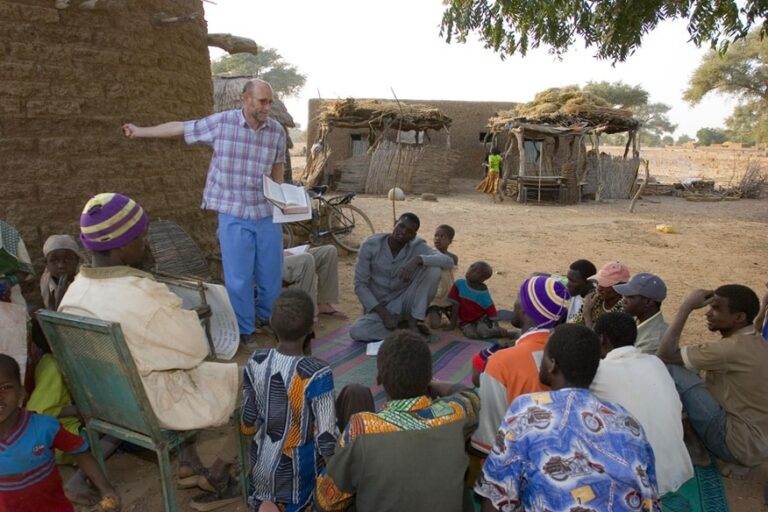
Modern mission efforts in Central Asia only began in earnest around 1990.2 Almost without exception, congregations planted during this period started in private homes and apartments. It was not uncommon for missionaries to have their first gospel conversations with Central Asians over tea in relaxed, home settings. Central Asian hospitality provided a natural setting for warm conversation and the exchange of ideas. Small groups worshipped Jesus in homes and apartments of every major city of Central Asia within just a few years.
Such church planting, however, did not occur in a vacuum. While the number of Muslim-background evangelicals in many of these locations prior to 1990 could be counted on one hand, Russians, Germans and other Slavs had been in the region worshipping in their building-based churches for almost 120 years. Most of the newly-independent republics maintained many governmental ministries that regulated religion from the Soviet era. To varying degrees, these republics have allowed religious freedom; however, all of them still require registration of churches. All “real” churches are to have a written charter and an address, and if they are not to be identified as sects, they need their own church building with a sign. This building-based mentality is predominant throughout the culture of Central Asia; thus, legitimacy is often determined by whether or not a church has a building.
From the beginning, most Central Asian believers seemed to instinctively believe that the logical progression of church growth resulted in the purchase of land and a building. Many of the churches that got their start in a Soviet-style apartment quickly began the quest for a larger location. Foreign missionaries, agencies and churches have been only too happy to oblige in meeting financial needs for the construction or renovation of buildings. If local Central Asian churches could not build, they sought to rent public facilities such as schools or university auditoriums. Small congregations meeting in homes were removed from their natural setting of community and family for the sake of the legitimacy of being a “real” church.
Foreign missionaries have contributed to the architectural hunger further by setting the standard of success as the large megachurch. A few years ago during a gathering of some sixty Central Asian pastors, a well-known Korean missionary-pastor, who has grown a very large congregation of approximately five thousand people, said to the group, “One day, if you have enough faith, your church will be larger than mine.” Many of these pastors came from villages whose population was less than five thousand! Additionally, the members of this missionary-pastor’s congregation were predominately indigenous Koreans or Russians, with a much smaller percentage being from a Muslim background. Yet this distinction was lost on the pastor’s gathering. For them, the standard for success became the mega-church.
While the vast majority of Central Asian churches started in homes, it almost universally served as a launching pad to “real” church, with the goal of a large, building-based organization. The reality is, however, that this standard of “ideal” church can be found in very few places in Central Asia, and there is almost no congregation of more than one hundred people that is led by a local. Even after more than a decade of labor, the largest churches are still pastored by foreign missionaries. Existing local Muslim-background pastors are often burdened with the weight of not having a “large church” and have no previous experience in leading a group much larger than their immediate family.
The current status of the Church and church planting in many parts of the region now suffers under extra burdens that new believers and their young leadership cannot carry. The concept of biblical servant-leadership, already difficult enough to grasp from a human perspective, is especially alien in a context where dictatorial, communistic and Asian models prevailed. Administrative skills that westerners handle naturally as a part of their culture, such as keeping a checkbook, can seem highly complex for leaders whose average education levels are not much beyond high-school. We must return to the simple and go back to the house church, the very core of Central Asian culture.
The ancient oikos (Greek for “household”) is the closest model we find in scripture to the idea of house churches (see Gehring 2004). Often, I have heard nationals mention how the traditional customs mirror so closely the scriptures. It is time for our Central Asian brothers and sisters to return to the simplicity of the small and relational and for missionaries to quit trying to turn them into large-scale people-managers who mimic professional businesspersons trying to raise the bottom line of their growing enterprise.
NEW EFFORTS TOWARD INTENTIONAL HOUSE CHURCH PLANTING
In parts of Central Asia house churches are the only way that the Church can continue to grow, particularly in Uzbekistan, Turkmenistan and Afghanistan. Yet in the former two countries, such church planting is often viewed as less than ideal. Some of the Russian and indigenous Korean congregations have been able to build structures, and Muslim-background churches have used their facilities. Yet in the last few years, due to rapid growth, some local church leaders are beginning to see the advantage of house churches. This is particularly true in Karakalpakistan and the Ferghana Valley, both locations in Uzbekistan where house churches and cell groups have steadily increased.
While restrictions and persecution in these locations have caused some to consider house church methodology, the embracing of house churches as a valid church planting strategy came when Garrison visited Kazakhstan and Uzbekistan in 2003 and 2004. During his visits, he spoke to both Eastern and Western foreign missionaries and local pastors. His presentations defined more clearly what a CPM is and also demonstrated that house churches are one of the universal elements of all CPMs (Garrison 2004, 191-193). While not accepted or understood by all those he spoke with, Garrison’s impact was unmistakable. Within a year’s time in Kazakhstan, many Western missionaries in particular began planting house churches. One local seminary started offering the option of house church planting to its leaders in training.
In 2004, some local leaders in southern Kazakhstan gathered to learn more about house churches. The gathering represented ten to fifteen small groups that considered themselves to be either churches or the beginnings of churches. They heard testimonies from Kazakh pastors who had already begun house churches. Increasingly there is an understanding of CPMs and the role of house churches. Uzbek church leaders recently discussed the need for gathering their house churches into a network. The same is true for five house church pastors in Tajikistan. Some Uighur pastors in Kazakhstan began intentionally starting house churches. In Kyrgyzstan, one missionary led seminars for Kyrgyz pastors in his Pioneer Evangelism method, a discipleship program that stresses the gathering of converts into house churches. House church planting efforts are underway among the Muslims in the Caucasus in Russia, Azerbaijan, Turkey and other areas highly-restrictive to the spread of the gospel. The intentional planting of house churches is gaining momentum and while there is no evidence of rapid multiplication, many locations seem to be positioning themselves for such.
Advantages for Planting House Churches in Central Asia
Zdero has provided several reasons for the advantages of planting house churches (2004, 56-57, 76-78). Many of those same advantages apply to the Central Asian context. This section seeks to highlight these advantages.
1. Advantages in contexualization. Over the past decade I have assisted Central Asian church leaders in contexualizing their building-based services to better fit the culture. Whether it concerned worship music, preaching or dress, long hours of discussion were devoted to creating a setting that seemed more Kazakh, Kyrgyz or Uighur. Such efforts often came up short, as the Central Asian believers merely copied what they observed from foreigners. Newspaper articles still appear from time to time, lamenting how meetings and music of a “foreign religion” are destroying the culture.
When the church meets in a home, it enters the most basic level of culture. The cradle of cultural traditions is the family unit. If a church is meeting in a home, it more easily takes on the characteristics of the surrounding culture and language of the home. As mentioned above, biblical parallels exist in the homes of Central Asians.
2. Advantages during persecution. “Everyone in our church has a birthday, so we have many birthday celebrations.” This was the answer one Central Asian church leader gave as to how they could continue to meet for worship despite governmental restrictions on religious meetings in homes. The home is the base for family gatherings and the average Central Asian family with extended relatives is quite large. People gathering to drink tea, enjoy a meal and sing is a part of daily life. House churches can also easily change location. Such gatherings are so stealthy that a house church pastor recently asked if registering his network of churches in a fairly restrictive area was even necessary because their house meetings attracted no attention of government officials. House churches by no means guarantee that persecution will not occur. The Bible reveals the certainty of persecution (Acts 8:1-3; Matt. 24:9). Someone with the zeal of a Saul of Tarsus had to persecute the Church in order to have a detrimental impact. Uzbekistan and Iranian governments have demonstrated such zeal in recent crackdowns, yet they have not been able to prohibit all house churches from meeting.
3. Advantages in leadership. Leadership is the biggest problem in the Central Asian Church today. Foreign missionaries are still leading the largest building-based congregations. While this article cannot examine all of the reasons that Central Asian church leaders have so slowly emerged, one major factor has been the decades, in some cases centuries, of colonial rule. In many parts of Central Asia, male passivity and obeisance was the only way to ensure survival. War, famine, oppression and fractured families contributed to the decimation of male leaders. Additionally, older males are the most resistant to the gospel. Most Central Asian male believers are still young, inexperienced, not well-educated and living in a culture that promotes passivity. Is it any surprise that so many young pastors struggle in leading a group of more than thirty people? Such leadership requires management skills derived from training and education. The pressure to perform and produce church growth contributes to the burden that has caused some leaders in a Central Asian seminary to report widespread burnout among the pastors they have trained.
I have personally seen the joy return to some pastors who embraced the house church model. Instead of wilting under administrative duties that often await building-based church pastors whose goal is to manage hundreds of people, these leaders focus on people and on multiplying small, manageable house churches. Their energy is directed toward building people instead of structures.
4. Advantages with finances. To date, there are no known self-financed evangelical church buildings among Muslim-background believers in the former Soviet Central Asia. Foreign sources have either totally or partially financed all current structures. Many Central Asian governments now prohibit churches from renting public facilities, thus increasing pressure for building-based churches to find their own facilities. As these countries advance economically, land and construction costs climb steadily. The majority of Central Asian evangelicals come from the population’s lower socio-economic strata where monthly salaries average $50 to $250. In the political, cultural and economic climate of the region, the building of a church structure is a daunting task and next to impossible apart from foreign assistance.
What about house churches? Financial needs are no longer a major concern when a church’s goal to build or purchase a structure is not a priority. The ability of the members to care for one another and to use their money for genuine felt-needs becomes a reality for even the smallest and poorest congregations.
POTENTIAL PITFALLS FOR HOUSE CHURCHES IN CENTRAL ASIA
House churches are not the “magic silver bullet” that will solve all the problems of church planting and the expansion of the Kingdom of God in Central Asia. As long as churches are filled with human beings, problems will exist. Christians meeting in a house does not guarantee that genuine fellowship, evangelism, disciple-making and God-encountering worship will occur. There are indeed pitfalls to house churches in Central Asia. Below are four.
1. Confusion with Islamic fundamentalist groups. Islamic fundamentalism is the greatest fear for the governments of Central Asia. Particularly in former Soviet Central Asia among governments still run by former Communists, the inability to distinguish between the various religious groups and their nuances has led to policies that are restrictive of all religions. Although the vast majority of the countries have constitutional provisions protecting freedom of conscience, government officials, particularly on a local level, often ignore or are ignorant of their constitutions. It is not unusual for fundamental Wahabist groups to meet in houses or cell groups. Therefore, when evangelicals meet in house churches, authorities can associate them with fundamental Muslims whose intent is to overthrow the governments in the region. In Uzbekistan and Turkmenistan, religious gatherings in homes are illegal. Even in Kazakhstan, local officials have fined unregistered religious groups who gather in homes, although such actions are unconstitutional.
As a way of overcoming this obstacle, some house churches have come under the registration of existing building-based congregations. Also, because large social gatherings in homes are not unusual, Christian gatherings are hard to distinguish from other social events. In most cases where house gatherings have been raided by authorities, it is due to disgruntled neighbors who inform on them rather than to a random discovery on the part of the secret police.
2. Promotion of tribalism. The expression “blood is thicker than water” certainly applies to Central Asia. In lands where blood feuds and massacres have occurred periodically throughout the centuries, and particularly in areas touched by Stalinism, only relatives are fully trusted. House churches that naturally form around family relationships can become too inwardly focused. While this problem is not unique to house churches, house church planting methodology could easily make the problem worse. From the beginning, house church planters should emphasize the need to make disciples of all nations by starting new house churches among all the people groups of Central Asia.
3. False teaching. While false teaching is most certainly a potential pitfall, I have yet to see or hear of a specific example of false teaching emerging from a house church in Central Asia. The same cannot be said of building-based congregations. So it may be more accurate to say that this is a pitfall of the Church among all generations in all countries at all times (Matt. 24:11, 24; 2 Peter 2:1). One distinct disadvantage that small house churches may have, however, is the inability to draw from a larger pool of sound theologians. It is very important that house church planters instill in the DNA of the church complete reliance upon scripture. The best antidote to false teaching is when house churches and their elders are trained to go to the Bible for answers (Garrison 2004, 182-86, 269-70).
4. Polarization of the larger body of Christ. God is using traditional, building-based churches in Central Asia. House church planters and the members of these new churches must not become prideful and criticize or distance themselves from their brothers and sisters in Christ who have chosen not to be a part of house churches. Throughout the history of the Church, critics have assailed movements that have promoted small groups and house churches (see Bunton 2001). House church planters, elders and members should expect criticism and misunderstanding (Luke 5:37-39); however, an attitude of defensiveness fails to enhance outreach and usually promotes disunity.
CONCLUSION: HOUSE CHURCH NETWORKS—THE NEXT STEP
A necessity in overcoming the pitfalls house churches in Central Asia face is the need to develop house church networks. Again, Zdero and others have explained the important role that house church networks can play in any movement (2004, 106-109; Kreider 2001). Intentional house churches in Central Asia are just emerging and only recently starting to link together via common leadership meetings. As of yet, there is no example of a full-fledged, formalized network that uses a common covenant or confession.
If house churches in Central Asia are going to remain and continue multiplying, networks must develop. Missionaries and local church planters can assist in this process by bringing various leaders together for fellowship, prayer and instruction. The sharing of ideas and resources via conferences could greatly increase the pace of house church planting and growth. Central Asian believers and missionaries involved with house churches need to provide case studies so others can learn from their successes and failures.
Endnotes
1. The boundaries of Central Asia, sometimes referred to as Inner Asia, are rarely one of uniform agreement. Our definition of Central Asia encompasses what would be considered the majority of the Turko-Persian world, starting in the west with Turkey and incorporating the former Soviet republics of Azerbaijan, Turkmenistan, Tajikistan, Uzbekistan, Kyrgyzstan and Kazakhstan. Turkico-Persian peoples can also be found in several parts of Russia, particularly the Caucasus and the Ural regions. Iran, Afghanistan and even parts of northwest China, with its large Uighur population, fall under our definition of Central Asia.
2. This is mainly true for the Central Asian republics of the former Soviet Union. Efforts outside of these parts of Central Asia (i.e., Turkey, Afghanistan, Iran) have a different history with various times of openness and varying levels of missionary activity.
References
Bunton, Peter. 2001. Cell Groups and House Churches: What History Teaches Us. Ephrata, Pa.: House to House Publications.
Foltz, Richard C. 1999. Religions of the Silk Road: Overland Trade and Cultural Exchange from Antiquity to the Fifteenth Century. New York: St. Martin’s Press.
Garrison, David. 2004. Church Planting Movements: How God Is Redeeming a Lost World. Midlothian, Va.: WIGTake Resources.
Gehring, Roger W. 2004. House Church and Mission: The Importance of Household Structures in Early Christianity. Peabody, Mass.: Hendrickson Publishers.
Kreider, Larry. 2001. House Church Networks. Ephrata, Pa.: House to House Publications.
Zdero, Rad. 2004. The Global House Church Movement. Pasadena, Calif.: William Carey Library.
—–
Todd Jamison (pseudonym) is an International Mission Board worker in Central Asia. He earned his doctorate from Southwestern Baptist Theological Seminary and has lived in Central Asia for thirteen years with his wife and four children.
Copyright © 2007 Evangelism and Missions Information Service (EMIS). All rights reserved. Not to be reproduced or copied in any form without written permission from EMIS.