by Gene Daniels
Expatriate workers can, sometimes unknowingly, dominate the people they work among. Rather, they should listen to them.
William Carey Library, 1605 E. Elizabeth Street, Pasadena, CA 91104, 2005, 234 pages, $12.99.
—Reviewed by Henry Thomas (pseudonym), an administrator in a development organization in Central Asia.
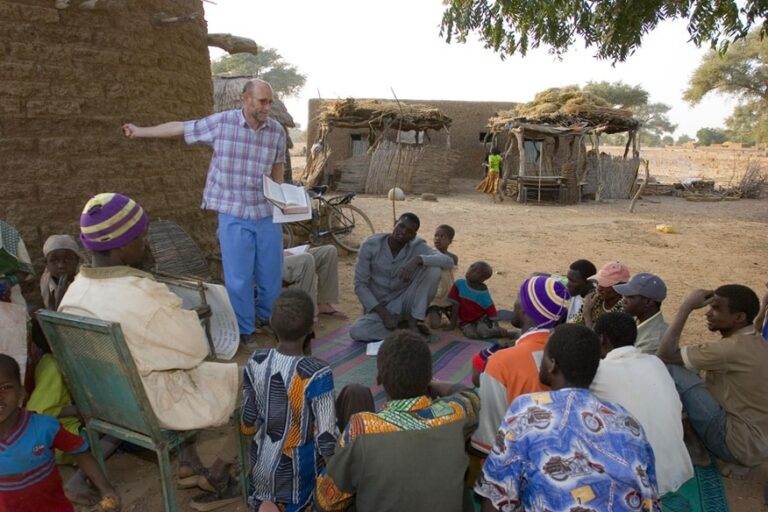
Expatriate workers can, sometimes unknowingly, dominate the people they work among. Rather, they should listen to them. Instead of building their own dreams, they should help nationals build theirs—and this will surely make a difference! This is Gene Daniels’ conclusion after serving for six years in Central Asia. A good listener and excellent analyst, Daniels is the perfect person to write this important book. It can help workers maximize their effectiveness, and avoid being painfully humbled by God.
Daniels’ journey contains failure and disorientation that leads to valuable insight. Some of these lessons include: admitting, even to supporters, when you are lost; avoiding the temptation to place publicity or visitors over the needs of the new church; asking repeatedly until you get the true answer; leaving after building the foundation; and remembering that a community of believers is the goal, not an organization or tidy meetings.
Daniels is tough on expatriate workers, but his judgment is based on personal experience, and his exhortation to humility must be heeded. Workers should not go to the opposite extreme, however, in underestimating their contribution.
The advice in this book applies as much in the West as to Central Asia. “Drink tea with the locals” can be translated, “take time to be with people, and really listen to them.” Listening, as Daniels notes, requires time in any culture. The people must be convinced that we are really interested in what they have to say.
Daniels’ lessons on community also need to be heeded by the Western church, where community is threatened by rampant individualism.
Every local church should be countercultural, yet at the same time as relevant as possible for reaching its own culture. Achieving this balance can best be done by humble interaction between expatriates and nationals, an interaction which churches in “sending” countries could also benefit from.
Two historical case studies would make an interesting companion to this book. The first is the church in Korea, where hymns and church structure remain “Western,” yet the church remains undeniably Korean. Did the expatriates listen or dominate there? The second is the church in Nepal, where most new believers want nothing to do with their old culture. There, it is expatriates who push contextualization on locals, and Daniels’ principles of listening to locals apply well in this context.
Check these titles:
Allen, Roland. 1962. The Spontaneous Expansion of the Church, And the Causes Which Hinder It. Grand Rapids, Mich.: Eerdmans. (Originally published in 1927 by World Dominion Press, London).
Scoggins, Dick. 1998. Planting House Churches in Networks: A Manual from the Perspective of a Church Planting Team, rev. ed. Pawtucket, R.I.: The Fellowship of Church Planters.
——
Copyright © 2006 Evangelism and Missions Information Service (EMIS). All rights reserved. Not to be reproduced or copied in any form without written permission from EMIS.