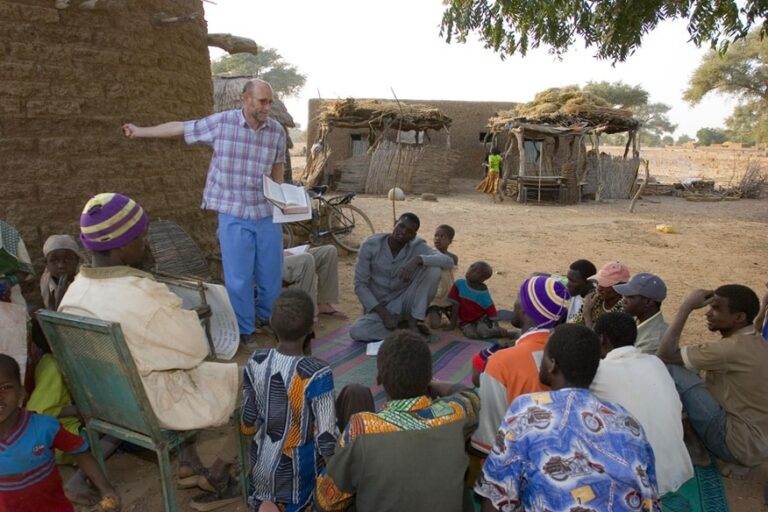
by Gary Corwin
It’s difficult to imagine a class of people less understood than missionary families, unless maybe it’s missionaries in general.
It’s difficult to imagine a class of people less understood than missionary families, unless maybe it’s missionaries in general. To their advocates they are heroes and creators of family faith legacies. To their detractors they are fools and irresponsible toward their children. The truth is they cannot be summed up neatly in a descriptive phrase.
Having said that, however, there are some characteristics and needs which tend to be common among them, and there are some resources and responses that many have found helpful. Please keep in mind that the observations offered here are based on anecdotal evidence and personal intuition. Readers are invited to write us touting particular research they have found helpful on any of these matters, and we will pass along your best suggestions.
First, what are some of the characteristics of missionary families that set them apart from other families?
1. They tend to be more closely knit and unified in their focus. Being a missionary family involves everybody in the unique challenges and blessings associated with the calling. Living cross-culturally is obviously the biggest part of that, particularly when it’s among the disenfranchised. One should not forget, however, challenges like raising support, relative wealth overseas and relative poverty at home, just to name a few other areas. Nor should one forget the quantity or quality of time together, or the exhilarating feeling of striving together for a goal so worthy of your energy and sacrifice, just to name a couple of key blessings.
2. They tend to be more out of touch than most with the cultural cues, fads and fashions of their home culture. Indeed, the better adjusted they are to their ministry culture, the more out of touch they are likely to be.
3. They seem to produce a higher percentage of exceptional and gifted children than their own numbers would justify. And this was true even before homeschooling became the rage, though many of the same factors which have tended to push up the achievement statistics for home-schoolers (e.g. parental involvement, focused and flexible learning, personal attention) are no doubt at play here as well.
Second, what are some of the needs unique to missionary families?
1. They tend to face the challenge of transitions much more frequently and to a greater degree than most families. Changing cultures requires a much larger adjustment than changing cities, and going back and forth between cultures every two to four years is a much greater challenge to maintaining healthy psyches, especially for children.
2. Home tends to be an elusive concept, and while a sense of loss may be the dominant feeling this may engender for oneself and one’s spouse, a sense of guilt may accompany it with regard to children. For some close families, distance from grandparents, aunts, uncles, and cousins can seem an overwhelming sacrifice.
3. Financial issues tend to be a bigger deal for missionary families than for others. It’s just not a lot of fun to ask people to support you. And shortfalls cannot be responded to by moonlighting or working harder. On the contrary, they usually require communication of the need to others so that they can "bail you out." Yes, it may be biblical and it may be right, but it still doesn’t feel very good from the missionary family side of the equation.
Finally, what steps can missionaries, their agencies and their supporting churches take to strengthen missionary families?
1. Take full advantage of books, seminars, and other resources available in the Christian community to strengthen families. Where needed, agencies should also be developing new resources to address issues peculiar to missionary families (culture adjustment issues, customized financial planning, etc.).
2. Agencies can create an atmosphere which communicates not only that it is OK, but that it is essential and expected that couples and whole families spend periodic time apart from their assignments-time to recharge their batteries, enjoy some privacy and pursue hobbies or other recreation. Churches can reinforce this idea by occasionally giving a small gift designated for this kind of use only.
3. Successful marriages always require hard work, patience and commitment. Successful missionary marriages are no exception, but they do require something more-recognition that there are additional stresses that will have to be faced. Issues of culture, distance, transitions, privacy, support raising, etc., can compound the challenges that exist in any marriage and family. It’s important to acknowledge this fact going in, to prepare oneself mentally and spiritually for all that will be required, and to plan for the practical steps that will provide periodic respite.
Missionary families aren’t from Venus, Mars, or anywhere else outside of our atmosphere. But they do have some special characteristics and needs, and those concerned for their welfare (including themselves) ought to be proactive in meeting them.
———-
Gary Corwin is associate editor of EMQ and missologist-at-large for Arab World Ministries, on loan from SIM.
Copyright © 2001 Evangelism and Missions Information Service (EMIS). All rights reserved. Not to be reproduced or copied in any form without written permission from EMIS.