by Roberta Jezequel
It’s adventurous for those in their twenties. More tedious for those in their thirties. And downright difficult for those in their forties.
It’s adventurous for those in their twenties. More tedious for those in their thirties. And downright difficult for those in their forties. As life goes on, the family grows. We accumulate more "stuff." We tend to get more set in our ways. We settle in. We’re creatures of habit. We like what is familiar. It makes us feel secure.
So when, like Abraham, the Lord comes to us and says, "Leave your country, your people, and your father’s household, and go to a land I will show you," even for missionaries, it’s hard to move. We pack up all our belongings, as Abraham did, and "set out." We "arrive there," in Medellin, Colombia; Sao Paulo, Brazil; Dakar, Senegal; Moscow, Russia; or Miami, Florida, but not without an adjustment.
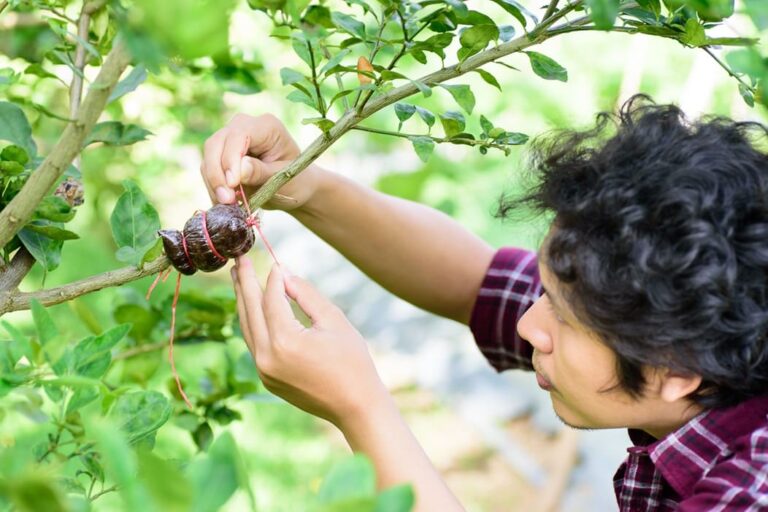
Even with good planning and preparation there is trauma. Like a tree uprooted from its native soil, we experience "root shock" to a greater or lesser degree, depending on how different the new environment is from where we have already lived.
We probably didn’t give much thought to the nutrients in the soil where we came from. A sermon in our own language in church on Sunday. A road sign that we can understand. A sister nearby. Family picnics and birthday celebrations on a regular basis. Close friends from way back who really know us. People in our everyday routine who recognize us and know our name. Familiar foods available in the stores where we shop. Our nation’s flag. Our national anthem. Even weather patterns that are predictable. These all provide a support system that enables us to grow and flourish in our given "place."
They "define and reinforce [our] identity and role-who [we] are," says L. Robert Kohls in his book Survival Kit For Overseas Living. So when a person moves to a new place, especially to a different culture, "these identity reinforcements are suddenly withdrawn," says Kohls. "It can produce a persistent sense of insecurity vibrating just below the threshold of consciousness-something like a low-grade infection, not seriously disruptive but annoyingly debilitating." Something seems wrong, but we can’t quite put our finger on it. Actually, nothing is "wrong." The disquiet one feels is a very normal reaction to this kind of change, the way you ought to feel for what you are going through.
It’s no wonder why the squatters who were workers on Isak Dinesen’s farm in the book Out of Africa reacted when she decided to sell the place. They were told they all had to move off the land where they had lived for so many years, and each find another place to live, without those who knew their story. "It’s more than their land that you take away from people," says Dinesen. "It is their past as well, their roots and their identity."
We might not be able to bring our "support group" with us like the squatters, or even Abraham (Genesis 12:5) or Rebekah (Genesis 24:61) of the Bible. But it helps greatly to understand what ingredients helped us to flourish and thrive in our native soil. Only then can we come up with an adequate strategy to put similar nutrients back into the new soil so that we will "bloom where we are planted."
Certainly prayer plays a central part in the moving process, for Scripture tells us that God understands those "who have set their hearts on pilgrim- age" (Psalm 84:5). As we have moved at different times in our lives (sensing God moving us), Scripture passages have jumped out at me and I have felt encouraged to pray this for our family in the process: "He led them by a straight way to a city where they could settle (Psalm 107:7). Settle us, Lord.
New faces wherever we go. At church. At school. In the market place. A new language. A new job. Different foods. Different smells. Different streets and roads. A different house. Different neighbors. A different place to take a walk. Different expectations with regard to time and space. Different holidays, for the history is different. Different ways of thinking because the "base" is different. The changes and the energy it takes to gather new information and to form all of these new relationships is draining. It’s hard work to resettle. So it’s normal to feel draggy at times, tired, and depressed. However exciting the new is, there is the loss of the old, what we have left behind in order to take hold of this new venture.
It’s normal to reminisce (one way of processing change) but often hard because the people around us have probably never been back "there." They can’t relate. So they might not be patient listeners. They don’t interact with what is being said. And they don’t know how to ask questions. They appear to be settled. Confident. Connected. Informed. Not "weak" as you might feel as the "foreigner" in the situation. If they have moved, especially cross-culturally, they’re likely to be a whole lot more understanding. As one veteran missionary remarked, "They need a cross-cultural experience."
I have found it very, very helpful to journal, to reminisce on paper. As Anne Frank said in her diary, "Paper is a whole lot more patient than people." Reminiscing helps the healing process, just as it does when a loved one dies. After awhile, with time, it’s not as necessary, but right after a move reminiscing is an important part of the grieving process. We go back down all those familiar streets in our minds. We visit those familiar people and places and things by telling about them.
It’s important to let children do this after a move-so talk together as a family about things or people or places you enjoyed where you’ve come from. Or perhaps it’s just one child at night before going to bed who is feeling particularly "homesick" and sad for the woods behind the house, and the tree fort, and for all the friends he shared that with. That child needs to express his or her feelings of sadness, maybe even to cry, and to remember the "good times." This is all part of bringing closure to the old, and healthfully moving on and settling in this new place.
An obvious part of settling means unpacking all of those boxes or trunks and hanging up that familiar picture on the wall. Take things with you wherever you move (no matter where that place may be) that make your home "home." This gives continuity to life, especially when so many other things have changed. Paint. Fix it up. Put yourself into it. Reestablish family traditions. (These keep that continuity also.) The family reading time before bed. An outing on a Sunday afternoon. Pasta and sauce on Thursday night.
The other part of resettling means finding a new church, a school for the children, learning where to shop for food or a million other items, and how to get there. It means locating a new doctor and dentist, opening a new bank account, obtaining a drivers license and auto "tags," or whatever they call them there. It means connectedness with relationships in a new community which takes a lot more time. Another missionary who has lived in Colombia, Costa Rica, and Singapore at different times of her life told me that even with all of her expertise in moving, it usually takes her three years to feel really settled in a new place.
The harder part of "putting down roots" is finding friends. Now you’re the "new kid on the block." Most people around you already have their established friendships, even their extended family nearby. It takes a lot of prayer, time, thought, and reaching out beyond your comfort zone to get to know people, especially if at first language is a barrier. It takes developing people skills. Knowing how to ask appropriate questions. Being vulnerable to extend yourself. Being able to laugh at yourself (or not take yourself too seriously) when you blunder. I’ve just come right out and said, "Hey, I’m new here. I don’t know."
I have found wherever God has placed us that getting involved in the new church, the new school, the new work, or in the new neighborhood has helped in developing friendships more quickly. This takes lots of effort. And still, even with much determination, it takes time. But a sure way to stay in a homesick mode is to remain isolated. Resettling has its lonely times, but do what you can do for yourself to get connected. Some people remain detached from the new. Perhaps they haven’t really left where they came from. Or they don’t want to face the pain of truly saying goodbye. Likewise, their reasoning is, if! don’t develop any new relationships in this new place, I won’t get connected here. When we move again, it won’t be as painful.
Yet moving to a whole new place, especially when you’re convinced this is the will of God, can enrich life in wonderful new ways. Be open to discovering this new world. When we lived in Costa Rica, I would often say to myself, children back in the States watch Sesame Street on television. My kids see coffee being picked on the mountainsides here. They smell the aroma of coffee roasting in the air. They walk through a rain forest and try to spot a quetzal. They help my husband Kevin harvest bananas from the trees in our back yard. They peer into the mouth of a volcano and smell the sulfur fumes.
Moving from my familiar turf to foreign soil also made me ponder a little bit more on what Christ did for us (and I don’t think any of us can fully comprehend this until we get to heaven and see what Jesus left) when He "who, being in very nature God, did not consider equality with God something to be grasped, but made Himself nothing, taking the very nature of a servant, being made in human likeness "(Philippians 2:6,7).
No wonder "the Lord watches over the alien," as we are told in Psalm 146:9. He understands all about "when the time comes to move."
—–
Roberta Jezequel is a freelance writer from Miami, Fla. She has an MA in Communications from Wheaton College, Wheaton, Illinois. She and her husband werre affiliated with the Latin America Mission for 20 years. They have four children.
Copyright © 2001 Evangelism and Missions Information Service (EMIS). All rights reserved. Not to be reproduced or copied in any form without written permission from EMIS.