by Robert NiUaus
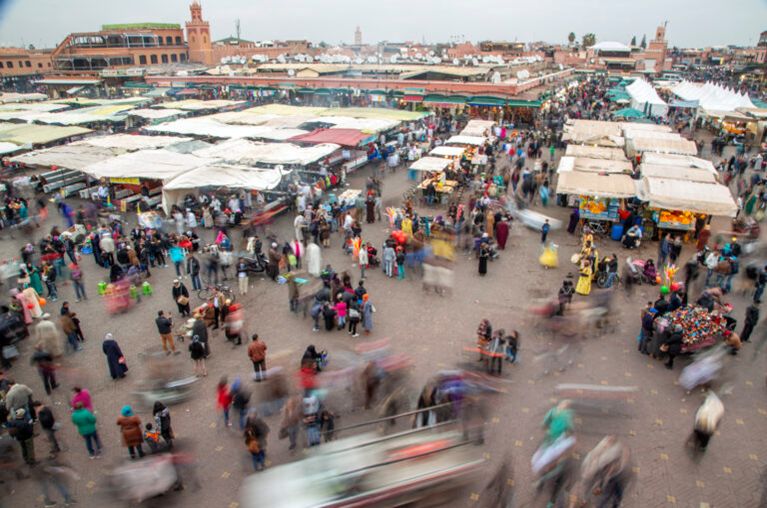
Islamic radicalism is usually associated with the Middle East. Yet the greatest concentration of Muslims is in Southeast Asia. The nation with the largest Muslim population is not Iran, but Indonesia, where 80 percent of the nation's 161 million people follow the Prophet Mohammed to a greater or lesser degree.
Government officials in the area hesitate to paint all dissension and unrest in religious hues, but they are increasingly uneasy about Islamic radicals trying to turn Southeast Asia into an arena of Islam.
Furthermore, officials and observers say that often it is not Islamic fundamentalism itself that causes problems, but attempts by politicians to use the religion as a ready-made base of support.
Recent riots in the port district of Jakarta, the Indonesian capital, support this contention. While quelling the Muslim fundamentalists, the Indonesian army discovered pamphlets calling on Muslims to defend Islam against its enemies in the armed forces.
One way of disarming the radicals is to depoliticize Islam, and Indonesia's President Suharto has been pursuing such a policy with remarkable success. The minority religions-Protestantism, Roman Catholicism, Buddhism and Hinduism-are the big winners in the government's determination not to succumb to Islamic rule.
While the Khomeini-type radicalization of Islam is new to Southeast Asia, commitment of the Indonesian government to a secular state is not. Tolerance has been the keystone of Indonesia from the time it was declared a republic in 1945.
That tolerance found expression in Pancasila, the sole state doctrine embraced by the late President Sukarno and other founders who intended that Indonesia should be a secular state despite its predominantly Muslim population.
Pancasila has five points: belief in one supreme God; just and civilized humanity; the unity of Indonesia; democracy led by deliberations among representatives; and social justice for all citizens.
The quality of tolerance in Pancasila suffered in the excesses of upheaval when an attempted Communist take-over was brutally suppressed. As one safeguard against Communism, the Muslim-backed United Development Party (UDP) was allowed to organize in 1973. Its political symbol became the Ka'bah (holy shrine of Mecca), and its intent was to mobilize all Muslims in the nation and champion Islamic goals.
As younger, more radicalized leadership took over the UDP, the party's goals included turning Indonesia into an Islamic state and restricting all other religions.
Suharto, however, successfully used Pancasila as a lever to pry Islam out of politics by requiring all socio-political organizations to recognize Pancasila as their sole ideology. When the UDP met in September for a national congress, it was forced to give attention to the policy of Pancasila. Bowing to government pressure, the UDP officially adopted it as the party's sole ideology and, in effect, placed itself on the side of religious tolerance and political consensus. Even the Ka'bah was removed as its political symbol.
The UDP, while retaining its Islamic flavor, can no longer appeal only to Muslim voters and limit membership to Muslims. Neither can it champion Islamic causes. It must dismantle its Islamic platform and find a more general, more secular one. Whether this will be possible before general elections scheduled for 1987 is doubtful. By contrast, there is no doubt that Suharto and his government are committed to a secular state in which Islam must operate only as a religion, and not as a political movement.
Even the religious sector of Indonesia must be permeated by the kind of tolerance Suharto believes is essential to the stability of the nation. "The use of Pancasila as the sole principle does not imply that we are going to neglect the development of religious life in Indonesia," he said.
"On the contrary, we are going to develop the best possible relations between the religious and political life in Indonesian society.
"There will continue to be mass organizations that are formed on the basis of common religion and faith in God almighty," promised the president, but he cautioned, "I must repeat again that religion is fully respected, and that we will never confuse religion with Pancasila."
While all this is good news for Indonesian Christians, the growing strength of the Christian community at a time when the Islamic community is diminishing numerically and politically could have uncomfortable consequences for the church at the grassroots level. Difficulties in securing a building permit for a church, for example, are not likely to decrease as a result of the ascendency of Pancasila in the Muslim political sector.
The blessings of Pancasila apparently do not extend to the missionary community, which seems to have endless problems at government immigration offices in securing new visas or renewals. The role of expatriate missions is under general review, with considerations being given to requiring five-year plans by the Indonesian churches, and to issuing work permits to all missionaries positioned in those plans.
This development may be more due to nationalism than to intolerance. The Ministry of Labor and other government agencies have embarked on a definite plan of "Indonesianization" of the work force. A quota plan being prepared will reduce the present expatriate industrial community from its present 16,000 to about 4,000 before the end of this decade.
A comparable "Indonesianization" of the religious community would be weathered best by those Western missions that have acted to place most or all supervision of church activities under national leadership.
Whatever the outcome of the government's revision of church/mission relationships, both Indonesian Christians and expatriate missionaries can have a more confident stance toward the future, knowing that as long as Pancasila reigns, Indonesia remains a secular, non-Islamic state.
Missionaries to Indonesia are not alone in their frustrations at the visa office. Rev. Peter Nanfelt, chairman of the joint Asia Committee of the Evangelical Foreign Missions Association and the Interdenominational Foreign Mission Association, says that visa problems are common throughout Southeast Asia:
Malaysia: imposed time limitation on all missionaries and has interdicted them from working among Muslims
Taiwan: established a definite quota policy on May first, limiting future missionary personnel to a unit system frozen at that date
Thailand: the availability of visas for missionaries after December 31, 1983, was placed in doubt
Korea: perhaps in retaliation to difficulties encountered by Koreans applying for visas to the United States, American missionaries are encountering problems at Korean visa offices
India: the policy has been in force for years; no new missionaries allowed in the country.
Ironically, says Mr. Nanfelt, the one country that has imposed no restrictions or problems relating to visa applications is the one Asian nation with the smallest response to the gospel: Japan.
"No situation is permanent," goes the African proverb. For Christians in the West African nation of Guinea, that meant suffering for 26 years under the bloody, Communist-oriented regime of Ahmed Sekou Toure.
During his reign, Guinea, considered both the reservoir of West Africa where all the rivers of the region have their sources and a geological sensation because of the immense riches underground, plunged to one of the world's poorest nations.
The economic disaster that characterized his regime was both precipitated and prolonged by the country's Toure"-influenced refusal to join the French economic community after independence in 1958.
Guinea was immediately cut adrift by France. Its currency had no international backing, its exports had no market, and its infrastructures dismantled by the departing French had no technicians to restore and operate them.
Once a food exporter, the country began to import substantial quantities. Although holding 18 billion tons of bauxite-enough to supply all the aluminum factories now operating in the world for more than 300 years-per capita income dropped to $290 per year. Some two million Guineans went into exile because of the disastrous economy.
More grievous than impoverishing the nation, Toure's regime caused the "disappearance" of some 2,900 people in the 1970s during a rash of aborted coups. Succumbing to paranoia, Tours' controlled the nation's ammunition supply. Only he knew which unit of the army or militia could load its weapons at any given time.
Following his death in April, Toure's military leaders overthrew the government in a bloodless coup and announced the end of "a bloody and ruthless dictatorship." The new president, Col. Lansana Conte", announced in a broadcast interview: "Now that we have succeeded in taking his place, we are obliged to banish all the harm he has done."
Conte and a Committee of National Redemption moved swiftly to release political prisoners, restore human rights, and promise: "No one will again be frightened to express his or her opinion in Guinea."
The new Minister of International Cooperation informed missionaries and church leaders of The Christian and Missionary Alliance that a policy of religious freedom would be followed. He granted the mission authorization to bring new missionaries into the country.
The Alliance has been the only foreign mission permitted to operate in Guinea since 1967. At that time Toure expelled all other Protestant and Catholic missions. The Alliance was spared because Dr. Louis L. King, at that time foreign secretary of the C&MA, was able to convince Toure that the Alliance church in Guinea had already been granted full autonomy.
Although severely restricted in their ability to travel and minister. Alliance missionaries and national church workers witnessed remarkable growth in the church. Today the national church numbers 600 congregations with a constituency of over 25,000.
Missionary activity will no doubt shortly be resumed by other agencies. One of the first visitors received by President Conte" was the Roman Catholic archbishop of Conakry. The Sudan Interior Mission has also applied for permission to work in Guinea.
Christians in Ethiopia must still wait for their situation to change. They have the unenviable distinction of living in the first African nation to fully identify with the Soviet Union and become a Communist state.
"The revolution or death," was the choice given his co-revolutionaries in 1977 by Col. Mengistu Haile Mariam when he wrested sole leadership of the regime begun three years earlier after Emperor Haile Selassie was deposed.
"Since then," suggests Colin Legum in Jeune Afrique, "the Ethiopians have known both revolution and death at the same time; they had no choice."
The revolution splintered in 1977 as one faction, including many intellectuals and students, pressed for a return to civilian rule. When their bid was rejected, they turned to assassinating supporters of the regime.
Their campaign, known as the White Terror was countered by the Red Terror, with the military distributing 20,000 guns to urban residents' associations and urging them to "kill the counterrevolutionaries."
An estimated 10,000 people died from November 1977 to March 1978, most of them in Addis Ababa, the capital. The Dergue, or military junta, eliminated the opposition and Mengistu emerged as the sole leader of the revolution.
Separatist wars in the Ethiopian hinterland, however, continue to defy resolution. The Eritrean war is the longest-running conflict in Africa, having begun in 1962 when Haile Selassie tried to bring the semi-autonomous Red Sea province under closer control of the central government. Other conflicts continue in the Tigre and Ogaden regions despite the help of 12,000 Cuban troops and some 4,000 Soviet advisors.
Religion as well took its lumps from the new regime despite a new policy of religious freedom that disestablished the official Ethopian Orthodox Church, to which at least 12 million of the 40 million Ethiopians belong.
The government closed churches and schools of the Lutheran-related Mekane Yesus denomination, apparently because members of the Oromo tribe who had launched a secessionist movement belonged to that church.
More indirectly the government has tried to discourage churchgoers through the kebeles, or neighborhood councils, that implement the revolution at the local level. The councils often schedule compulsory political meetings to compete with church services. Political activists take down the names of people who attend church and they openly call many religious practices "reactionary" and "backward."
Mengistu's regime might better have concerned itself with the nation's failing economy. With agricultural production increasing by only two percent annually and the population growing by three percent, Ethiopians are worse off than ever.
Vast areas of northern Ethiopia have been devastated by drought and famine worse than that of 1972-73, which was one of the principal causes of Emperor Haile Selassie's overthrow. Agricultural officials are hoping for donations of at least 250,000 tons of grain this year, but despite generous assistance from the United States and Europe, not nearly enough has been given.
And while Western governments provide food to the starving, Eastern bloc nations provide arms and technicians to shore up the Mengistu regime.
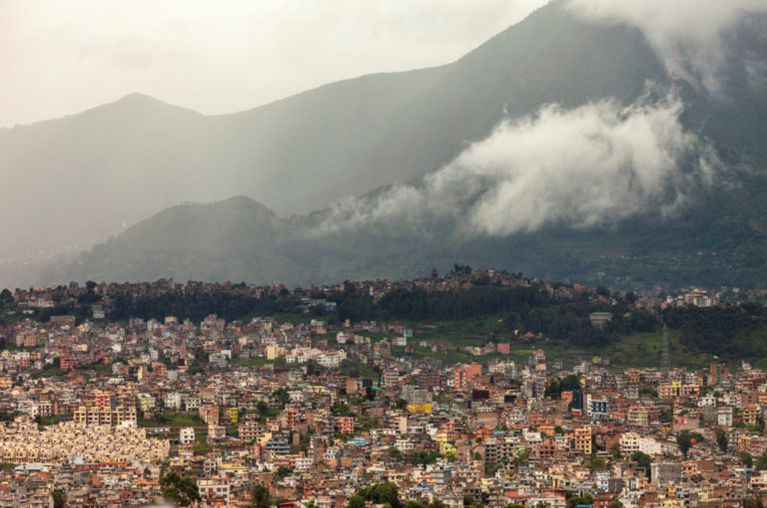
Hinduism, a religion which prides itself in being able to see good in other faiths, has become myopic in the Himalayan kingdom of Nepal.Wedged between China and India, the nation of 15 million people is the only Hindu state in the world.
That distinction has made it no more tolerant than an Islamic state.
It is against the law for a Hindu to change his religion. If one is convicted of doing so, the punishment is a year in prison; if the individual does not recant after that period, he or she can be remanded to prison for an indefinite period.
It is against the law for anyone to attempt to convert a Hindu to another religion. The penalty for proselytizing is seven years in prison.
But despite these obstacles, according to Sharon Mumper in Christianity Today, the Christian community has grown from a frightened few hundred just five years ago to an aggressive 15,000 today. They are nourished by some 250 house churches and leaders are being trained in a Bible school that was disbanded by the government but continues to function in private homes.
The great attraction of the movement to Nepalese is the obvious joy of the Christians. "They love singing, and the worship services go on for hours," says one missionary. This obvious demonstration of faith has precipitated government reaction that is anything but joyful. Within the past year the government has stepped up arrests of Christians, according to Mumper.
Christian Response International, an interdenominational watchdog of religious freedom, says that 57 Christians are either on trial or serving time in prison. Some Christian workers arrested recently are free on bail and their trials have been postponed.
Charles Mendies, director of the David Evangelistic Outreach, was one of those arrested. He believes the government is delaying court proceedings until Western interest in the case wanes. Several American congressmen had written to the king of Nepal encouraging the Nepalese government to demonstrate religious toleration.
Mumper also reports that the government has become more strict with Christian organizations working in Nepal. One administrator said "it appears that missions are being asked to sign a statement saying that the organization will not engage in any acts of proselytization."
Groups refusing to sign the statement may have problems securing visas and permits related to their work. Missions had previously been able to hold meetings for Christians and even occasional meetings with unbelievers present.
The umbrella organization for approximately 300 expatriate workers with nearly 40 Christian agencies is the United Mission to Nepal. The UMN has an agreement with the government that its member groups will not operate open evangelistic meetings, but that workers are free to answer questions and give evangelistic literature if it is requested.
The government, however, is less successful in trying to contain the contagious joy of Nepalese Christians. It's like trying to imprison the wind.
Copyright © 1985 Evangelism and Missions Information Service (EMIS). All rights reserved. Not to be reproduced or copied in any form without written permission from EMIS.