by David M. Howard
The Latin America Mission in Colombia has been privileged to witness an outpouring of the Spirit of God in recent years that has resulted in a rapid spread of the Gospel. Often this has been entirely apart from missionaries or national pastors, proving that it is a spontaneous work of the Spirit through laymen who have faithfully witnessed to Christ. The undeniable fruits of the Spirit plus the fruits of the preaching of the Gospel have been so evident as to leave no doubt that this has been a movement initiated and blessed by God.
The Latin America Mission in Colombia has been privileged to witness an outpouring of the Spirit of God in recent years that has resulted in a rapid spread of the Gospel. Often this has been entirely apart from missionaries or national pastors, proving that it is a spontaneous work of the Spirit through laymen who have faithfully witnessed to Christ. The undeniable fruits of the Spirit plus the fruits of the preaching of the Gospel have been so evident as to leave no doubt that this has been a movement initiated and blessed by God.
More recently, certain gifts of the Spirit have been manifested in connection with the spread of the Gospel in some areas of our field. It is noteworthy that the preaching of the Gospel in obedience to the Lord’s commands came first; then followed an accompaniment of certain "signs" that have confirmed this preaching and in turn have led to further outreach. Similar things are being reported elsewhere, provoking much discussion about the gifts of the Spirit.
Throughout the history of the Christian Church, when the Spirit of God has begun to move in an unusual way, the devil has also mustered his forces to oppose God’s work by special efforts. This has now been happening in some places where the work of the Spirit has been most evident. The Spirit of God has been measuring to every man "severally as he will" (1 Cor. 12:11) certain spiritual gifts, and the devil has been successful in imitating some of these gifts to a degree sufficient to cause great confusion in the church.
For example, one quiet evening the silence was pierced by the shouts of a wild-eyed young man who had worked himself into a frenzy and was prodding the believers who knelt in prayer. Was he seeking their blood? Quite the contrary. He was urging them to be filled with the Spirit, to shout louder to prove they were filled, to demonstrate that the fire had fallen on them.
Those who failed to respond with "fire" were labeled as unspiritual. Some tried to respond by working up more noise. Others slipped out quietly in confusion and despair, brokenhearted over what was going on supposedly in the name of Christ.
The next day the young man who had led the disturbance admitted to the church that the devil had taken hold of him, deceiving him by subtle means in imitating what he thought was the work of the Holy Spirit. He seemed to recognize the errors of his ways and the demonic deceit that had taken him captive. However, the master deceiver, the father of lies, continued to ensnare him, and before long he was repeating his performances. Feelings ran high, deep wounds were opened in many hearts, and a divided and emaciated church emerged from the fracas.
In view of this I wish to state as clearly as possible my understanding of the teachings of the Word of God on such matters and how I strive to apply these teachings in my ministry.
I. The Bible is the Word of God in its entirety and its truths must be ministered in the power of the Holy Spirit.
Christ warned the Sadducees, "Ye do err, not knowing the scriptures, nor the power of God" (Matt. 22:29). While Christ was speaking of a specific doctrinal issue, He was certainly enunciating a basic principle, namely, the tension or balance between the written Word of God in its doctrinal presentation and the power of the Spirit of God in applying that Word. These two factors must always be paramount in our ministry: the Word of God as the basis for all our work and teachings, and the power of God in our lives as we minister His Word to others. The Word of God without His accompanying power in our lives becomes ineffective; the power of God in our experience, unless grounded in the Word of God, may be misunderstood and thus lead into error. We seek a holy combination of God’s Word enacted in power in our daily lives and ministry by His Holy Spirit.
II. The continual in filling of the Holy Spirit is indispensable to an effective ministry of the Word of God.
We must be open to whatever the fullness of the Spirit may mean for us, recognizing that the Spirit of God may choose, in His sovereignty, to work in ways that we may not have anticipated but that will always be in accord with the clear teachings of God’s Word.
This happened to the Apostle Peter in Acts 10 in the case of Cornelius. Peter’s understanding of the Scriptures was incomplete at that time, and he was forced to reevaluate his interpretation in light of what God wanted to do for the Gentiles. It was the power of God coming upon Cornelius and his household that forced Peter to recognize his deficiency in understanding the Word of God. God’s word had not changed, but Peter’s understanding of it had.
Let us seek before God to preach and teach His Word as He enables us to understand it. If, in the course of our ministry, the Holy Spirit chooses to do unexpected things, we accept this as the power of God that will always be manifested in accord with the Word of God.
The Bible exhorts us to "be filled with the Spirit" (Eph. 5:18). This will come in harmony with and through the application of God’s Word. When this fullness is accompanied by gifts of the Spirit, we rejoice with all those who are blessed by such gifts and accept them as part of God’s plan for the edification of the Body of Christ.
We purpose, therefore, with God’s help to "follow after . . . reaching forth unto those things which are before . . . press toward the mark for the prize of the high calling of God in Christ Jesus" (Phil. 3:12-14). Then we can say with Paul, "And if in anything ye be otherwise minded, God shall reveal even this unto you" (Phil. 3:15). Thus, if God wishes to reveal Himself afresh through His power, in accord with His unchangeable Word, we stand ready to admit our own limited understanding and to receive any new infilling that He wants to give us.
III. Openness to the true work of the Holy Spirit must be accompanied by diligent effort to guard against errors, excesses, false teachings and practices.
1. We believe that the gifts of the Spirit enumerated in Romans 12, 1 Corinthians 12, and Ephesians 4 may be divided to every man severally as the Spirit wills. If the Spirit chooses to manifest any or all of these gifts in our day, we accept this as part of His sovereign plan for the church.
2. At the same time we do not believe that every outward manifestation of a so-called "gift" is necessarily from the Spirit of God. On the contrary, the Bible teaches that the opposite is true. "And many will say to me in that day, Lord, Lord, have we not prophesied in thy name? And in thy name have cast out devils, and in thy name done many wonderful works? And then will I profess unto them, I never knew you; depart from me, ye that work iniquity" (Matt. 7:22-23 ). "For there shall arise false Christs, and false prophets, and shall show great signs and wonders; insomuch that, if it were possible, they shall deceive the very elect" (Matt. 24:24). Thus the devil may counterfeit the gifts of the Spirit. This requires constant vigilance on my part, therefore, warning and instructing my brethren against such errors.
What, then should we do? We have just been exhorting our national brethren to accept their own God-given responsibilities in the local and national church. Now can we turn around and interfere with the way our brethren may be handling a given situation, thus denying by our actions the principles of self-government that we have been preaching with our lips? On the other hand dare we stand by and watch the Angel of Light deceive, confuse, and divide the church by subtle means involving imitations?
Criticisms come from all sides. Some urge the missionary to rush in and put a stop to all practices of outward manifestations. Others accuse the missionary of being unspiritual and anti-Holy Spirit because he doesnot participate fully in some manifestations. Others say the missionary doesn’t know what he himself believes.
At this point he realizes as never before that "we wrestle not against flesh and blood, but again principalities, against powers, against the rulers of the darkness of this world, against spiritual wickedness in high places." And this is the time when he must gird himself daily with the "whole armour of God," starting with the "truth" as God gives him to understand it; wearing "the breastplate of righteousness" so that none can accuse him of a faulty testimony in his own life; preaching as never before "the Gospel of peace" in all its fullness; defending himself and his brethren with the "shield of faith" and the "helmet of salvation;" attacking with the "sword of the Spirit, which is the word of God." Above all comes that great exhortation for himself and for all who stand behind him in the homeland, sharing in this spiritual battle: "Praying always with all prayer and supplication in the Spirit, and watching thereunto with all perseverance and supplication for all saints; and for me that utterance may be given unto me, that I may open my mouth boldly to make known the mystery of the Gospel…that therein I may speak boldly, as I ought to speak."
3. No single gift of the Spirit is the indispensable sign of the fullness of the Spirit. Some teach earnestly that speaking in tongues will accompany the true fullness or baptism of the Holy Spirit. We believe the Bible teaches that tongues are given to some for edification (1 Cor. 14:4-5) but not to all (1 Cor. 12:10, 30). Whether tongues are viewed as a gift or a sign, or both, the Bible nowhere teaches that all believers must experience this phenomenon. That some do is undeniable. That other Spirit-filled believers do not is equally true. The teaching that tongues must accompany the baptism of the Spirit can be a divisive doctrine that may lead to subtle spiritual pride for some and frustration for others.
The New Testament epistles were written to explain and interpret the historical events recorded in the Gospels and Acts, and they provide the doctrinal basis of our faith. The epistles have much to say about the fullness of the Holy Spirit in the life of the believer, but nowhere do the epistles teach that tongues must accompany this fullness. What took place at Pentecost (Acts 2), in the household of Cornelius (Acts 10) , and among the Ephesians (Acts 19) are historical events with a given purpose at that particular time. That such events must necessarily be duplicated in the experience of every beliver is nowhere taught in Scripture, while the Bible does clearly teach that every believer should be filled with the Spirit who indwells him.
In all the epistles, from Romans to Jude, speaking in tongues is referred to only in 1 Corinthians 12-14. If this gift or sign were necessary for every believer, it is odd that the New Testament puts such little stress on it. It is likewise odd that the only church where Paul dealt with this matter in writing was the church of Corinth. Here was every kind of sin and vice: divisions, contentions, carnal practices, fornication that could scarcely be mentioned for its perversion, criticism of leaders, marital tangles, brother going to law against brother, profaning of the Lord’s table, and the like. Hardly a picture of Spirit-filled believers! By contrast we have no evidence that the Philippian church, for example, where love and joy were the dominant notes, ever experienced tongues in their midst. Were they not filled with the Spirit? All nine fruits of the Spirit (Gal. 5:22, 23) are to be manifested in the life of every believer, but nowhere do we find that all the gifts (or even any specific gift) must be demonstrated by every believer. If this were true, the teaching of the Body of Christ, with its many members exercising different functions, eachdependent on the other, would lose its significance. Each gift contributes to the edification of others, but not all members are expected to exercise every gift.
Any attempt to induce the outward manifestations of the gifts of the Spirit (e.g., the use of unknown phrases to start the flow of speaking in tongues) is a fleshly effort that can result in grave error. The Holy Spirit does not need human intervention in order to bestow His gifts. What He desires is a humble and contrite heart completely surrendered to Him.
4. The exercise of the gifts of the Spirit must be done "decently and in order" (1 Cor. 14:40), for "God is not the author of confusion, but of peace" (1 Cor. 14:33). Where disorder results, there has been either a counterfeiting work of Satan or a misunderstanding of the true manifestations of the Holy Spirit.
IV. Exaltation of the Person of Christ that men may turn to Him and grow in Him is the primary aim of the ministry of the Word of God.
The history of Christianity is replete with heretical movements that have lost their Scriptural bearings by failing to focus on the Person of Christ. The Bible is Christocentric. Christ is the Author and Finisher of our faith, and we look to Him as such. Christ says of the Comforter, "When He, the Spirit of truth is come, . . . He shall glorify me" (John 16:13, 14). The Spirit’s work is to glorify Christ and not Himself. Therefore, any emphasis on the Spirit of God that tends to minimize or exclude the Person of Christ is an incorrect interpretation of the Scriptures.
Failure to focus properly on Christ not only leads to misunderstanding the work of the Spirit; it also can result in misunderstanding Satan and his work. One extreme is to neglect Satan, for all practical purposes, and proceed as if he did not really exist. This allows him to operate unnoticed. Another extreme is to overemphasize the devil and his works, attributing too much to him and his emissaries. This turns our attention from Christ to the enemy of Christ. Paul warns, "Now the Spirit speaketh expressly, that in the latter times some shall depart from the faith, giving heed to seducing spirits, and doctrines of devils" (1 Tim. 4:1), a warning we do well to heed.
Great care should be taken not to attribute to Satan or his demons sins that are really the result of an individual’s lust. There is grave danger in attributing to demons activities that the Word of God specifically calls "the works of the flesh" (Gal. 5:19-21). Any excusing of sin or attempt to deal with it by exorcism, instead of dealing with the sin itself (lust, hatred, jealousy, etc.) in the life of the believer, avoids the true issue. Such an approach tends to minimize sin and the responsibility of the individual. "Every man is tempted when he is drawn away of his own lust and enticed" (James 1:14).
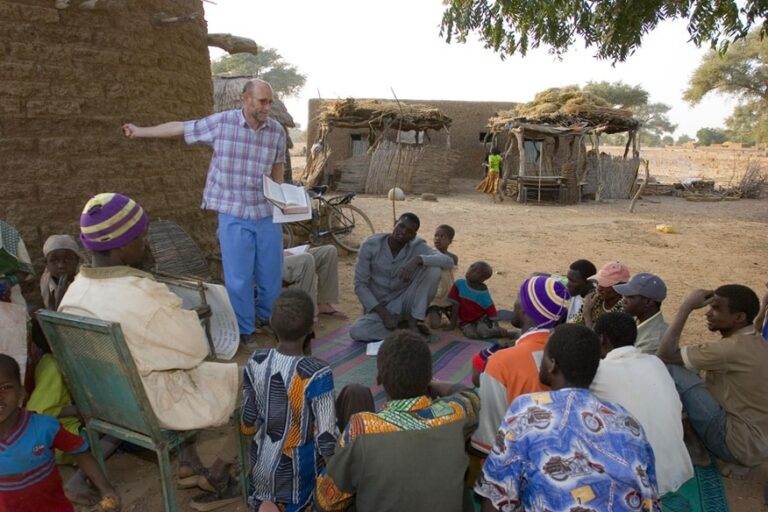
1 was privileged to spend Easter Week, 1965, with a large group of humble believers in a village of the forests of southern Cordoba. This particular area had been especially prone to extremes and fanaticism of the nature described above. My heart was greatly encouraged to see how the Spirit of God has been lifting up a standard against the enemy, who had come in like a flood. Extremes are being curbed. There is evidence of a renewed desire to search the Scriptures in order to judge personal experience in the light of the Word of God. The openness to the ministry of the Word with the eagerness with which the brethren received and even sought exhortations was a confirmation that "he which hath begun a good work in you will perform it until the day of Jesus Christ."
I received urgent requests for more Bible conferences, and a formal invitation to minister to another large group in November and also at Christmas, 1965. These were encouraging evidences of the desire of believers to study the Word. This makes more pressing than ever the need for prayer which Paul breathed in Ephesians 6 (quoted above) that I may faithfully fulfill the task which the Lord has committed to us.
…..
Copyright © 1965 Evangelism and Missions Information Service (EMIS). All rights reserved. Not to be reproduced or copied in any form without written permission from EMIS.